Adaptation Measures
Adapting management practice helps reduce vulnerability to climate change risks. We showcase ten different measures to consider depending on identified risks and management objectives for particular sites.

Adapting management practice helps reduce vulnerability to climate change risks. We showcase ten different measures to consider depending on identified risks and management objectives for particular sites.
In order to identify the most appropriate adaptation measures, forest and woodland managers should consider their management objectives alongside an assessment of climate change risks for their sites. Adaptation measures that will reduce the most immediate and greatest risks should be prioritised.
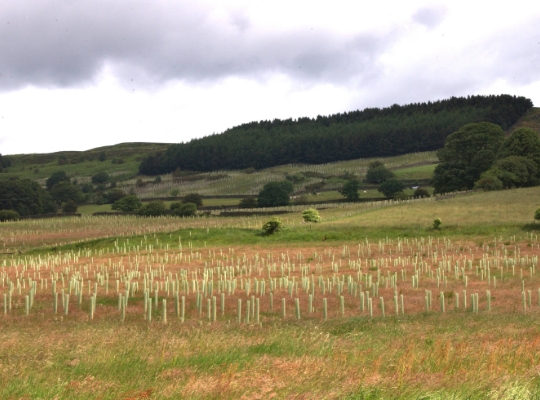
The future climate must be considered and integrated into design plans to increase resilience, not just for current woodland but for new woodland and areas of woodland expansion.
|
Measures
|
|---|
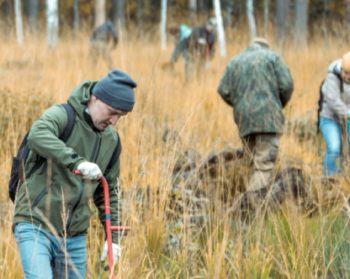
Guidance on how to select the most appropriate adaptation measures and information on useful decision-making tools
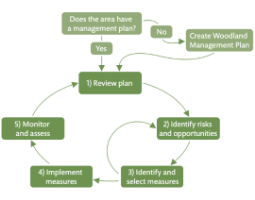
A step-by-step approach to tackling the impacts of climate change and increasing resilience through adaptation.
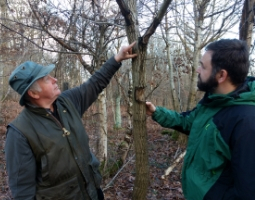
Read how forest and woodland managers are putting theory into practice and testing new measures to help minimise risk
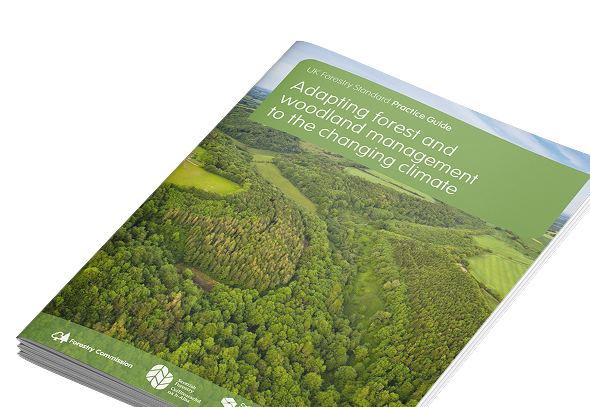
The UKFS Practice Guide ‘Adapting forest and woodland management to the changing climate’ guides practitioners through the process from assessing climate change risks to implementing adaptation measures.
Printed copies are available to purchase from Forest Research.
Printed copies are available to purchase from Forest Research.
"*" indicates required fields