Management of non-native or invasive vertebrates
Author(s): Robin Gill

Find trusted information on tree health threats, from pest and disease identification to management advice, reporting guidance and the latest research.
Explore our comprehensive database of tree pests and diseases affecting the UK’s forests, woodlands and trees. Browse species profiles, identify symptoms, learn about distribution and impacts, and find guidance on reporting, management and biosecurity measures.

Learn about plant health regulations, trade requirements and official sources of advice following the UK’s exit from the EU.
Author(s): Robin Gill
Author(s): Robin Gill
Author(s): Robin Gill

Author(s): Robin Gill
Author(s): Sarah Green
Author(s): Emma Hinton, Elizabeth Edwards, Sarah Pohlschneider, Mariella Marzano
Author(s): Bethan Stagg, Peter Crow, Nathan Brown, Emma Hinton
Author(s): Sarah Green
Author(s): Elena Vanguelova, Beth Brockett, Grace van der Wielen, Duncan Ray, Nathan Brown, Luci Corbett
Author(s): Barley Rose Collier-Letcher, Anna Platoni
Author(s): Anna Platoni
Author(s): Imogen Cavadino-Phillips
Author(s): Gemma McDonald
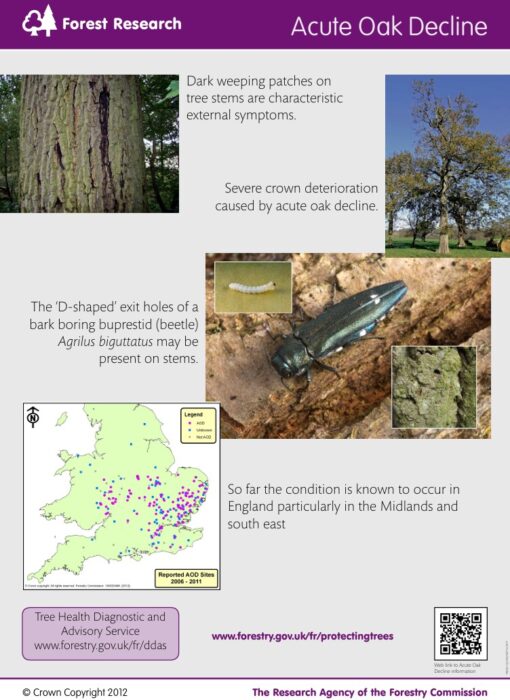
A selection of posters that can be downloaded as PDFs and then printed at a size to suit (up to…
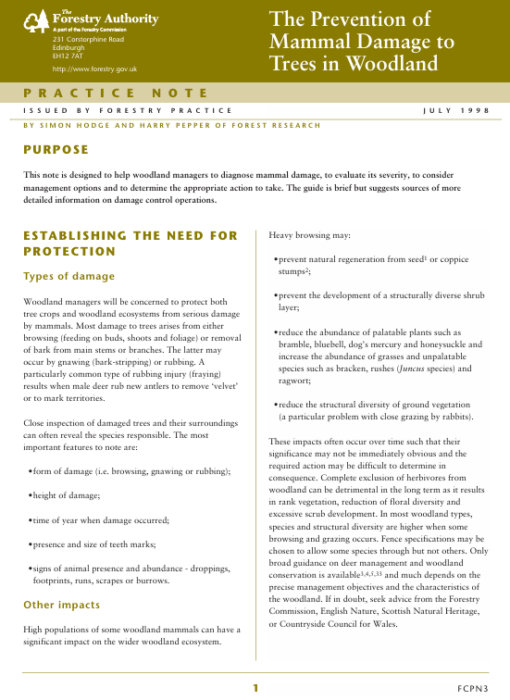
This note is designed to help woodland managers diagnose mammal damage, to evaluate its severity, to consider management options and…
Lead Author: Harry W. Pepper
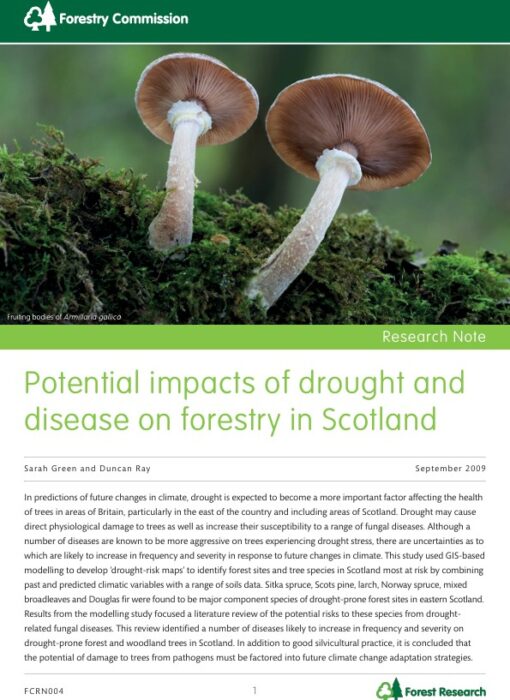
This study identified 288 medium or high drought risk forest sites in eastern Scotland, 125 of which include Sitka spruce…
Lead Author: Sarah Green
Overview The emerald ash borer (EAB, Agrilus planipennis Fairmaire (Coleoptera: Buprestidae) is devastating ash trees in its invaded range of…
Lead Author: Katy Reed
Overview Ash trees across Great Britain are under increasing threat from pests and diseases as ash dieback (ADB) continues to…
Lead Author: Clare Hall

Invasive tree pathogens pose a significant and increasing threat to natural ecosystems. The outcome of these novel host-pathogen interactions depends…
Lead Author: Daisy Crowson
This report provides a review of the Forest Trapping Network Year Two rollout
Lead Author: Alice Walker
Summary This Letter to the Editor of the international journal 'Phytopathology' lays out the case for retaining the historic and…
Lead Author: Clive Brasier
Invasive Phytophthora species are increasingly impacting UK landscapes. Most recently, cryptic outbreaks of P. pluvialis Reeser, Sutton & E. Hansen…
Lead Author: Alastair MacLaren
Acute oak decline (AOD), a decline syndrome affecting mature oaks, involves bacterial pathogens which likely act as opportunists under host…
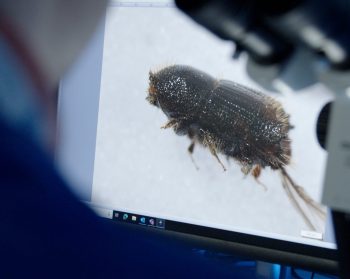
How will the changing environment impact bark-boring insects? Climate change projections indicate more frequent extreme weather events, such as storms,…
Lead Author: Sonja Steinke