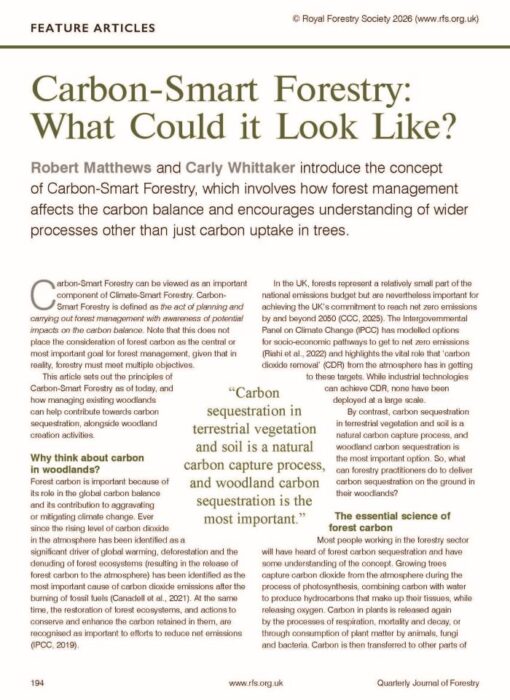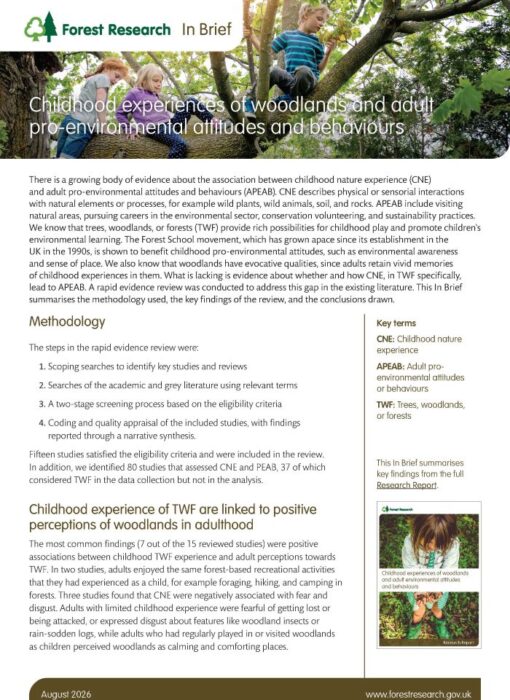


Carbon-Smart Forestry: What could it look like?
This journal article sets out the principles of Carbon-Smart Forestry as of today, and how managing existing woodlands can help…
Help us explore how people record observations of the natural world. Complete our short survey and share your experiences of participating in citizen science.
Find out more
Scientists at Forest Research have discovered that some trees within native British juniper populations carry heritable natural resistance to the invasive tree pathogen, Phytophthora austrocedri.
Forest Research, on behalf of the Forestry Commission, Scottish Forestry, and Welsh Government, is launching the Forestry Workforce Census. It aims to better understand what the forestry operations workforce in Great Britain looks like today.
Forest Research has announced SciFor 26, a major conference focused on the evidence, findings and innovations resulting from its core research programme.
Carbon experts Robert Matthews and Carly Whittaker discuss how forest management affects the carbon balance in a new featured article for the Royal Forestry Society’s Quarterly Journal of Forestry.
We want to know about the size of your workforce on 1 October 2026 and 1 March 2027 to help us better understand what the forestry sector looks like today. You could be a large organisation or a one-person company.
Entomology scientist, Molly Davidson, discusses her work as a diagnostician for TreeAlert, the hidden world of moths, and a new survey investigating what motivates people to take part in citizen science.
A new outbreak of sweet chestnut blight has been identified in Devon. Read how a Forest Research trial is assessing treatment for sweet chestnut blight disease.
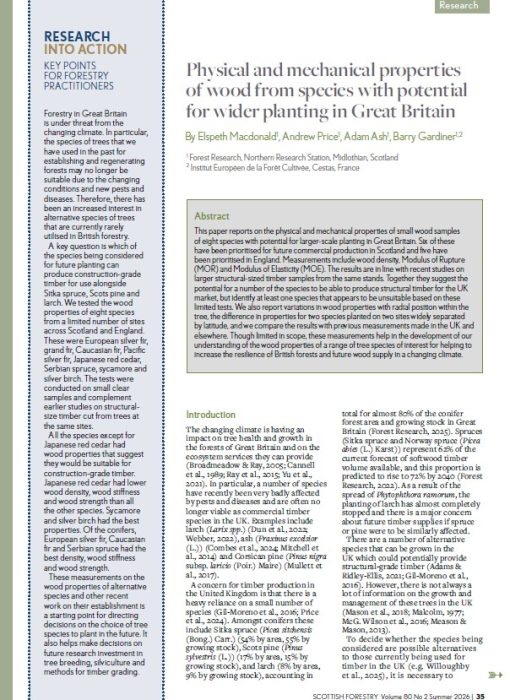
How Forest Research worked with Scottish Forestry to identify the tree species that could future-proof Scotland’s forests against pests, disease and climate change.
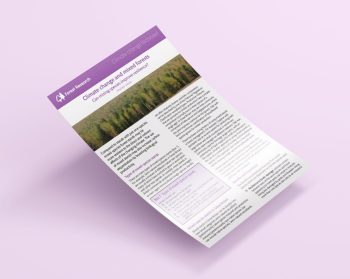
Discover Forest Research’s Climate Change Factsheets – clear, evidence-based guides to help landowners, practitioners and policymakers adapt forests for the future.
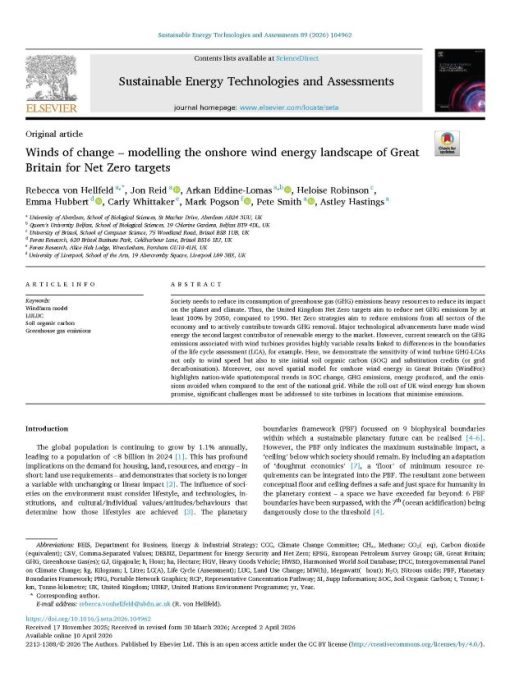
Plan smarter, grow stronger. Senior Climate Change Scientist Tom Locatelli explains how ForestGALES helps foresters tackle wind risk and build resilient woodlands in Great Britain, and beyond.
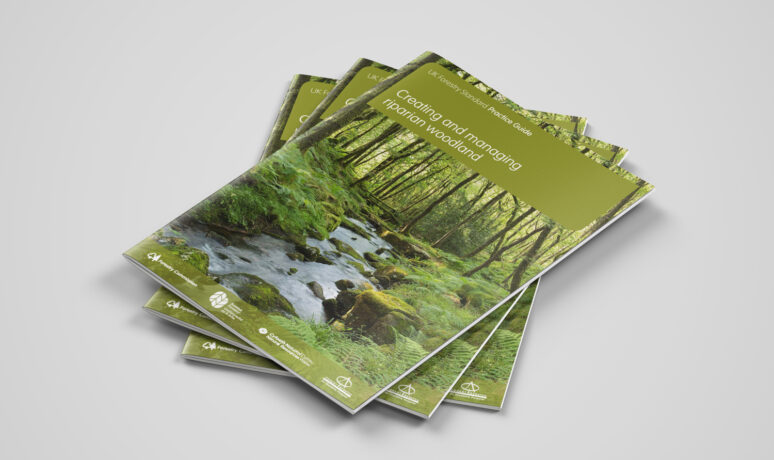
Find out how a natural capital approach is being used to inform tree planting at Blenheim Palace through a Woodland Water Code pilot project.
Work at the cutting-edge of environmental science research with Forest Research, Great Britain’s leading organisation for forestry and tree-related research.
Learn how Ash Dieback is impacting Great Britain's native ash trees, and discover resources to help slow its spread.
Understand the threat of Oak Processionary Moth to the country’s oak trees and access key information on its management and control.
Explore this detailed resource with information on common tree pests and diseases, from Acute Oak Decline to the Asian Longhorn Beetle.
Access a detailed database on information on over 60 tree species that are either widely grown in British forests or which could play an increasing role in the future.
Explore ForestGALES, a computer tool that assesses wind damage risk to forests in Britain, allowing comparison of different silvicultural practices.
Discover vital insights about Britain’s woodlands through the National Forest Inventory (NFI), a comprehensive programme offering up-to-date data on forest size, distribution, health, and biodiversity.
We carry out research to develop a better understanding of the ways in which trees and woodlands can benefit society
Chemical analysis of plant, water and soil samples, testing of plant stock quality and tree assessment products
The Tree Health Diagnostic and Advisory Service provide advice and where possible diagnosis and identification of tree pest and pathogen
By analysis of DNA extracted from samples, Forest Research can identify the presence of cryptic or reclusive species.
The Land Use and Ecosystem Services Research Group provides services to the forestry and environment sectors.