A guide to Forest Research’s Climate Change Factsheets
Discover Forest Research’s Climate Change Factsheets - clear, evidence-based guides to help landowners, practitioners and policymakers adapt forests for the future.

Our climate is changing, and trees, woodlands and forests play a vital role in mitigating the risks from climate change and in reducing the impacts on society and the environment
Forests store carbon, support biodiversity and provide us with materials and energy but they also face increasing risks from pests, diseases and extreme weather events.
Forest Research has developed a series of Climate Change Factsheets aimed at:
These short, evidence-based guides bring together the latest science with practical insights. They introduce you to:
James Morison, Principal Scientist at Forest Research said, “our series of bite-size Climate Change Factsheets are grounded in Forest Research’s science and summarise key topics and make the information accessible.”
Our series of bite-size Climate Change Factsheets are grounded in Forest Research’s science and summarise key topics and make the information accessible.
Browse the full series of factsheets

One of the newest factsheets looks at the climate benefits of wood products.
Timber products store carbon while in use, with lifespans ranging from months to many decades. The UK’s wood product “carbon pool” is currently estimated at around 500 million tonnes of CO2e.
Timber can also replace materials that release more emissions from fossil-fuels during their manufacture, such as steel or concrete. By reusing and recycling wood products, we can keep carbon locked away for longer and reduce emissions.
Download the wood products factsheet
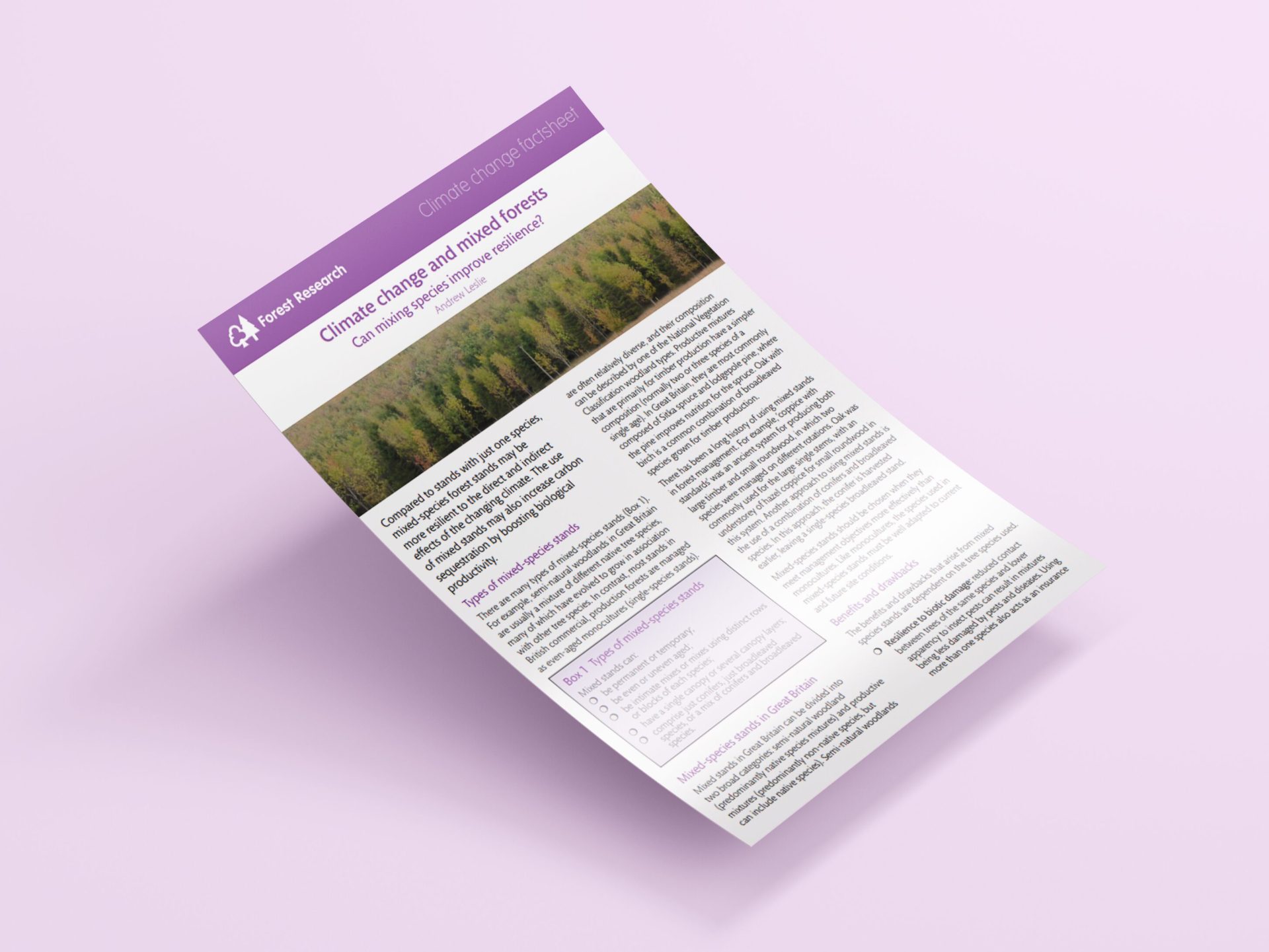
Our latest factsheet looks at how mixed-species forest stands may be more resilient to the direct and indirect effects of the changing climate compared to stands with just one species. The use of mixed species stands may also increase carbon sequestration by boosting biological productivity.
The benefits and drawbacks from mixed species stands are also noted, including financial returns, resistance to biotic and abiotic damage as well as nutrient availability and biodiversity.
Forest Research has released the latest Accredited Official Statistics on woodland and forestry in the UK.
As Forest Research and Forestry England release five animations spotlighting productive tree species, Dr Tom Ovenden, silviculture and species scientist at Forest Research, discusses resilience, diversification and the future of forestry.
Forest Research, on behalf of the Forestry Commission, Scottish Forestry, and Welsh Government, has launched the Forestry Workforce Census. It aims to better understand what the forestry operations workforce in Great Britain looks like today.
Forest Research has released the latest Accredited Official Statistics on woodland and forestry in the UK.
As Forest Research and Forestry England release five animations spotlighting productive tree species, Dr Tom Ovenden, silviculture and species scientist at Forest Research, discusses resilience, diversification and the future of forestry.
Forest Research, on behalf of the Forestry Commission, Scottish Forestry, and Welsh Government, has launched the Forestry Workforce Census. It aims to better understand what the forestry operations workforce in Great Britain looks like today.