We use some essential cookies to make this website work. We’d like to set additional cookies to understand how you use forestresearch.gov.uk, remember your settings and improve our services. We also use cookies set by other sites to help us deliver content from their services.
Spotlighting five alternative productive tree species
As Forest Research and Forestry England release five animations spotlighting productive tree species, Dr Tom Ovenden, silviculture and species scientist at Forest Research, discusses resilience, diversification and the future of forestry.
Date
19 October 2026
Reading Time
7 minutes
Last Updated
19 October 2026
What do we mean by resilience?
In forestry, the concept of resilience in its broadest sense is about ensuring forests remain relatively stable and continue to deliver a range of goods and services in the face of unprecedented change. In practice this means that when trees – or the forests they form – experience something stressful, they can ‘bounce back’ quickly and easily. Ideally, this is also coupled with the ability of the forest to acclimate and change to accommodate the changing environment.
No single species can be resilient to every possible eventuality. There’ll be trade-offs – benefits and weaknesses of different species to different conditions and the characteristics of different species will interact when mixed. This can make reliably increasing resilience through diversification challenging and complex. This challenge also highlights the importance of understanding what you are specifically trying to increase resilience to (e.g. droughts, storms or pests and diseases etc).
For example, if you’re interested in maintaining high productivity in an increasingly drought prone environment, then you might want to diversify with species whose growth rate is resilient to very high temperatures and low moisture availability.
However, this may not necessarily be the most wind-firm species in the face of increasing storm activity, or a drought tolerant species might be susceptible to a particular pathogen.
As has become a modern-day mantra in forestry, it’s about making sure that you’ve got the right species in the right place for the climate and site-specific challenges of today, but also for the future.
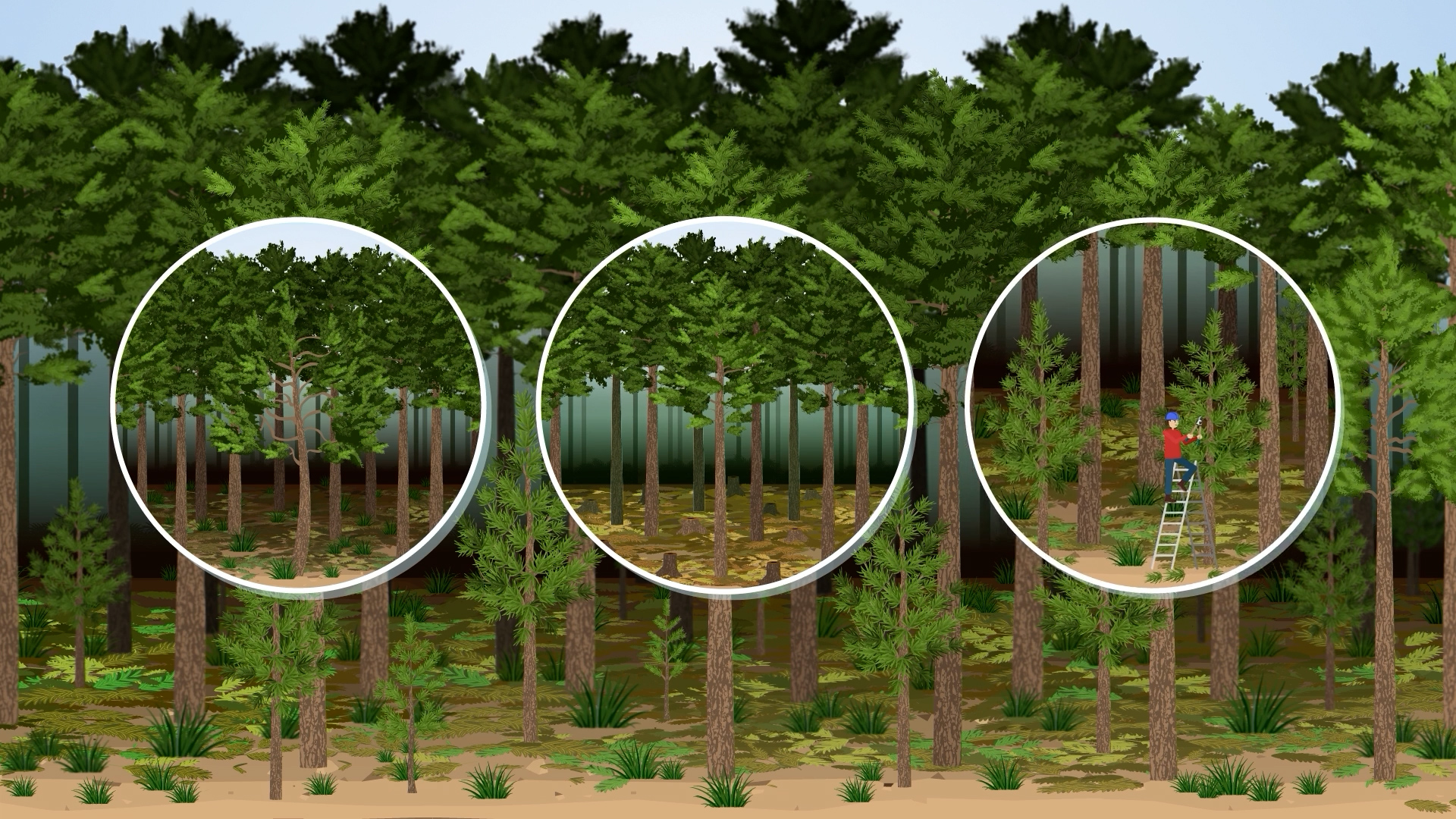
Still taken from film about maritime pine.
How do we better communicate scientific evidence to help inform forest resilience planning?
In my experience, people working in forestry are often incredibly well informed about the challenges facing the sector and the merits of diversification. I also see a real thirst for knowledge to inform decisions about which species are best placed to achieve this diversification. So, I think in many ways the onus is on us, as the scientific community, to make sure our research is as accessible and digestible as possible to as many people as possible, ready to equip those who can translate that evidence into action on the ground. Part of this means experimenting with new ways of communicating information, outside of the conventional means and especially in a world increasingly dominated by short-form digital content.
This shift in how information and scientific content is being consumed, coupled with the dangers that accompany the explosion in availability of (mis)information across digital platforms was recently flagged in a short editorial in Nature – one of the leading scientific journals. Part of the antidote proposed in this article to such a saturation of information is that “In this increasingly competitive environment, it is essential that credible science broadcasts a strong signal” and that “…done well, narrative storytelling, infographics, animation and video are all incredibly compelling and popular ways to engage people with science.”
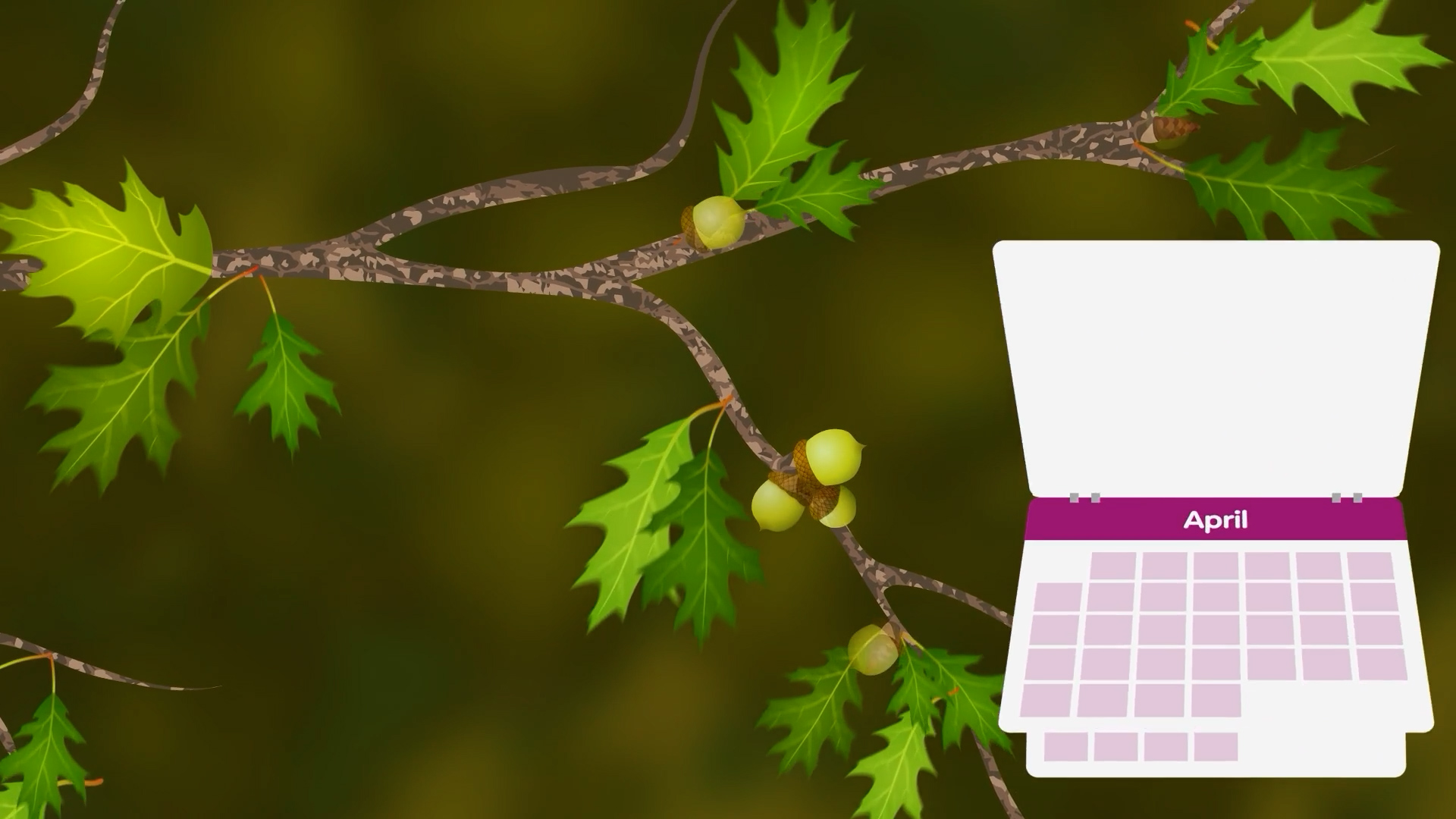
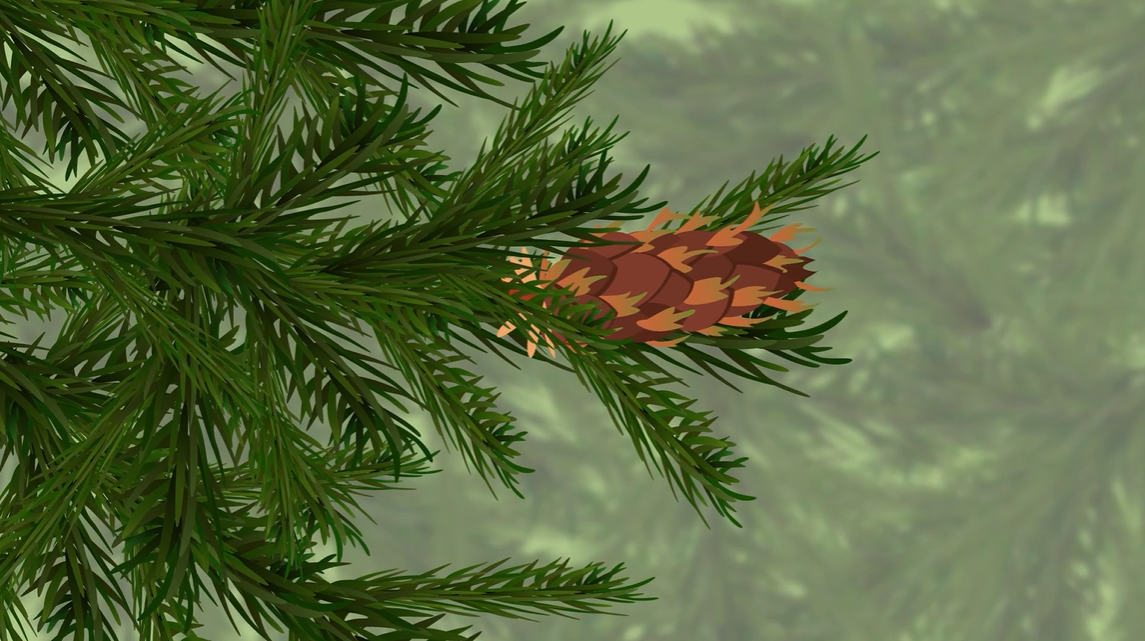
This is why, working with Forestry England, we’ve created this series of short animations that spotlight five alternative productive tree species which, while already planted (some more extensively than others), represent comparatively little of the UK forest area. These five species are coast redwood, Douglas fir, maritime pine, red oak and Western red cedar.
We settled on these species as they are not your immediate go-to species like sitka spruce, Scots pine or larch, but are still relatively well known and already familiar to many foresters.
The videos provide a general overview of the species’ origin, silvicultural characteristics, site requirements, timber properties, and a short comment on their anticipated place in the future of British forestry.
While not intended to be a comprehensive review of all aspects of each species, our hope is that these videos will act as an introduction to those new to forestry, a refresher to those wanting a reminder of some alternative species, and a complimentary reference to accompany the formal species pages in Forest Research’s Tree Species Database.
Accompanying these five animations, we have also produced a freely available Forest Research data dashboard. This is another new tool we are experimenting with to make our science, and the data that underpins it, more accessible. This dashboard allows you to explore and compare the early growth and survival of a wide range of different species and provenances currently growing across five of the ‘next generation’ of Forest Research’s species trials. Our hope is that this dashboard can expand to include additional experiments and data over time, and so feedback from anyone who gives it a try is very welcome and actively encouraged to help us refine its useability in future iterations.
Read more about our five spotlighted alternative productive tree species:
What other exciting areas of silvicultural research are we working on for climate change adaptation, other than species diversification?
I’ve always loved the idea that you can manipulate the structural composition and diversity of a forest through the targeted use of silviculture. Recently, I started considering whether the overwhelming focus on species diversification for climate change adaptation might mean we were perhaps overlooking the role targeted silvicultural interventions (and the changes in forest structure they produce) might also play.
A lot of my research interest to date has focused on the impact of extreme climate events, particularly in the context of drought. Over the last 18 months we have been working on a separate project funded by Defra through the Centre for Forest Protection which aims to bring these two elements together and try, for the first time and focusing initially on Corsican pine and Douglas fir, to understand if the structural diversity of the forest is linked to how drought resilient the individual trees and wider forest are.
We are halfway through this project now and over the next 18 months, we will begin to answer some of these tantalising questions about whether forest structural diversification, in addition to species diversification, might be a reliable way to also increase forest resilience and adapt to climate change.
For more information about adaptation interventions and management objectives, visit the Climate Change Hub, the official home of UK forestry climate change guidance.
Forest Research, on behalf of the Forestry Commission, Scottish Forestry, and Welsh Government, has launched the Forestry Workforce Census. It aims to better understand what the forestry operations workforce in Great Britain looks like today.
Dr Matt Wilkinson, NCEA Programme Manager at Forest Research talks about how we are trailblazing new technology and implementing innovations as part of the most significantecosystem assessment ever conducted in the UK.
Forest Research, in partnership with the University of Exeter’s Centre for Net Positive Health and Climate Solutions, is leading a new study investigating outdoor nature-based recreation, health and climate change.
Modal
Manage consent
Cookies on forestresearch.gov.uk
Cookies are files saved on your phone, tablet or computer when you visit a website.
We use cookies to store information about how you use the forestresearch.gov.uk website, such as the pages you visit.
We use 3 types of cookie. You can choose which cookies you're happy for us to use.
Strictly necessary cookies
Always On
These essential cookies do things like remember your progress through a form.
They always need to be on.
Cookies that measure website use
We use Google Analytics to measure how you use the website so we can improve it based on user needs.
Google Analytics sets cookies that store anonymised information about:
how you got to the site
the pages you visit on forestresearch.gov.uk and how long you spend on each page
what you click on while you're visiting the site
Cookies that help with our communications and marketing
Some forestresearch.gov.uk pages may contain content from other sites, like YouTube or Flickr, which may set their own cookies. These sites are sometimes called ‘third party’ services. This tells us how many people are seeing the content and whether it’s useful.