We use some essential cookies to make this website work. We’d like to set additional cookies to understand how you use forestresearch.gov.uk, remember your settings and improve our services. We also use cookies set by other sites to help us deliver content from their services.
“We need people to be recording nature when out and about to help us learn as much as possible about our world.”
Forest Research entomology scientist, Molly Davidson, discusses her work as a diagnostician for TreeAlert, the hidden world of moths, and a new survey investigating what motivates people to take part in citizen science.
Date
1 September 2026
Reading Time
5 minutes
Last Updated
2 September 2026
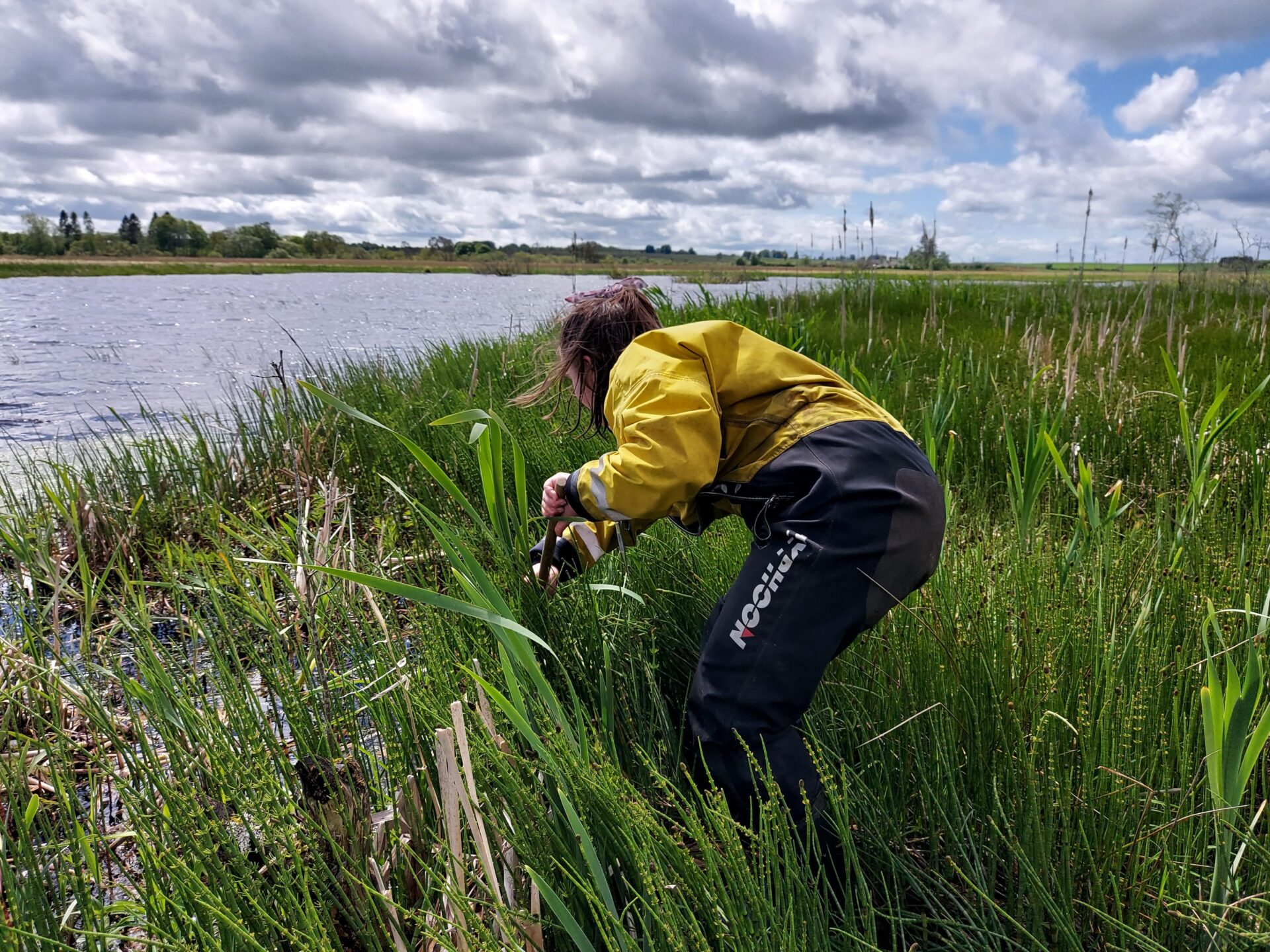
I’m a scientist within the entomology department at Forest Research. I work in tree health, identifying and delivering research projects on various pests that affect forests and woodlands in Great Britain. As part of my role, I’m a diagnostician for our Tree Health Diagnostic and Advisory Service. It’s my job to identify the bugs in photos sent via TreeAlert enquiries from the north of England and Scotland.
I fell into this field almost completely by accident. My grandparents loved birds and so, growing up, I would go out birdwatching with them. I got my first pair of binoculars at about eight years old.
All the way through high school, I enjoyed biology and learning more about how the natural world works. I went to university to study zoology because I was interested in animals and the weird and wonderful things they do.
Back then, I was big into birds, so I did a master’s placement year with the RSPB reserves ecology team. At the reserve I was based at there was a light trap, managed by the volunteers – which is used to harmlessly capture moths for observation and identification before release. It was like a window into a secret nighttime world. It was so exciting to sit down with other moth lovers, identify everything in the trap and let them fly away. I realised how much diversity there was in the insect world and immediately fell in love with it.
I realised how much diversity there was in the insect world and immediately fell in love with it.
In my final year at university, I started up my own ecological consultancy and did surveys for various nature reserves looking at freshwater bugs and plant communities. Then a job came up at Forest Research, working with people who were real experts at identifying forest insects. It seemed like a great opportunity to learn even more.
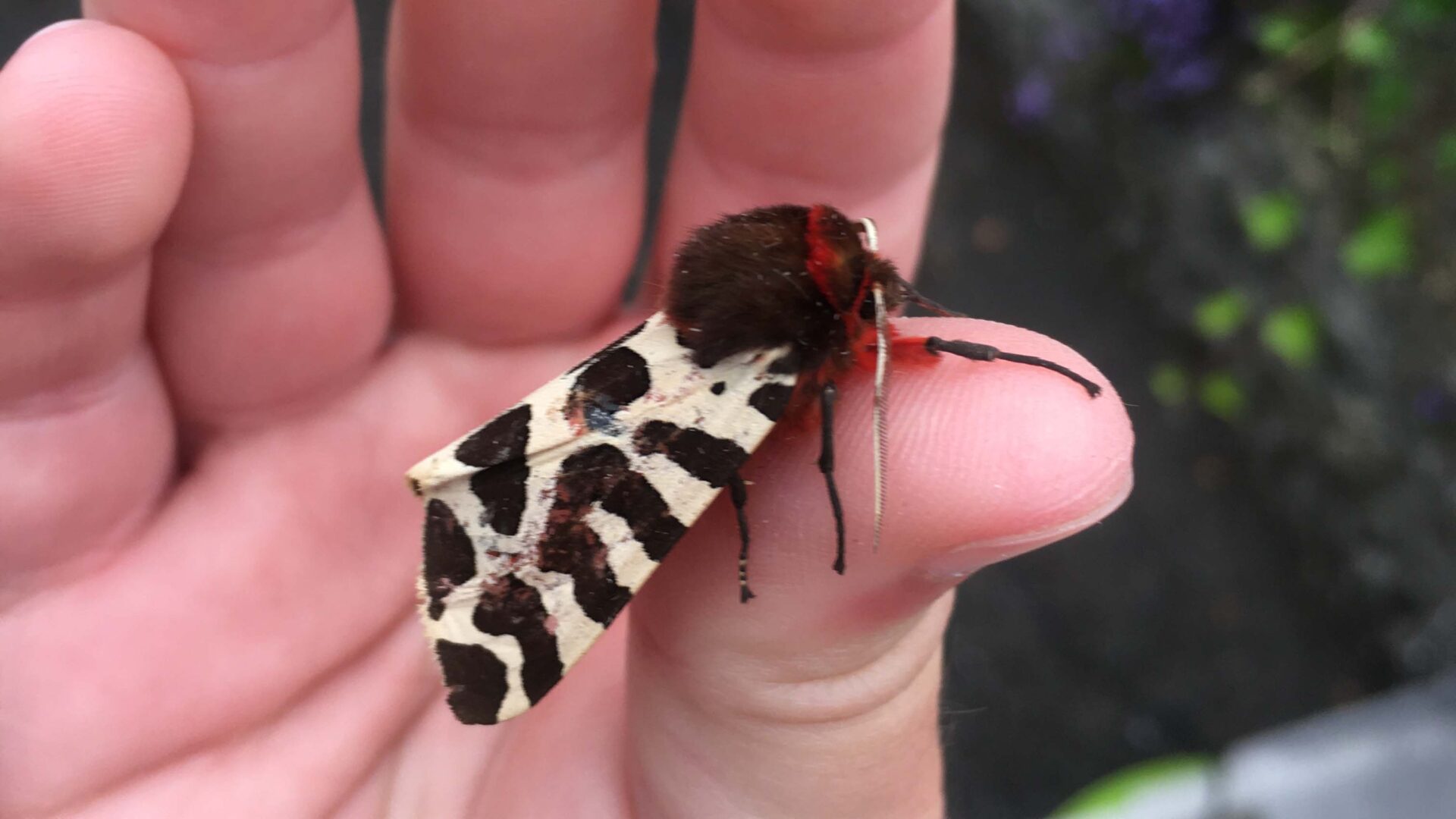
As an entomologist, picking my favourite insect is very difficult! In terms of moths, it would have to be a garden tiger (Arctia caja). It was one of the first moths I caught in my own back garden moth trap. It has brown cow print on its front wings and its hind wings are a beautiful red, with blue spots.
Beetle-wise, my favourite bug is the timberman beetle (Acanthocinus aedilis), which is native and nationally rare. It’s quite a big longhorn beetle, with huge, long, stripy antenna. It feeds on dying wood, helping decaying trees to be broken down and recycled. So, not only is it gorgeous, but it plays an important role in our ecosystem!
Personally, I think one of the best things about citizen science is the strong community surrounding it; there’s a lot of lovely people who generously share their time and knowledge. Since university I’ve taken part in the RSPB’s Big Garden Birdwatch, which was always a great excuse for a break from studying! I also enjoy participating in Butterfly Conservation’s Big Butterfly Count every year and I enter details of what I’ve caught in my moth trap into iRecord.
Citizen science apps like TreeAlert help us to pick up on things that we might not have found otherwise.
From a professional point of view, citizen science apps like TreeAlert help us to pick up on things that we might not have found otherwise, particularly in urban environments. Non-native bugs can often turn up in unexpected places, as we’ve seen in the report of a Plane Lacebug (Corythucha ciliata) crawling over a rucksack on a bus, submitted to iNaturalist by a member of the public in 2024.
Citizen science is important in terms of surveillance for regulated insects, but it’s not all about pests. For example, in 2023 we received a report of a horse chestnut leaf miner moth from the most northerly place it had ever been sighted at the time, which expanded our knowledge of the species distribution. We need people to be recording nature when out and about to help us learn as much as possible about our world.
New survey for volunteer observers of nature
Forest Research is looking to hear from people who enjoy, or are interested, in recording or observing nature in support of scientific research.
If you use apps like iNaturalist, TreeAlert or others, to record and identify what you see when out and about or if you have taken part in nature surveys, or are interested in doing so, we’d love you to complete our short 10-minute survey.
The results will help shape future approaches to monitoring tree pests and diseases.
Forest Research, on behalf of the Forestry Commission, Scottish Forestry, and Welsh Government, has launched the Forestry Workforce Census. It aims to better understand what the forestry operations workforce in Great Britain looks like today.
Dr Matt Wilkinson, NCEA Programme Manager at Forest Research talks about how we are trailblazing new technology and implementing innovations as part of the most significantecosystem assessment ever conducted in the UK.
Forest Research, in partnership with the University of Exeter’s Centre for Net Positive Health and Climate Solutions, is leading a new study investigating outdoor nature-based recreation, health and climate change.
Forest Research, on behalf of the Forestry Commission, Scottish Forestry, and Welsh Government, has launched the Forestry Workforce Census. It aims to better understand what the forestry operations workforce in Great Britain looks like today.
Dr Matt Wilkinson, NCEA Programme Manager at Forest Research talks about how we are trailblazing new technology and implementing innovations as part of the most significantecosystem assessment ever conducted in the UK.
Forest Research, in partnership with the University of Exeter’s Centre for Net Positive Health and Climate Solutions, is leading a new study investigating outdoor nature-based recreation, health and climate change.
Modal
Manage consent
Cookies on forestresearch.gov.uk
Cookies are files saved on your phone, tablet or computer when you visit a website.
We use cookies to store information about how you use the forestresearch.gov.uk website, such as the pages you visit.
We use 3 types of cookie. You can choose which cookies you're happy for us to use.
Strictly necessary cookies
Always On
These essential cookies do things like remember your progress through a form.
They always need to be on.
Cookies that measure website use
We use Google Analytics to measure how you use the website so we can improve it based on user needs.
Google Analytics sets cookies that store anonymised information about:
how you got to the site
the pages you visit on forestresearch.gov.uk and how long you spend on each page
what you click on while you're visiting the site
Cookies that help with our communications and marketing
Some forestresearch.gov.uk pages may contain content from other sites, like YouTube or Flickr, which may set their own cookies. These sites are sometimes called ‘third party’ services. This tells us how many people are seeing the content and whether it’s useful.