AI helps reveal Britain’s bats in largest-ever national woodland bat survey
The largest passive acoustic bat survey ever undertaken in Britain has detected over 98 million bat calls across 310 woodland sites.

Cutting-edge AI has helped process 217 terabytes of sound recordings from more than 300 English woodlands, generating one of the most comprehensive datasets ever assembled on woodland bats.
The largest passive acoustic bat survey ever undertaken in Britain has detected over 98 million bat calls across 310 woodland sites. The National Woodland Bat Survey, led by Bat Conservation Trust (BCT) and Forest Research and funded by the UK Government through Defra’s Natural Capital and Ecosystem Assessment programme, collected 9,734 nights of acoustic recordings between 2021 and 2024.
The results highlight the exceptional importance of woodlands for bats, particularly broadleaved woodlands, where activity levels were highest on average. Woodlands provide essential habitat for all British bat species, supporting foraging, roosting and movement through the landscape. This was reflected in the widespread occurrence of bats across the survey, with common pipistrelles detected in all 310 woodlands surveyed across England, soprano pipistrelles at 99% of sites, Myotis bats at 98%, noctules at 94% and brown long-eared bats at 90%.
Dr Chloe Bellamy, Senior Spatial Scientist at Forest Research, said: “By harnessing AI technology, we have produced one of the most comprehensive datasets ever assembled on bats in England’s woodlands. This extraordinary data will improve how we create and manage woodland, to support bat populations and wider nature recovery.”

In total, the survey generated 217 terabytes of audio data, ~90,000 hours of recording. Processing data on this scale would not have been possible without advances in AI. BCT and Forest Research worked with researchers at the University of Edinburgh and University College London (UCL) to develop and use cutting-edge technology to identify bat echolocation calls within the recordings.
A subset of the AI identifications were checked by a network of 19 bat call experts from BCT’s Verifier Network, one of the largest UK networks of bat call verifiers where members have demonstrated their identification skills through a standardised assessment.
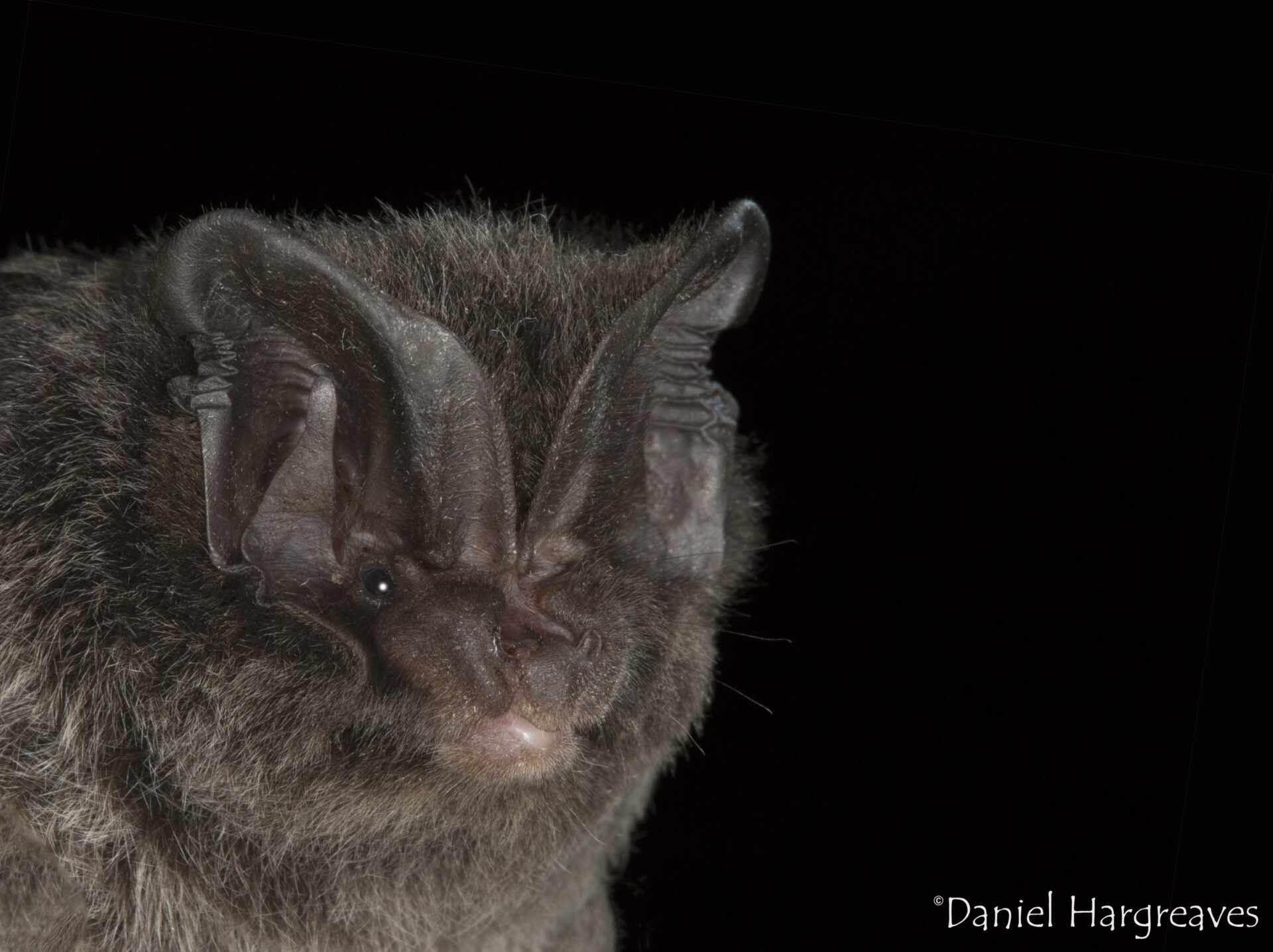
The survey detected every bat species or species group found in Britain, except for the serotine, a less common species which is particularly challenging to identify from acoustic recordings. Notably, the survey recorded some of Britain’s rarest and most threatened bat species, including the grey long-eared bat and barbastelle, both of which are on the UK Red List, as well as the near-threatened Nathusius’ pipistrelle and Leisler’s bat.
Kate E Jones from University College London said: “AI has fundamentally changed the scale at which we can monitor wildlife.
“Previously, analysing this volume of acoustic data would simply not have been feasible. These efficient open-source AI tools allow organisations like the BCT to identify millions of bat calls across thousands of nights of recordings, identify patterns and flag species at a national scale, while BCT’s expertise ensures the results can be carefully verified.”
The survey provides an important baseline for tracking long-term changes in bat presence, distribution and population trends in English woodlands.
For seven bat species, including greater horseshoe, lesser horseshoe, barbastelle, brown long-eared, grey long-eared, Leisler’s and Nathusius’ pipistrelle, the National Woodland Bat Survey currently provides the only national-scale survey in England away from known roost sites. For barbastelle, Leisler’s bat and Nathusius’ pipistrelle, it is the only active national-scale monitoring in England of any kind.
The scale of the survey is particularly significant because bats are notoriously difficult to monitor. They are nocturnal, highly mobile and often difficult to observe directly. Acoustic monitoring allows researchers to listen for the echolocation calls bats make as they move through their environment, creating a much richer picture of their distribution and habitat use.
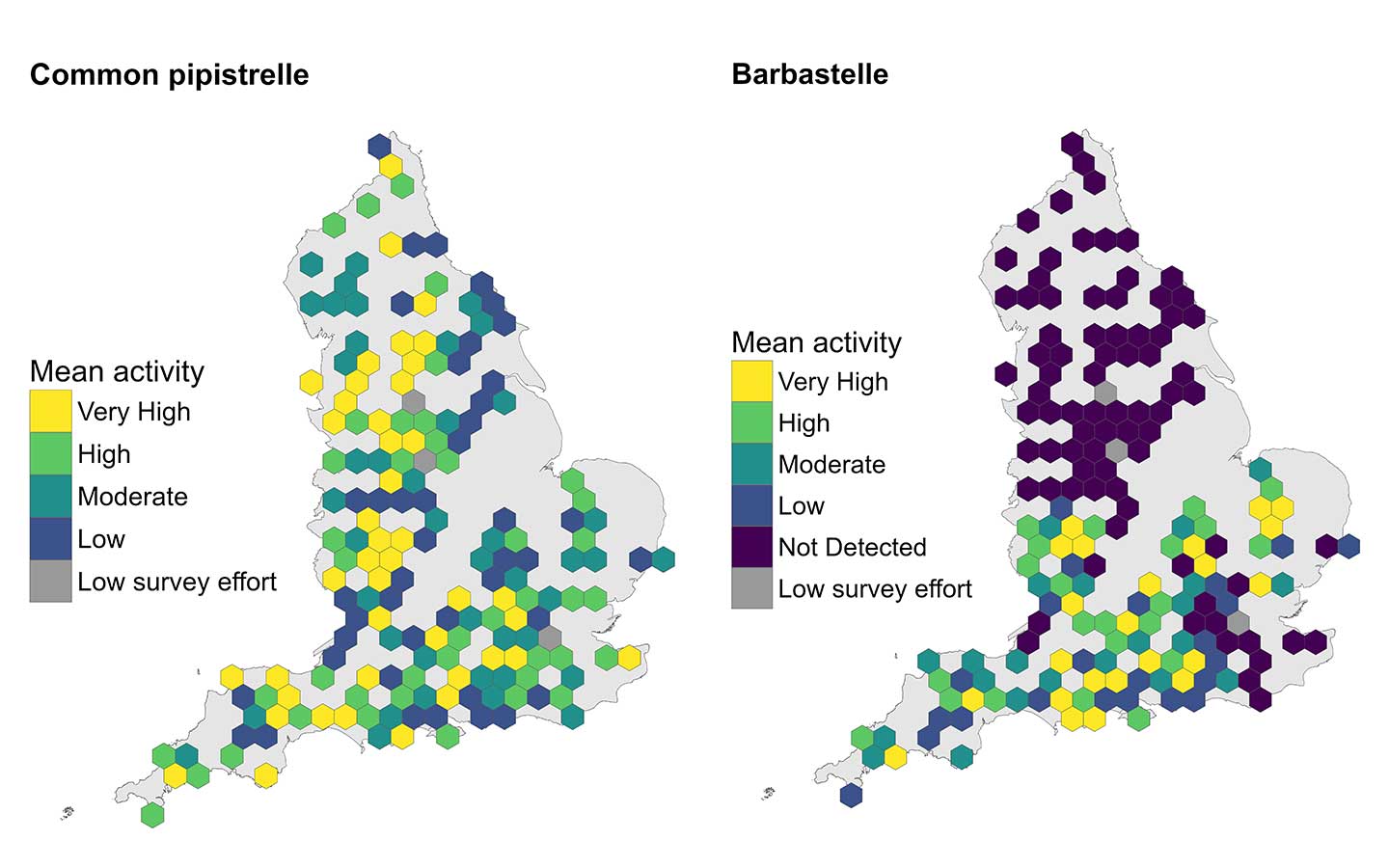
This national dataset provides new insights into patterns of bat species richness, activity and occurrence across England. Activity of common and soprano pipistrelles, Britain’s most abundant bat species, was generally highest in western regions.
Meanwhile, hotspots of barbastelle activity, one of Britain’s rarest and most threatened bats, were concentrated across southern England, excluding much of the South East. The survey also recorded barbastelles in parts of Cornwall, Devon and Dorset where only a few sparse records of the species exist, helping to fill gaps in their known distribution.
These patterns could provide important clues about the influence of factors such as climate, woodland cover, hedgerow extent and habitat connectivity on bat distributions, which the team plan to explore with data modelling. Understanding these relationships is increasingly important as the climate changes, helping to inform conservation action, woodland management and nature recovery.
Dr Lia Gilmour, Research Manager at Bat Conservation Trust, said: “Bats can indicate the quality of the habitats they rely on for survival, whether feeding, breeding or just getting from A to B. Therefore, understanding how bats are faring in woodlands, will allow us to understand how pressures such as climate change and changes in the management of our landscapes may impact these important habitats and how we can best conserve them. The datasets generated by this survey are a powerful resource, allowing us to view a snapshot of how bats are faring in English woodlands.”
The National Woodland Bat Survey demonstrates how technology can transform wildlife monitoring. By combining automated acoustic identification with expert verification, researchers have been able to analyse data on a scale that would have been impossible to process manually.
The survey also demonstrates the value of bringing together conservation organisations, government, forestry researchers and universities to tackle one of the biggest challenges in wildlife conservation: understanding how species are distributed and how their populations are changing.
The National Woodland Bat Survey was delivered by Bat Conservation Trust in partnership with Forest Research and funded by the UK Government through Defra’s Natural Capital and Ecosystem Assessment programme, with technology and research expertise from the University of Edinburgh and University College London.
“The National Woodland Bat Survey gives a full picture of bats across England’s woodlands, using technology to analyse millions of recordings at a scale that wouldn’t have been possible by people alone. It is a great example of the NCEA’s work to deliver the most ambitious assessment of the state of nature ever undertaken in the UK,” David Jones, Senior Responsible Owner for the Natural Capital and Ecosystem Assessment programme.
Data on the recorded species occurrence and activity are available to download and can be explored online using the National Woodland Bat Survey Data Explorer.
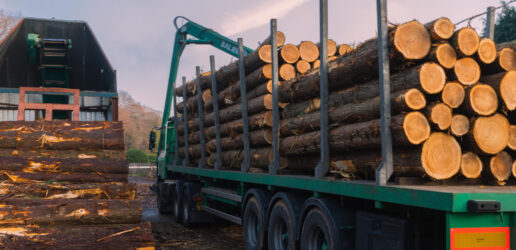
Forest Research has released the latest Accredited Official Statistics on woodland and forestry in the UK.

As Forest Research and Forestry England release five animations spotlighting productive tree species, Dr Tom Ovenden, silviculture and species scientist at Forest Research, discusses resilience, diversification and the future of forestry.
Forest Research, on behalf of the Forestry Commission, Scottish Forestry, and Welsh Government, has launched the Forestry Workforce Census. It aims to better understand what the forestry operations workforce in Great Britain looks like today.
Forest Research has released the latest Accredited Official Statistics on woodland and forestry in the UK.
As Forest Research and Forestry England release five animations spotlighting productive tree species, Dr Tom Ovenden, silviculture and species scientist at Forest Research, discusses resilience, diversification and the future of forestry.
Forest Research, on behalf of the Forestry Commission, Scottish Forestry, and Welsh Government, has launched the Forestry Workforce Census. It aims to better understand what the forestry operations workforce in Great Britain looks like today.