One summer, 11 locations, 160 people.
Growing a community equipped with the skills to assess oak health.

This summer over 160 woodland owners, forestry practitioners and volunteers attended oak health workshops hosted by Forest Research, Sylva Foundation and Aberystwyth University, at 11 locations across England and Wales. While the in-person events are over for the year, there’s still time to assess the health of your oak trees. We caught up with project lead, Celyn Basset, a PhD student at Aberystwyth University, who is working in collaboration with Forest Research, to find out more.
The free workshops were held in 11 different locations across England and Wales – from country estates in Norfolk and Suffolk to city parks in London. Over 160 woodland owners, workers and volunteers attended.
We wanted to train people to conduct tree health assessments of native oaks with a particular focus on chronic and acute oak decline and bring together a community of engaged stakeholders to discuss the future and management of oak woodlands.
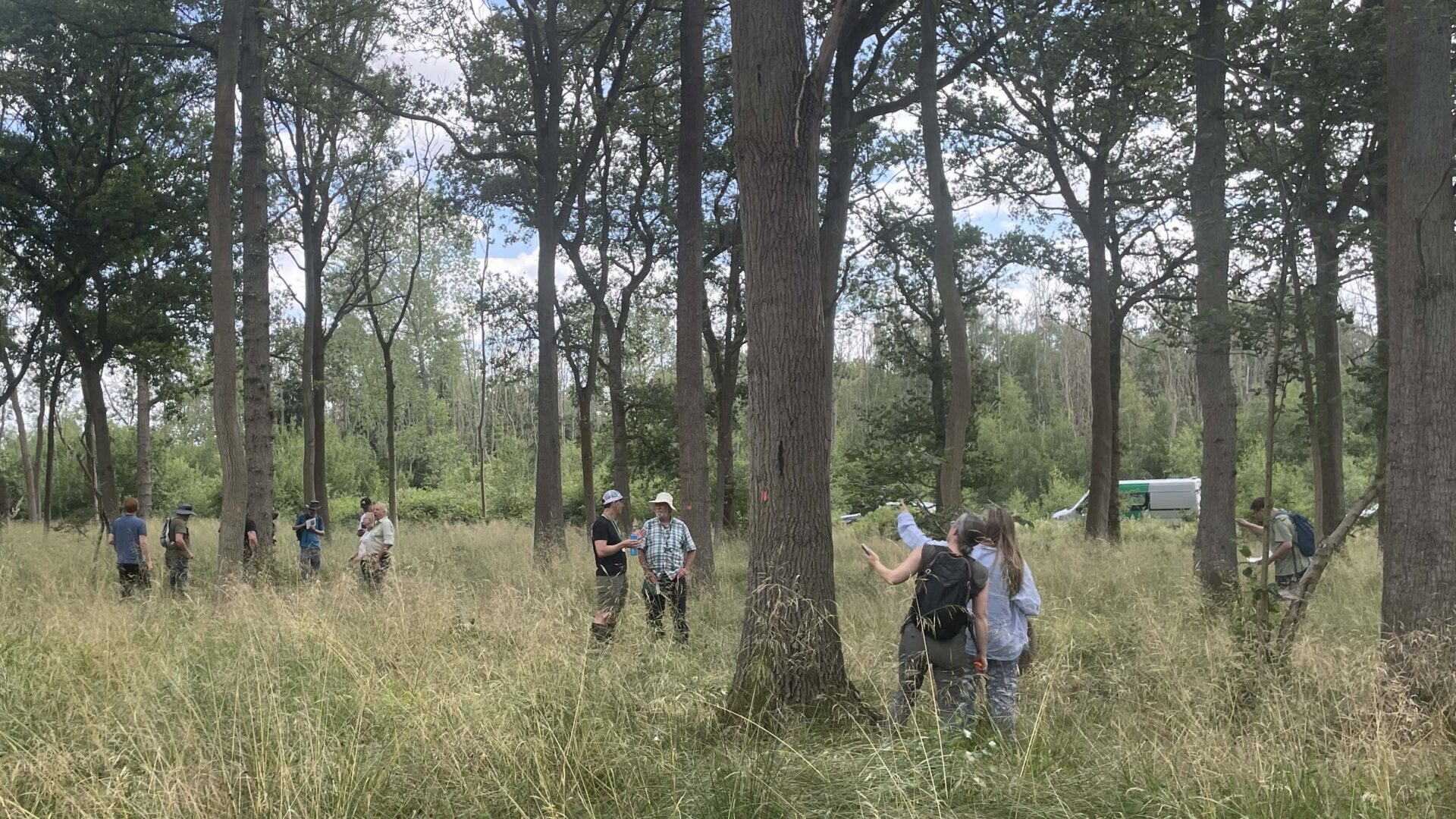
Each day began with a talk about oak decline in Britain and the stresses affecting our native trees. We spoke about the signs and symptoms of chronic and acute oak decline and how practitioners can identify these in their own woodlands.
We then used the free oak health web-app, which we developed as part of the project, to carry out health assessments on approximately five trees together as a group, discussing each measurement as we went along.
With something as subjective as a tree health assessment, there’s bound to be variation in measurements throughout the group. A huge benefit of hosting these sessions in-person and in the field is that everyone can discuss their findings and reasoning behind a specific score.
A successful and educating day. All those that attended got a great deal from the day and have come away with a better understanding of AOD and management options.
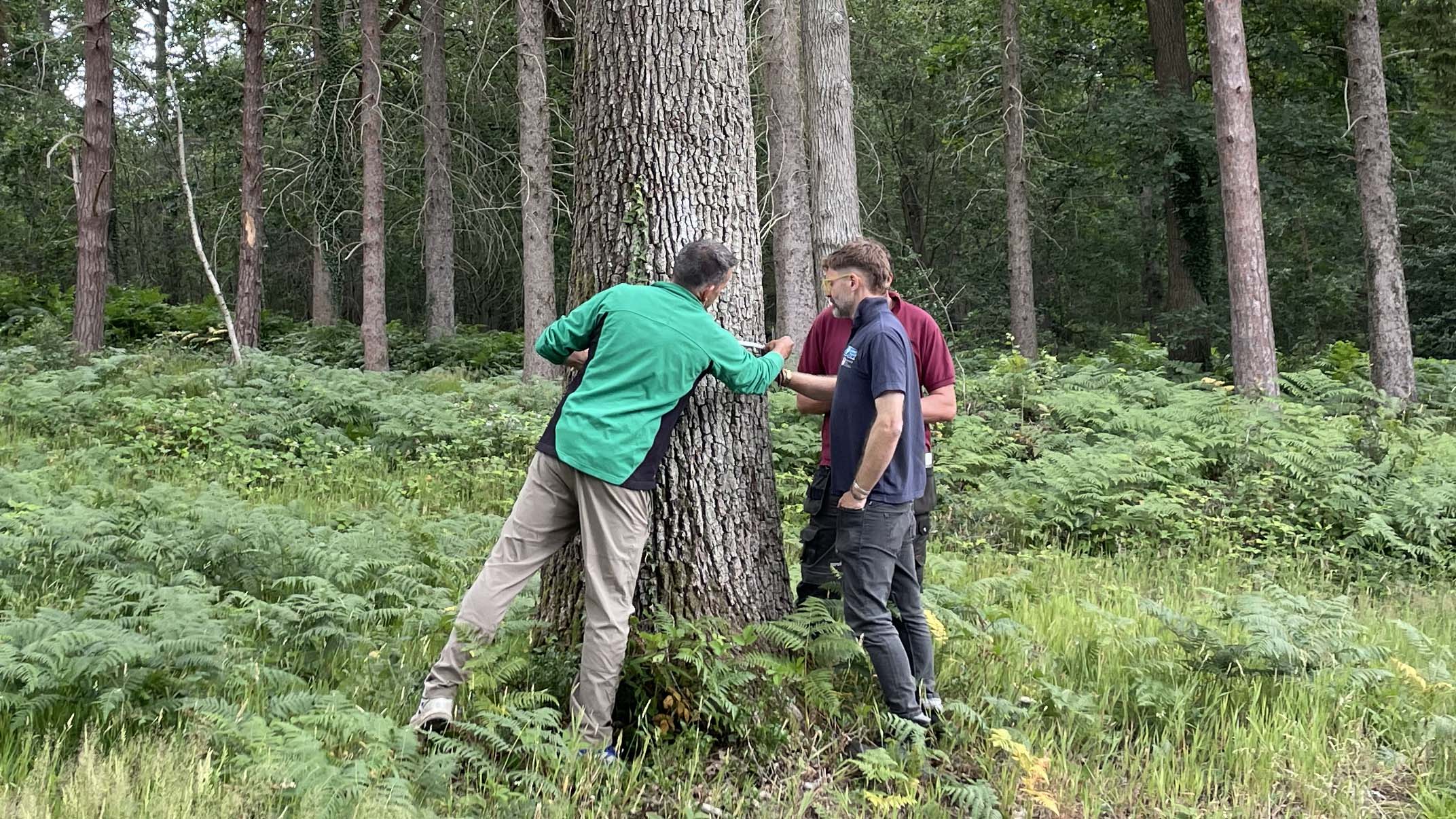
After lunch we held a group discussion about management techniques. The heatwave was an unfortunate but fitting background for talking about how to manage woodlands experiencing stresses exacerbated by climate change.
We heard from foresters dealing with soil compaction and waterlogging at productive oak woodlands, rangers attempting to restore soil health by encouraging understorey growth and volunteers at city parks that have witnessed the gradual increase of acute oak decline stem bleeds and tree death at their patch.
At the end of the day attendees left with a better understanding of oak decline and how to spot it, as well as the skills to make assessments in their own woodlands and contribute to nation-wide monitoring of oak health.
I really enjoyed your afternoon session very much and the follow up discussion, which I felt was open, honest and thought provoking…credit to the whole team who delivered today’s event.
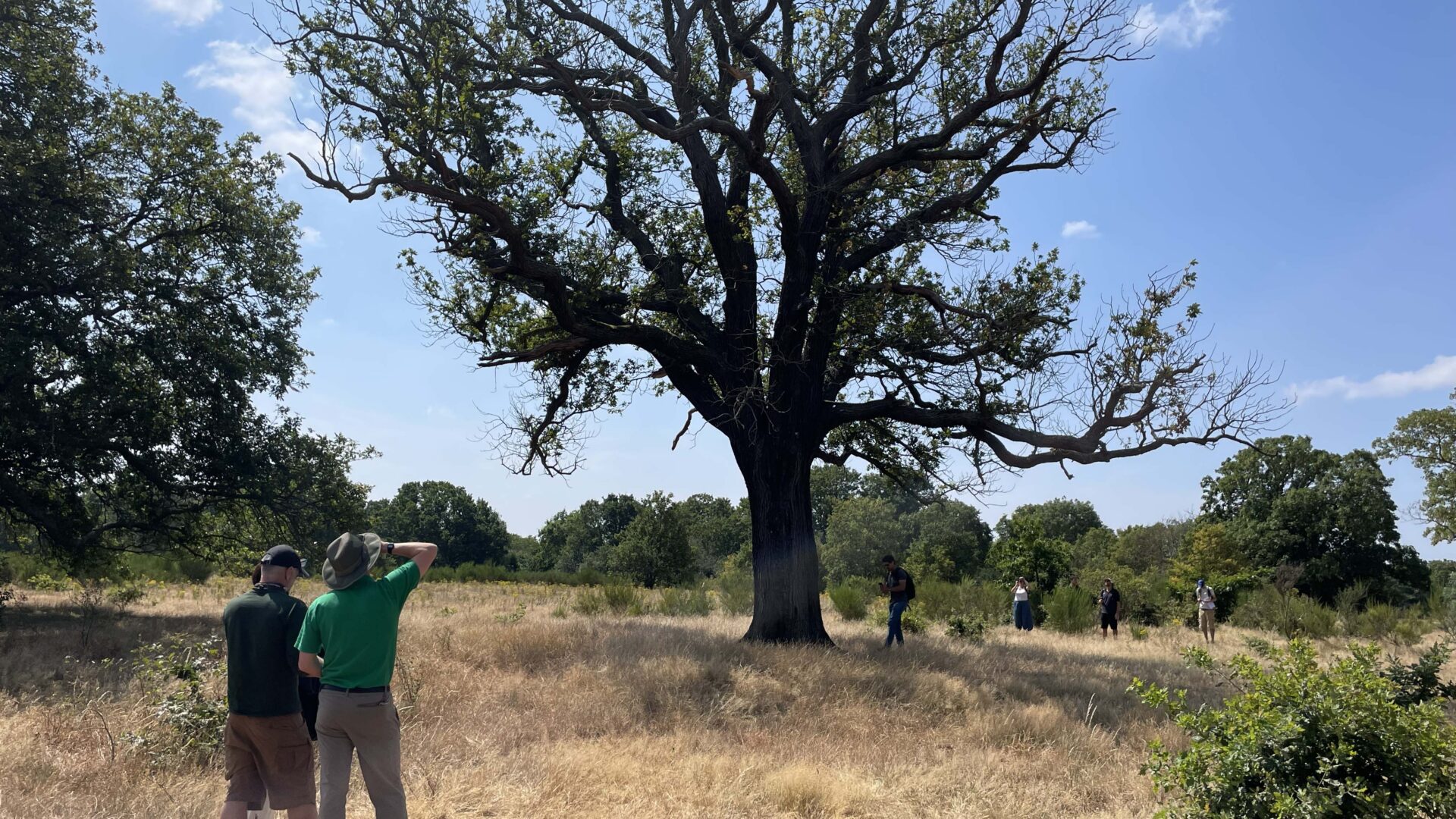
Absolutely, oak health assessments can be carried out until September, once the crown is fully flushed, so there’s still time to get out to conduct surveys on your site.
All the guidance needed to survey your oak trees using our web-app can be found at Forest Lab, an online platform set up by our project partner, Sylva Foundation.
To access Forest Lab, you’ll need to set up a free MyForest account. Once registered, navigate to ‘Lab’ > ‘All projects’ > ‘Oak Health Project’.
By signing up to the oak health project you’ll became part of a community of people looking after oak trees including scientists at Forest Research. You’ll be able to share your experiences or seek advice about oak health. You’ll also have access to further training, guidance and support as well as future project updates.
Our oak health web-app simplifies the data collection process and enables users to gather consistent data each year, enabling us to see how tree health changes with time.
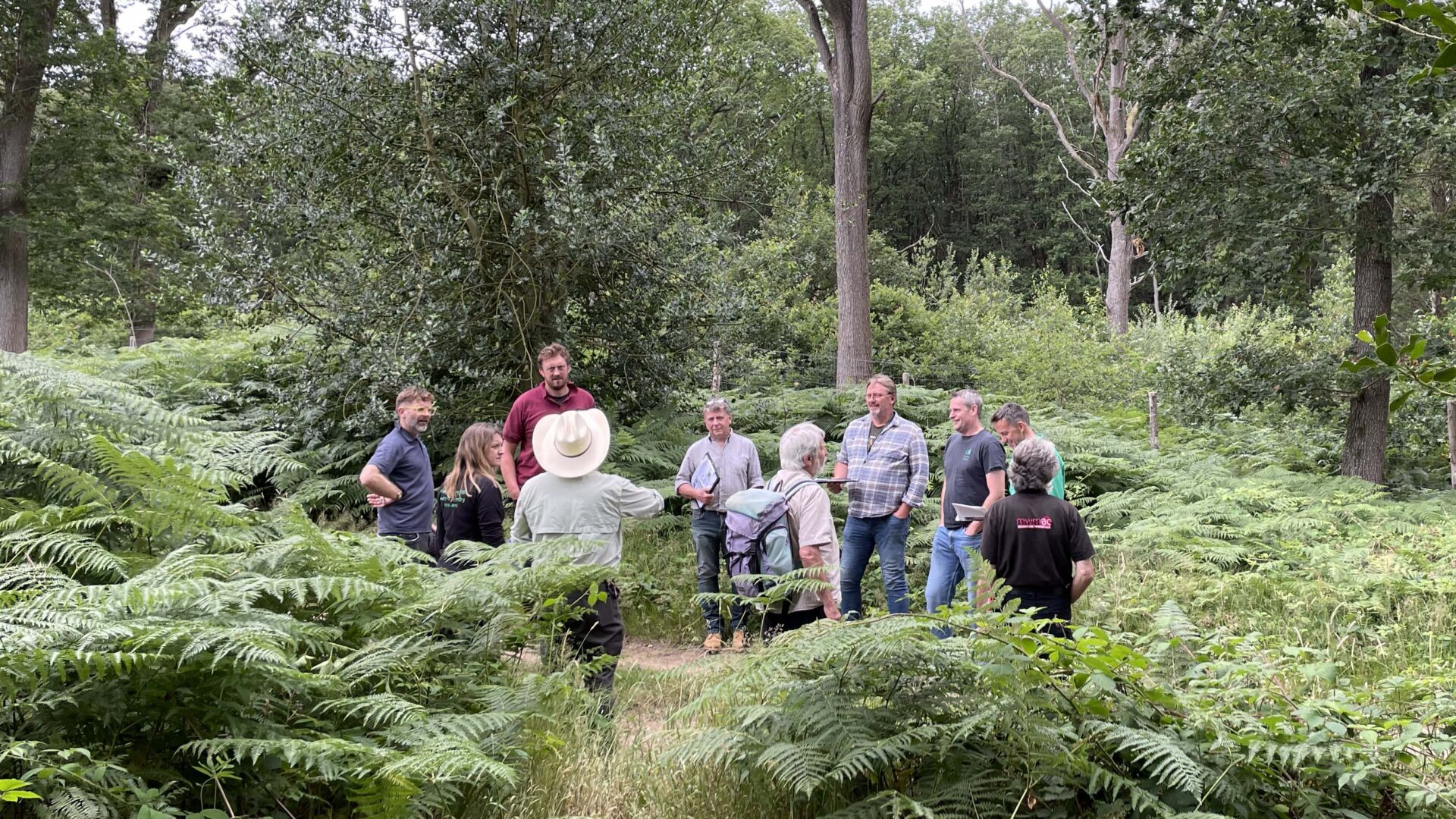
The data collected will help us to better understand the changing health of native oak trees across Britain. We want to translate this into evidence to support management decisions, and through our collaboration with Sylva’s ForestLab, we hope to make use of MyForest woodland mapping and inventory data to add extra value to the data on a site-level.
We’ll be hosting another webinar on 3 December 2026 to present the results of the research and discuss oak management. But for now, we’d like to thank all the site managers and workers who helped with the workshops and everybody who attended. We look forward to continuing our work on this project across Britain in the years ahead.
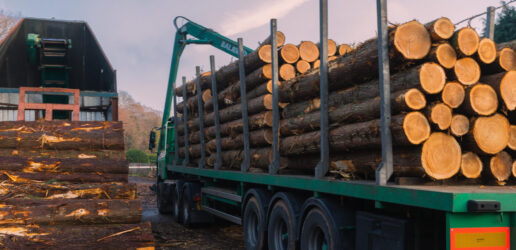
Forest Research has released the latest Accredited Official Statistics on woodland and forestry in the UK.
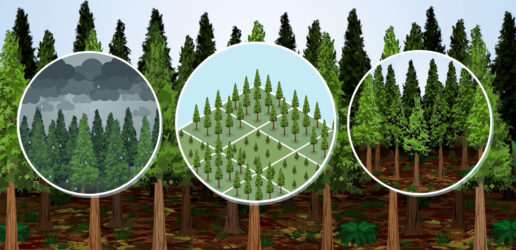
As Forest Research and Forestry England release five animations spotlighting productive tree species, Dr Tom Ovenden, silviculture and species scientist at Forest Research, discusses resilience, diversification and the future of forestry.
Forest Research, on behalf of the Forestry Commission, Scottish Forestry, and Welsh Government, has launched the Forestry Workforce Census. It aims to better understand what the forestry operations workforce in Great Britain looks like today.
Forest Research has released the latest Accredited Official Statistics on woodland and forestry in the UK.
As Forest Research and Forestry England release five animations spotlighting productive tree species, Dr Tom Ovenden, silviculture and species scientist at Forest Research, discusses resilience, diversification and the future of forestry.
Forest Research, on behalf of the Forestry Commission, Scottish Forestry, and Welsh Government, has launched the Forestry Workforce Census. It aims to better understand what the forestry operations workforce in Great Britain looks like today.