Summary
This project builds on the successful delivery of a draft WWC between 2023-25: ‘Designing and developing a Woodland Water Code’. The main objective was to test, refine and update the draft WWC to create a finalised Version 1 to underpin an operational code. This included working with end users and an independent validator to assess the metrics and methodologies across a range of UK pilot sites.
Through end‑user consultation and alignment with UK nature‑market best practice, the WWC aims to provide a credible mechanism to mobilise private finance and inform future policy on green finance and water regulation.
This project was funded to run from April 2025 to March 2026 by the UK Government through Defra’s Forestry Research and Development (FRD) programme.
Research Objectives
This project’s objectives were to:
- test, refine and update the draft WWC to create a finalised Version 1 of the WWC
- update the WWC water benefit methods and calculators based on feedback collected during the ‘Designing and developing a Woodland Water Code’ project
- update the priority maps to improve targeting
- trial the application of the WWC with end users across a wide range of UK pilot sites
- appoint an independent validator to assess the metrics and methods
- explore the future development, data needs and positioning of the WWC to best support UK water and green finance policies
- raise awareness of the WWC among potential end users
Findings and Recommendations
The project successfully delivered an extensively piloted and validated final Version 1 (V1) of the WWC. This includes: a revised and improved set of water quality, flood alleviation and water shading calculators; a refined and updated set of target maps; and an improved, restructured and clearer set of Methods & Rules. Its development was overseen and steered by Technical and Steering Groups with wide representation from government bodies, water regulators and NGOs, as well as independent experts.
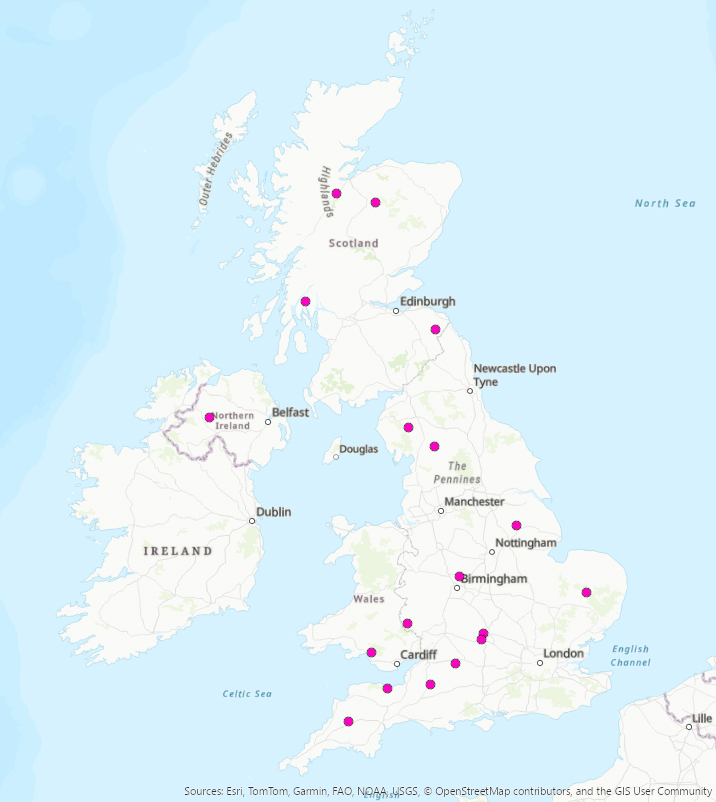
Piloting involved 18 sites across all four UK countries with a wide range of end users, stress testing the methodologies and useability of the calculators and target maps. Importantly, this included five Woodland Carbon Code (WCC) sites to check alignment and potential for integration. Feedback and lessons learned were captured in an End User Consultation report and appropriate adjustments made. Associated guidance was expanded and clarified. Online interactive maps were created for identifying priority areas, removing the need to download GIS files to assess eligibility for specific water benefits.
The Soil Association assessed the application of the WWC at two of the WCC pilot sites. A phased approach was adopted, with lessons learned from the first validation exercise informing the second. Separate reports were provided on each project, detailing changes to the WWC documentation to strengthen and inform compliance. Amendments were also made to ensure alignment with the BSI 704 Nutrient Standard and ISO 17029, as well as checking for consistency with the WCC. Risk and modelling uncertainty buffers were incorporated for each water benefit calculator following agreement with an expert group.
Auditability testing confirmed that the final V1 of the WWC is structured in a way that enables validation bodies to undertake efficient and consistent assessments. Updates informed by end‑user testing demonstrate that the tools operate reliably, the guidance is clear, and barriers to participation are minimised while maintaining the robustness of the Code.
The WWC water quality calculator was benchmarked against water quality monitoring data from Defra’s Natural Capital Ecosystems Programme and the results written up for a draft journal paper. A Briefing Paper was also delivered considering the future development, data needs and positioning of the WWC to best support UK water and green finance policies. This identified three main options for operating the WWC: (1) integration of the WWC within the existing WCC; (2) a standalone WWC; and (3) look-up tables of woodland water benefits with no overarching code structure.
Latest Update
A proposal has been submitted to Defra’s Forestry Research & Development programme to secure an additional three years of funding to facilitate operationalisation of the WWC.
The proposed work includes publishing the WWC calculators and documentation, keeping the WWC methods and priority maps up to date, and strengthening the evidence base on woodland water benefits and disbenefits, including by pursing the establishment of one or more ‘catchment laboratories’ to quantify the water impacts of large-scale woodland creation.
The latter resource would be used to test and verify the WWC water benefit calculators, hopefully building investor confidence in the WWC and obviating the need for costly monitoring of the water benefits provided by individual woodland creation schemes.
Frequently asked questions (FAQs)
Read the full list of FAQs relating to this project on the Designing and developing a Woodland Water Code (WWC) page.