
Summary
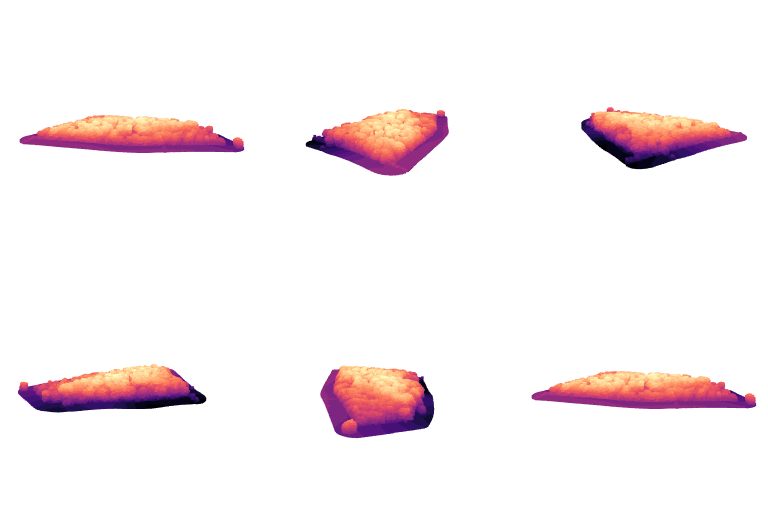
This research aims to harness advances in remote sensing (the national LiDAR programme) to produce national-scale maps of woodland structural diversity and relate these metrics to biodiversity potential and carbon storage in English woodlands.
The project aims to
- Evaluate three remote-sensing approaches
- Track structural change through time
- Assess how management actions alter structural complexity
- Co-develop user-friendly tools for policymakers and private landowners to guide sustainable woodland management
As part of this, we will engage with private woodland owners through a Forest Lab project called ‘Living Layers’.
This project has been funded by the UK Government through Defra’s Forestry Research and Development (FRD) programme.
Research Objectives
- Can remotely-sensed structural metrics be used to map biodiversity potential in English woodlands through time?
- Can management outcomes be tracked with remotely sensed data?
- How can structural metrics be usefully packaged to meet the expectations/on-the-ground knowledge of private landowners and guide management effort?
- What are the carbon risks of moving woodland into management and are there trade-offs with biodiversity?
Latest Update
The Forest Lab project, under the name ‘Living Layers’, will be launching shortly – if you would like to know more or participate in this project, please see the Forest Lab webpage.
Funding & Partners
-
 DEFRA
DEFRA
