We use some essential cookies to make this website work. We’d like to set additional cookies to understand how you use forestresearch.gov.uk, remember your settings and improve our services. We also use cookies set by other sites to help us deliver content from their services.
New guide to help local authorities conduct a people survey on the social value of their treescapes
A new step-by-step guide to help local authorities, charities and civic societies carry out a people survey to understand social and cultural values related to trees in their area, is now available.
Date
3 December 2025
Reading Time
4 minutes
Last Updated
15 December 2025
A new step-by-step guide to help local authorities, charities and civic societies carry out a people survey to understand social and cultural values related to trees in their area, is now available.
Liz O’Brien, Principal Social Scientist at Forest Research said, “Understanding a local treescape, the ways people engage with it, and how they value it is critical when developing strategies and planning resource management. The people survey can run alongside an i-Tree Eco study to provide a more holistic understanding of a local treescape or run as a standalone project to understand communities’ perceptions of their local treescape.”
i-Tree Eco assesses some of the benefits trees provide. It measures urban forest structure, the environmental effects of the treescape, and benefits to communities, including air pollution reduction and avoided runoff. Although the i-Tree Eco methodology estimates the benefits a treescape can provide, it does not capture the range of ways that people value trees, how they engage with them, or their views about how the treescape is or should be managed.
Forest Research, in association with The Tree Council, University of York and FERA, and funded through Defra’s Future Proofing Plant Health fund, have therefore developed a new guide to a ‘people survey’ to complement the core i-Tree Eco approach.
Gathering an in-depth understanding about social and cultural dimensions can help local authorities, charities and civic societies to:
Be holistic: by combining environmental data on local treescapes with the views of local communities.
Focus on areas with a need for trees: canopy cover tends to be related to levels of deprivation, with the most deprived areas having the lowest cover.
Take a proactive approach: social and cultural values emerge strongly at catalyst moments when trees are threatened by management or development. This is often at too late a stage for the tree(s) to be saved. Understanding values can potentially help to avoid these types of situations.
Be strategic: this evidence is important for strategic planning to ensure that benefits to people such as health, sense of place, seeing wildlife and nature connection, are distributed equitably.
Deliver multiple policy objectives: the information can also be linked to other broad policy areas, such as active travel, public health, the green economy, and community cohesion.
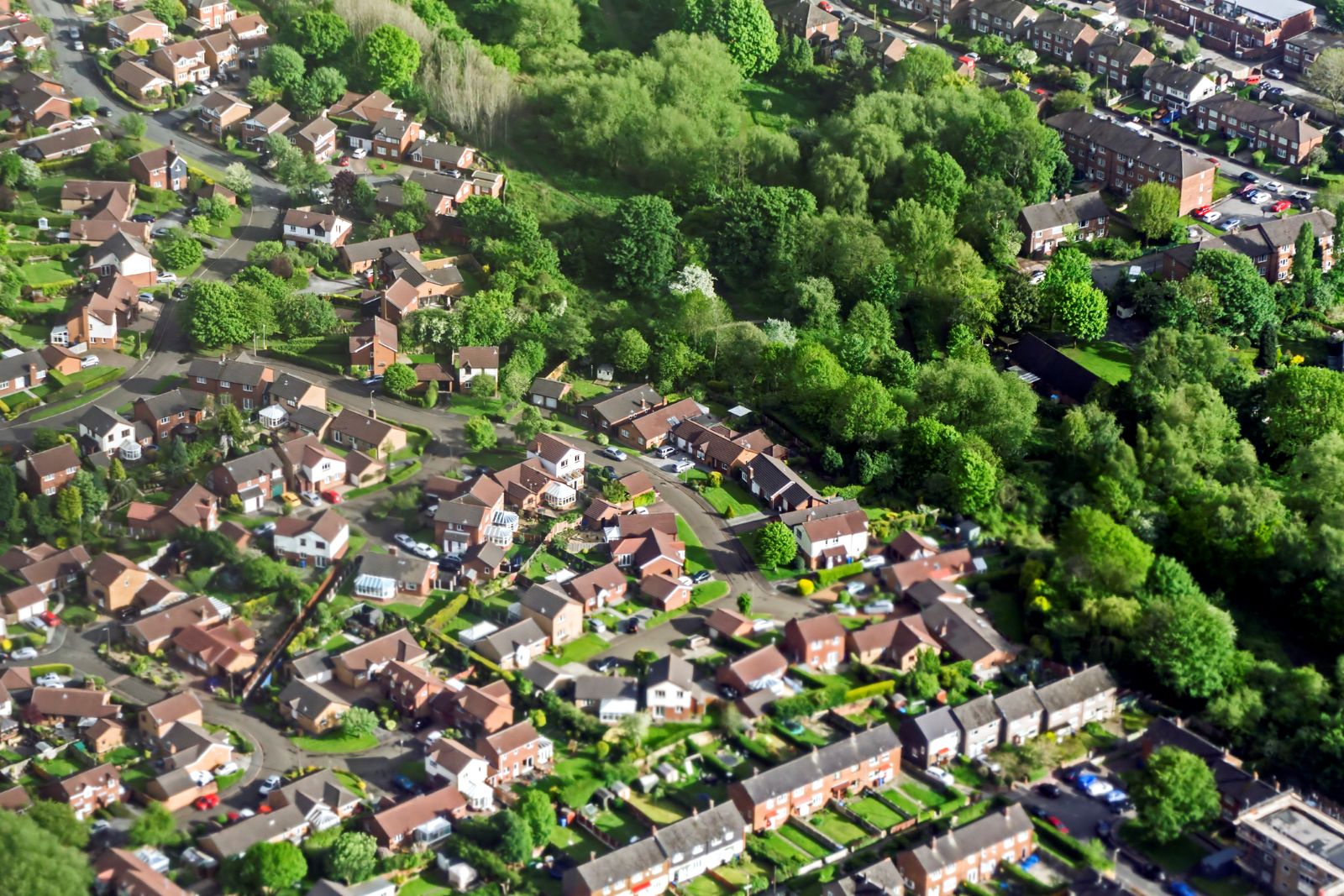
An aerial view of trees in an urban setting | Credit: iStock.com/George Standen
Charlotte Benham, The Tree Council’s Science and Action Research Manager, said: “The people survey is a really useful tool for land managers to better understand their treescape, and the way residents and users interact with and value trees.
“We would encourage local authorities and others to consider using this survey approach, along with the information in the Social and Cultural Values’ module of the Trees and Woodlands Strategy Toolkit, to ensure the views of their communities are represented in decision-making.”
Two local authorities, Wirral Borough Council and Portsmouth City Council, helped trial and shape the guidance:
Senior Tree and Woodland Manager, Wirral Borough Council
“By incorporating the social and cultural values of trees into our decision-making and policies, we adopt a more holistic approach to tree management. This ensures that our green spaces not only meet community needs but also foster public engagement, promote wellbeing, and play a vital role in advancing sustainable development.”
Green and Healthy City Project Officer, Portsmouth City Council
“Integrating the Social and Cultural Values survey into the work we are doing for our resilient treescape has been a valuable addition. We are using it to inform the creation of our Urban Forest Master Plan, that sets out our long-term vision, with measurable actions, to continue developing our resilient treescape. It is allowing us to make the actions and targets within the plan tailored and specific to Portsmouth, helping us to achieve the best for our treescape and the benefits it brings to our residents.”
We provide guidance on designing and running an i-Tree Eco project. Alongside this we also provide guidance on how to undertake a survey of people in a local community to better understand their perspectives and attitudes towards their local trees. Combined these provide a more holistic view of the treescape to aid decision-making.
A new sweet chestnut blight outbreak has been confirmed in Devon, read how Mick Biddle’s Forest Research trial is advancing potential treatments and what this means for the newly introduced demarcated area.
Forest Research, working with The Royal Horticultural Society (RHS) and Coventry University, is calling on woodland owners and the public to help check on the health of sweet chestnuts (Castanea sativa) this spring and summer.
A new sweet chestnut blight outbreak has been confirmed in Devon, read how Mick Biddle’s Forest Research trial is advancing potential treatments and what this means for the newly introduced demarcated area.
Forest Research, working with The Royal Horticultural Society (RHS) and Coventry University, is calling on woodland owners and the public to help check on the health of sweet chestnuts (Castanea sativa) this spring and summer.
Modal
Manage consent
Cookies on forestresearch.gov.uk
Cookies are files saved on your phone, tablet or computer when you visit a website.
We use cookies to store information about how you use the forestresearch.gov.uk website, such as the pages you visit.
We use 3 types of cookie. You can choose which cookies you're happy for us to use.
Strictly necessary cookies
Always On
These essential cookies do things like remember your progress through a form.
They always need to be on.
Cookies that measure website use
We use Google Analytics to measure how you use the website so we can improve it based on user needs.
Google Analytics sets cookies that store anonymised information about:
how you got to the site
the pages you visit on forestresearch.gov.uk and how long you spend on each page
what you click on while you're visiting the site
Cookies that help with our communications and marketing
Some forestresearch.gov.uk pages may contain content from other sites, like YouTube or Flickr, which may set their own cookies. These sites are sometimes called ‘third party’ services. This tells us how many people are seeing the content and whether it’s useful.