Launch of the Large-scale Ecosystem Recovery Network (LERN)
On 17 February 2026, the Knowledge Exchange Network for the Large-scale Ecosystem Recovery Network (LERN) was launched at Harold’s Park Wildland in Essex.

On 17 February 2026, the Knowledge Exchange Network for the Large-scale Ecosystem Recovery Network (LERN) was launched at Harold’s Park Wildland in Essex.
LERN is a national living-lab research network designed to test how large-scale woodland creation can best support nature recovery. By combining long-term experiments with real-world land management, it aims to generate practical evidence to guide policy and on-the-ground action.
The event brought together a diverse community united by a shared ambition to transform woodland creation and nature recovery across the UK.
The day blended science, practice, and collaboration and was hosted with project-partner and nature restoration company, Nattergal, alongside representatives from Forest Research, Forestry Commission, Defra, Natural England, The Woodland Trust, and City of London Corporation.
Participants explored the vision behind LERN, heard the scientific case for large-scale ecosystem recovery and visited living lab experiments in the field.
“The event sparked strong enthusiasm and engagement, with participants actively contributing ideas to help co-design the network’s future research directions,” said Dr Tom Jameson, LERN project lead at Forest Research.
“Most importantly, it marked the successful start of a growing community of practitioners, policymakers, land managers, and researchers working together to shape the future of woodland creation and nature recovery.”
Harold’s Park Wildland will be one of four LERN experimental sites across the country. These sites will test different approaches to creating new woodland, including tree planting, natural colonisation, and hybrid methods, for analysis over 30 years.
“At Harold’s Park Wildland, this partnership will help generate the robust, long-term evidence needed to understand which techniques best support biodiversity, habitat structure, and wider ecosystem processes,” said Jill Wotherspoon, Head of Marketing at Nattergal.
The Large-scale Ecosystem Recovery Network is funded by the UK Government through Defra’s Forestry Research and Development (FRD) programme.
For more information, visit Developing the Large-scale Ecosystem Recovery Network (LERN) – Forest Research
Forest Research, on behalf of the Forestry Commission, Scottish Forestry, and Welsh Government, has launched the Forestry Workforce Census. It aims to better understand what the forestry operations workforce in Great Britain looks like today.

Dr Matt Wilkinson, NCEA Programme Manager at Forest Research talks about how we are trailblazing new technology and implementing innovations as part of the most significant ecosystem assessment ever conducted in the UK.
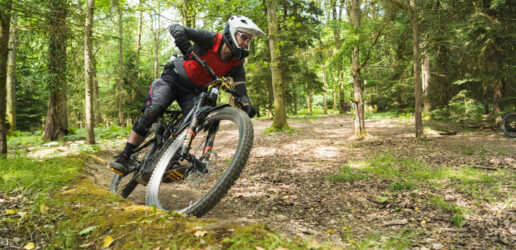
Forest Research, in partnership with the University of Exeter’s Centre for Net Positive Health and Climate Solutions, is leading a new study investigating outdoor nature-based recreation, health and climate change.
Forest Research, on behalf of the Forestry Commission, Scottish Forestry, and Welsh Government, has launched the Forestry Workforce Census. It aims to better understand what the forestry operations workforce in Great Britain looks like today.
Dr Matt Wilkinson, NCEA Programme Manager at Forest Research talks about how we are trailblazing new technology and implementing innovations as part of the most significant ecosystem assessment ever conducted in the UK.
Forest Research, in partnership with the University of Exeter’s Centre for Net Positive Health and Climate Solutions, is leading a new study investigating outdoor nature-based recreation, health and climate change.