
Date
30 June 2022
Reading Time
2 minutes
Last Updated
5 January 2026
Categories

Editorial note: this News item has been amended to reflect the merger, in 2025, of the Forestry and Climate Change Partnership with the Defra Plant Health Policy Group. Defra’s Resilient Treescapes Advisory Group now provides a single forum for the monitoring, collaboration, discussion and delivery of non-government stakeholder-led actions to contribute to an overarching strategic vision to build the resilience of England’s trees, woods and forests to threats from pests, diseases and climate change.
Forestry, conservation and government organisations, including Forest Research have come together to reaffirm their commitment to work together to promote the importance of adapting trees, woods and forests to climate change.
The Forestry and Climate Change Partnership (FCCP) published the Forestry and Climate Change Adaptation Accord which set out a collective vision that Britain’s trees woods and forests are resilient to climate change and therefore able to meet their full potential to provide environmental, social and economic benefits.
Climate change and the associated environmental impacts including drought, flooding, fire, pests and pathogens present serious threats to the health of our trees, woods and forests. There is an urgent need to improve the resilience of both newly created and existing woodland to climate change. This requires significant change to widely accepted and practised systems of woodland and land management. Greater awareness is needed for the importance of adopting a broader range of species, diversity of genetics, age and stand structure, and improved connectivity in the landscape.
The FCCP was working to communicate the case for adaptation, to provide training and education, inform research priorities and contribute to policy development.
Dr Gabriel Hemery, Chair of the FCCP said:
The recently renamed Forestry and Climate Change Partnership represents an unusual level of collaboration and a powerful agreement to work together to make change happen, fast. Our trees, woods and forests are faced with unprecedented rates of climate change and increased environmental threats such as pests and pathogens. Only by working together, and with the support of individual woodland owners and professionals, will we be able to rise to meet these challenges, with an ambition to bounce back better.
The Accord was previously available on the FCCP website.
Recent News
View All news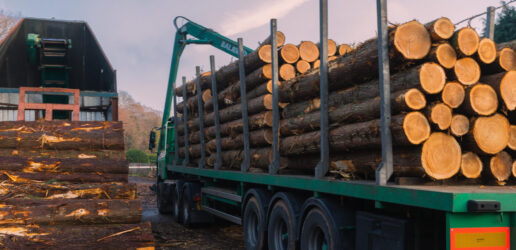
Forestry Statistics 2026 now available
Forest Research has released the latest Accredited Official Statistics on woodland and forestry in the UK.
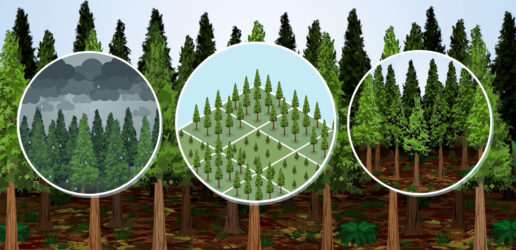
Spotlighting five alternative productive tree species
As Forest Research and Forestry England release five animations spotlighting productive tree species, Dr Tom Ovenden, silviculture and species scientist at Forest Research, discusses resilience, diversification and the future of forestry.
Be counted – take part in the Forestry Workforce Census
Forest Research, on behalf of the Forestry Commission, Scottish Forestry, and Welsh Government, has launched the Forestry Workforce Census. It aims to better understand what the forestry operations workforce in Great Britain looks like today.
Forestry Statistics 2026 now available
Forest Research has released the latest Accredited Official Statistics on woodland and forestry in the UK.
Spotlighting five alternative productive tree species
As Forest Research and Forestry England release five animations spotlighting productive tree species, Dr Tom Ovenden, silviculture and species scientist at Forest Research, discusses resilience, diversification and the future of forestry.
Be counted – take part in the Forestry Workforce Census
Forest Research, on behalf of the Forestry Commission, Scottish Forestry, and Welsh Government, has launched the Forestry Workforce Census. It aims to better understand what the forestry operations workforce in Great Britain looks like today.