Differences persist between ex-arable and ancient woodland even after 25 years, study suggests
A rare long-term study of woodland creation found that ex-arable woodland was distinct from adjacent ancient woodland 25-years after planting

Scientists studied how the plant communities and soil properties of farmland changed as it slowly developed into ex-arable planted woodland over a period of 25 years. They compared this to nearby ancient woodland.
The researchers found that the soil characteristics and both plant and fungal communities in ex-arable woodland remained distinct from those in ancient woodland 25-years after planting. Several properties – such as soil pH, available phosphorus and potassium, and overall plant diversity – showed signs of gradual convergence but an absence of specialist woodland species persisted.
The results were published in the journal Forest Ecology and Management.
The researchers found that the ex-arable woodland plots had higher pH, more available phosphorus, less total nitrogen, and less total carbon than ancient woodland plots.

Ectomycorrhizal fungal communities – symbiotic fungi that form mutually beneficial relationships with the roots – were also significantly different in ex-arable and ancient woodlands, with higher fungal richness positively associated with soil pH and tree species richness.
Changes in plant diversity were mostly associated with the carbon to nitrogen ratio. In the ancient woodland the presence of specialist ancient woodland plant species was associated with higher light availability and proximity to ancient woodland edge.
“This is a valuable, rare long-term repeat-observation study of arable land afforestation considering the combined responses of plants, fungi, and soil properties,” said Dr Nadia Barsoum, Senior Forest Ecologist at Forest Research. “With large-scale tree planting in progress across Britain, we still have much to understand about conditions required for woodland communities to establish”.
The research was carried out at Hucking Estate in Kent where a semi-natural ancient woodland occurs alongside former linseed cropland. Vegetation surveys were conducted at irregular intervals between 2001 and 2024. Soil sampling for chemical analysis was completed in 2002, 2012, and 2024.
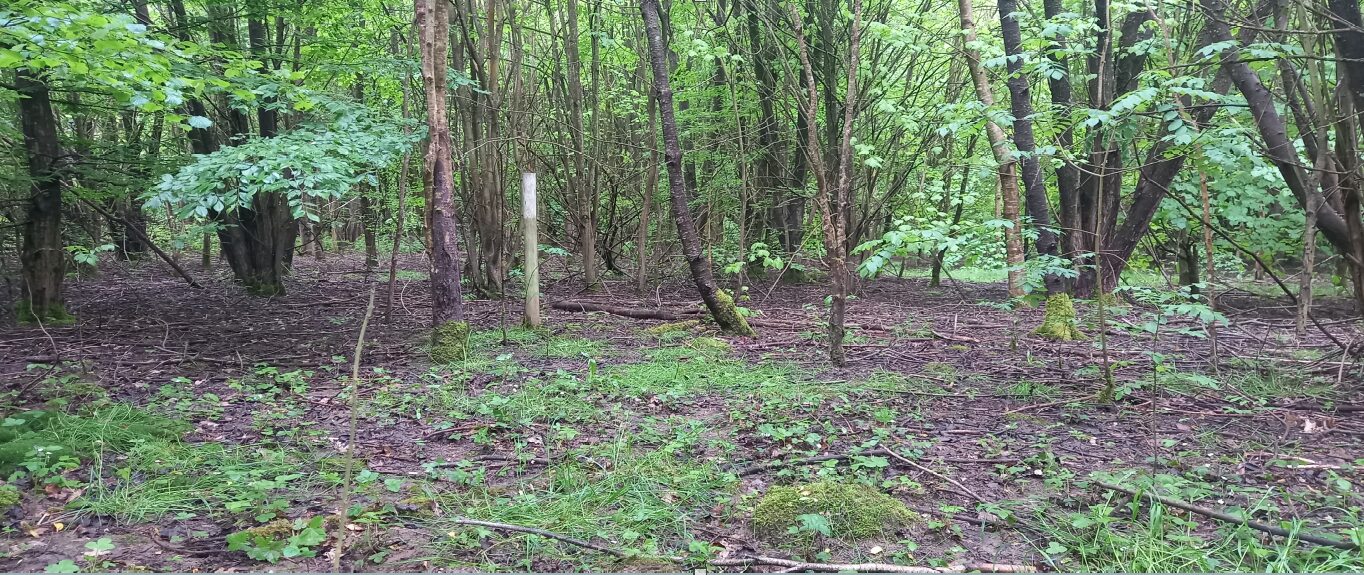
“This study builds on an exceptional experimental design established by the Woodland Trust, and we were delighted to be part of this distinctive long-term observational research,” said Julija Fediajevaite, an ecology PhD student at the University of Reading.
“The insights gained can help improve projections of woodland development, particularly where an accelerated transition toward ancient woodland conditions is a management objective.”
“We know that ancient woodlands are irreplaceable habitats, which take many centuries to develop their ecological complexity,” said John Crawford, Senior Conservation Evidence Officer at the Woodland Trust.
“But it is also vital that we understand the ecological trajectory of newly created woodlands, especially on ex-arable sites, where trees have been absent for many decades or centuries.
“Increasing our understanding of these processes may help us better manage and design woodland creation projects, to help nature thrive at all stages of woodland establishment.”
The research was funded by Defra’s Nature for Climate Fund. To find out more about the research please visit: Fungi for Forest Restoration (Fungi4Restor) – Forest Research
Growing a community equipped with the skills to assess oak health.
Join for an update on the Forest Lab oak health project, showing how monitoring oak tree condition, pests, and diseases can help woodland managers make informed decisions to protect and manage oak woodlands across the UK.
Forest Research entomology scientist, Molly Davidson, discusses her work as a diagnostician for TreeAlert, the hidden world of moths, and a new survey investigating what motivates people to take part in citizen science.
Growing a community equipped with the skills to assess oak health.
Join for an update on the Forest Lab oak health project, showing how monitoring oak tree condition, pests, and diseases can help woodland managers make informed decisions to protect and manage oak woodlands across the UK.
Forest Research entomology scientist, Molly Davidson, discusses her work as a diagnostician for TreeAlert, the hidden world of moths, and a new survey investigating what motivates people to take part in citizen science.