
Quick Facts
Distribution
Bleeding canker of horse chestnut is found in all parts of Great Britain.
Identification and symptoms
- Trees of all ages are affected and can die.
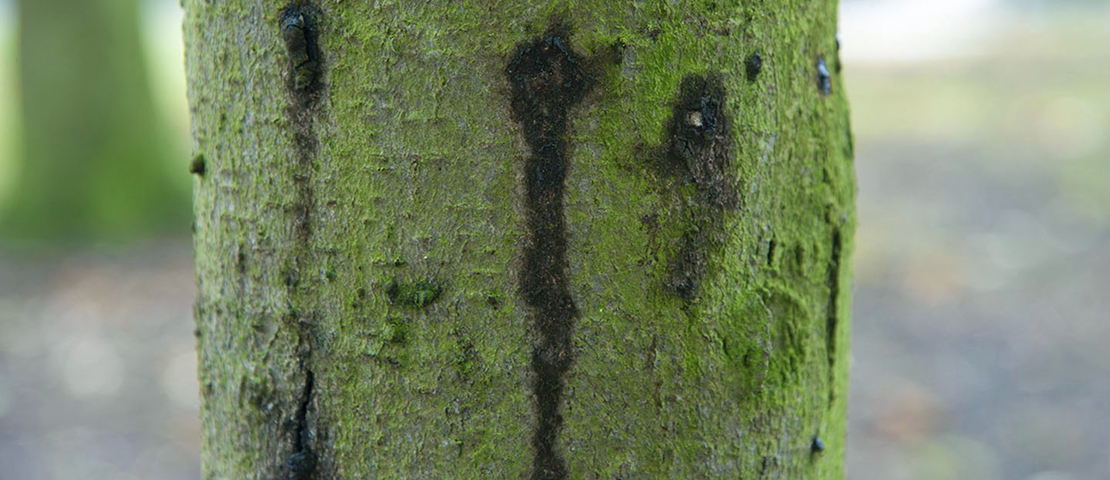
- Cankers, or lesions, and bark cracks appear on the stem (trunk) and branches ( above and below).
- Bleeding of dark fluid occurs from the cankers.
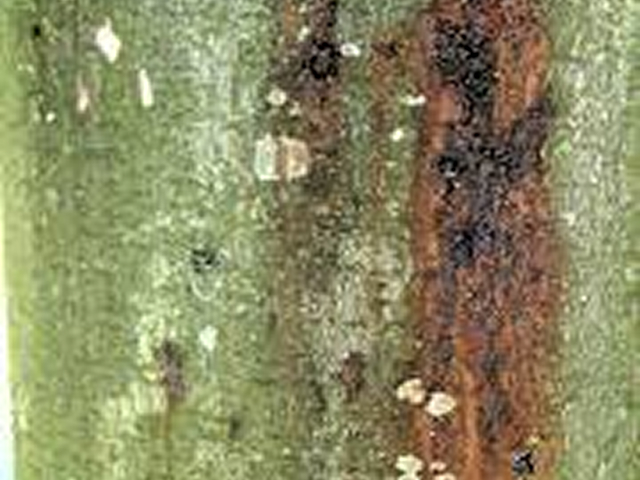
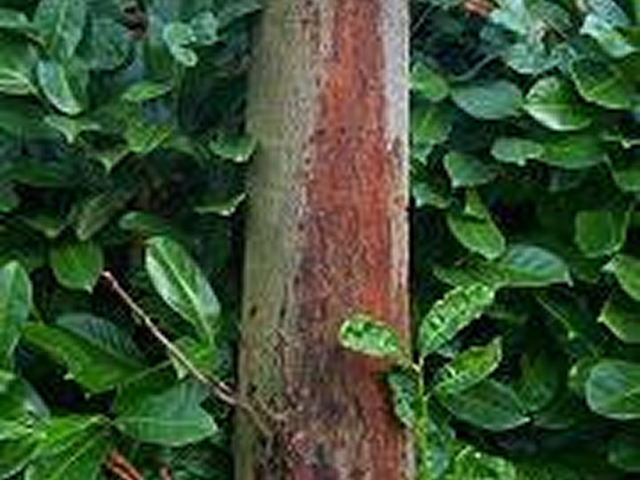
Find out more about the symptoms of bleeding canker.
Similar symptoms can also be seen on other tree species, but are caused by different pathogens. For example, some root diseases can present with similar symptoms, such as bleeding on the lower trunk and root flares.
Report a sighting
There is no need to report suspected cases of bleeding canker of horse chestnut to us. Managers of affected trees should follow the guidance given below.
Management and control
Confirming the cause of bleeding canker on horse chestnut is critical to any recommendations about effective management. Surveys are also recommended to assess the number and condition of affected trees.
There is no chemical treatment currently registered or approved for use in the UK to cure or arrest the development of bleeding canker caused by P. syringae pv. aesculi. The following points should be borne in mind by managers of affected horse chestnut trees.
- If cankering lesions become extensive the entire trunk can be girdled and the tree will inevitably die, and might have to be removed.
- For public and property safety purposes, consider removing major branches that are infected and show dieback. Recently dead branches of horse chestnut can be susceptible to sudden fracture and drop as the wood dries out.
- Trees with bleeding cankers on the trunk can still have healthy-looking crowns, and might not pose an immediate safety risk.
- Some trees may survive for many years because disease progression can be very slow. They might even show signs of recovery, thanks to vigorous callus development at the margins of cankers when bark has been killed by the disease.
- Removing affected trees unless they pose a safety hazard is unnecessary. It will not prevent disease spread on a site where some trees already show symptoms. Also, significant numbers of trees do recover.
- Some trees are apparently resistant and never go on to develop symptoms despite exposure to the causative pathogens.
Find out more about specific recommendations on how to manage bleeding canker.
More-general biosecurity advice on preventing and minimising the incidence, spread and impact of tree diseases is available on the UK Government website.
Our research
Forest Research scientists identified the bacterium, Pseudomonas syringae pv. aesculi, which has been responsible for the increase in incidence of bleeding canker disease on horse chestnut. Researchers have used molecular technology to characterise the biology of this pathogen.
They have also been conducting a long-term study to determine whether there are any interactions between P. syringae pv. aesculi and the insect pest horse chestnut leaf miner, including whether one influences the extent of the other, and how they affect the health of affected trees. A paper reporting the results of the first 10 years of the study was published in the journal Agricultural & Forest Entomology.
Scientists have also been exploring the impact that Phytophthora species have on the health of trees. Frequent symptoms associated with Phytophthora pathogens include bleeding canker on trunks and branches.
Origins and background
Bleeding canker on horse chestnut trees was first reported in Britain in the 1970s, although it had been recognised in the USA in the 1930s.
Until 2000, most cases in Great Britain were thought to be caused by two fungus-like pathogens: Phytophthora cactorum and Phytophthora citricola (now called P. plurivora). Incidence was low and did not give cause for concern.
However, the incidence of the disease in Great Britain increased significantly during the early 21st century. In 2000 only four cases were reported, but this rose to more than 110 reports in 2006.
A systematic survey in 2007 across England, Scotland and Wales revealed that about half of the horse chestnut trees (49 per cent) surveyed showed symptoms which indicated or might have indicated bleeding canker: regional averages ranged from 36 per cent in Wales to 76 per cent in South-East England. See ‘Related resources’ below for the survey report.
Our research into the causes of the increased incidence showed that the cause is now most often due to an introduced, previously unknown bacterial pathogen, Pseudomonas syringae pv. aesculi, which originates in the Himalayas. It had only previously been known to infect the leaves of Indian horse chestnut (Aesculus indica), a native of the north-west Himalayan region of the Indian sub-continent.
Contacts

Joan Webber
BSc, PhD
Principal Pathologist
Tree health