
Summary
Oak processionary moth (OPM) caterpillars eat oak leaves, weakening oak trees making them more susceptible to other stresses.
In addition, the caterpillars are covered in urticating hairs which can cause irritation to the skin, eyes, and throat of humans and animals. The first OPM outbreak in England occurred in 2005, and the species is subject to a government-led programme of survey and control.
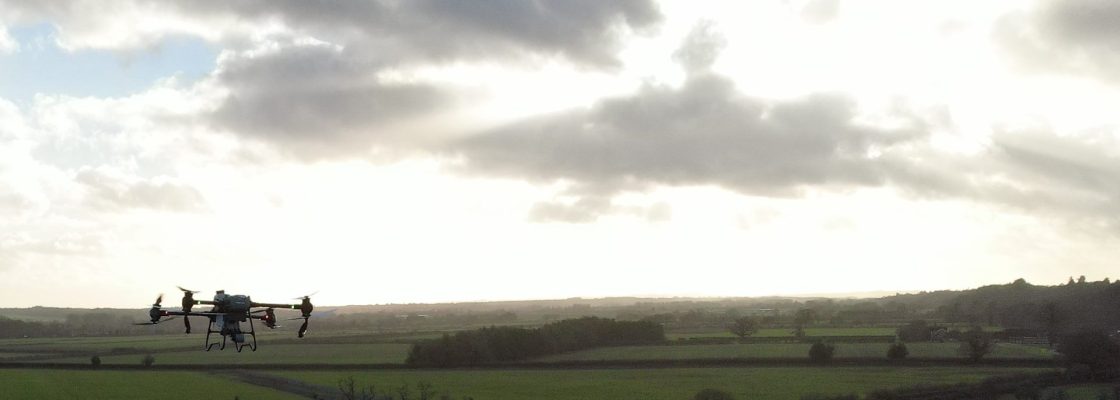
This project builds on previous work that suggested that drones may have valuable potential for the control of tree pests, but protocol optimisation is needed. The project aims to address the operational challenges highlighted by the initial experiment, focusing on decreasing spray volume and flight time while maximising coverage.
The project will compare the efficacy of treating OPM by spraying with a biopesticide administered using either the new drone protocol or ground spraying. Drone spraying could be especially beneficial in pest outbreak scenarios where limitations of ground spraying on tall trees (over 20 m) or those on inaccessible terrain could prevent successful eradication. Future uses of the technology could include other OPM research e.g. as a delivery system for pheromones for mating disruption, or as part of control programmes for other quarantine pests.
Research Objectives
This project aims to:
- produce an optimised protocol for drone spraying of large trees
- assess the spray coverage of optimised drone application in comparison to ground spraying
- assess the efficacy of an optimised drone application of a biopesticide in controlling OPM caterpillars
Latest Update
Two drone systems have been purchased and permission to fly from the Civil Aviation Authority (CAA) has been granted. The two systems functionalities and flying capabilities have been compared and data has been collected on their swath widths and uniformity, and the optimised spray protocol is being developed. Initial experiments will compare the spray coverage of the optimised drone application method to ground spraying.
Subsequently an efficacy trial will test the optimised drone application method in controlling OPM. Further work will then analyse the collected data and determine if using done spraying to control OPM is operationally feasible. If it is the protocol and results will be made available so that the method can be used for wider control of pests throughout GB.
Further Information
Funding & Partners
Forest Research leads this Future Proofing Plant Health Project which involves the Forestry Commission as a partner. The funding is provided by Defra.

