Report instances of oak shake this felling season
Scientists are calling on woodland owners to report instances of oak shake this felling season as part of research to identify the causes of the cracking.

Oak is a crucial broadleaved tree species for biodiversity and hardwood timber but it’s susceptible to shake – an internal cracking that can occur in the stem and is often only detected once the tree has been felled.
“We know shake has a big impact on oak growers as it can reduce the value of really high-quality stems down to just firewood,” said Dr Joe Beesley, Spatial Scientist at Forest Research.
“With the felling season soon approaching, we’re asking woodland managers to report any instances of shake that they observe when felling oak in their woodlands.”
Report oak shake via TreeAlert, and complete an abiotic report.
By reporting instances of shake, woodland owners will contribute to a new research project seeking to improve our understanding of the drivers of oak shake.
Report oak shake via TreeAlert
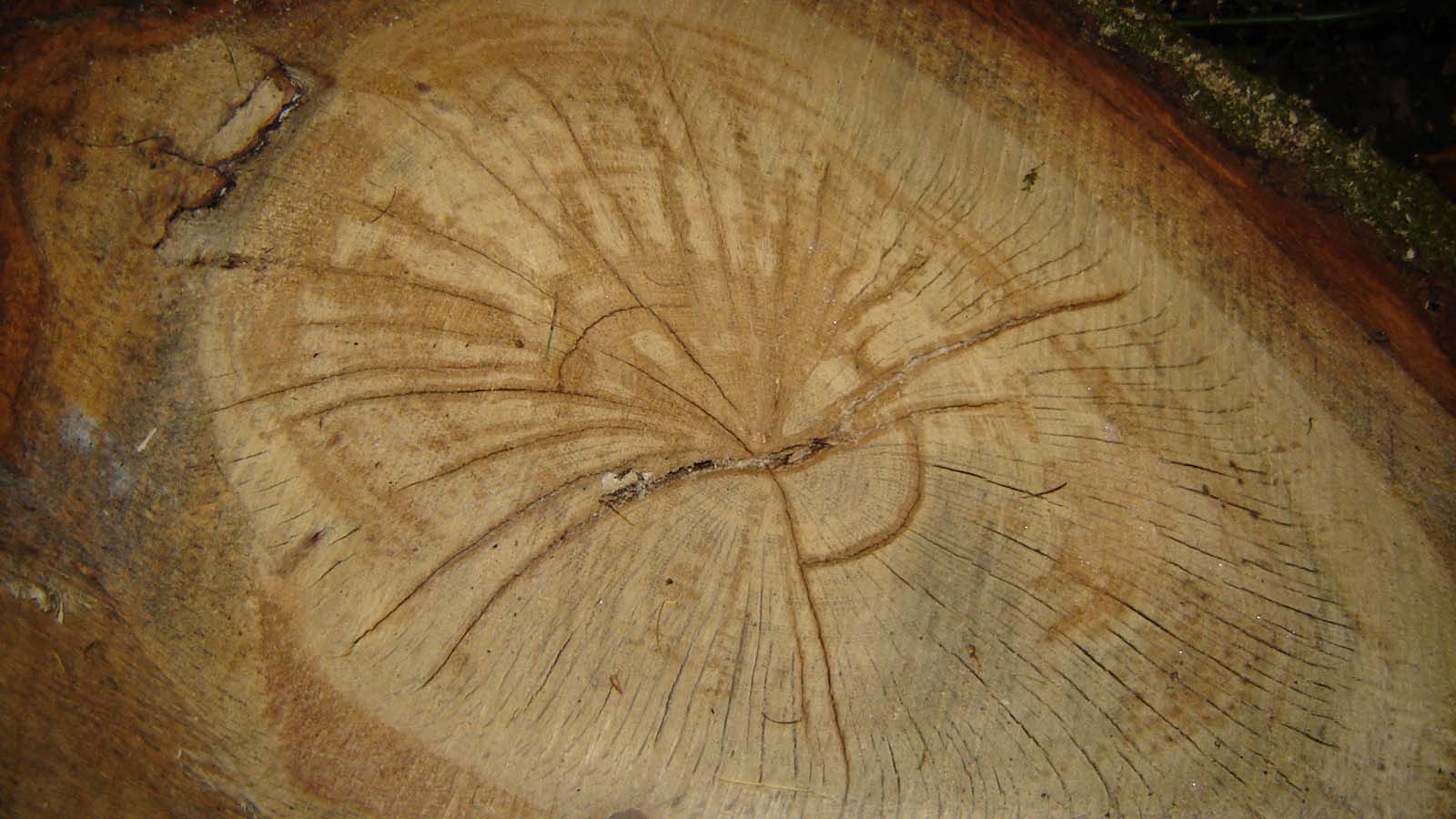
The Defra-funded Centre for Forest Protection project, led by Forest Research and Royal Botanic Gardens Kew aims to identify reliable external indicators of shake, such as stem form and the timing of budburst.
Working with experts at Edinburgh Napier University, scientists are developing a non-destructive testing methodology to detect shake within standing trees using sonic tomography – which assesses the internal condition of trees by analysing how sound waves travel through the wood – and resistance microdrilling – which measures wood resistance using a fine drill needle to detect internal defects.
Reporting oak shake is easy, simply visit the tree health reporting platform, TreeAlert, and complete an abiotic report.
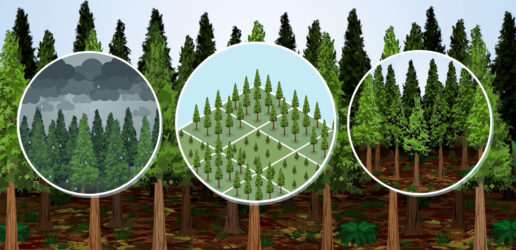
As Forest Research and Forestry England release five animations spotlighting productive tree species, Dr Tom Ovenden, silviculture and species scientist at Forest Research, discusses resilience, diversification and the future of forestry.
Forest Research, on behalf of the Forestry Commission, Scottish Forestry, and Welsh Government, has launched the Forestry Workforce Census. It aims to better understand what the forestry operations workforce in Great Britain looks like today.

Dr Matt Wilkinson, NCEA Programme Manager at Forest Research talks about how we are trailblazing new technology and implementing innovations as part of the most significant ecosystem assessment ever conducted in the UK.
As Forest Research and Forestry England release five animations spotlighting productive tree species, Dr Tom Ovenden, silviculture and species scientist at Forest Research, discusses resilience, diversification and the future of forestry.
Forest Research, on behalf of the Forestry Commission, Scottish Forestry, and Welsh Government, has launched the Forestry Workforce Census. It aims to better understand what the forestry operations workforce in Great Britain looks like today.
Dr Matt Wilkinson, NCEA Programme Manager at Forest Research talks about how we are trailblazing new technology and implementing innovations as part of the most significant ecosystem assessment ever conducted in the UK.