Putting woodland bats on the map
1 May 2018

For actions aimed at halting biodiversity declines to be effective, significant evidence gaps must be filled so that we can better target resources and monitor progress. We need more cost-effective surveying methods to gather reliable data on the population trends and distributions of rare and inconspicuous species, in tandem with robust approaches to scientific modelling to unpick associated causes and predict the impacts of potential changes.
This project is piloting survey approaches and technologies with the aim of developing, for the first time, a method that could be carried out with volunteers at a large enough scale to provide species-specific trend data on bats in woodlands.
As well as delivering a baseline for long-term monitoring, the data are being incorporated into a modelling framework to predict species distributions at national, regional and local scales. This flexible framework can be applied to any taxonomic group for which adequate data are available, informing site to landscape scale planning, decision-making and strategies in support of a more biodiverse, resilient landscape.
The project is now embarking on the second year of fieldwork within four case studies areas, which are being coordinated by Bat Conservation Trust. Forest Research have also been working closely with the Forestry Commission’s South England Forest District and Woodland Trust to better understand how the habitat suitability modelling outputs can be used to inform conservation and management decisions.
We are grateful for the many volunteers carrying out surveys and providing data for this project. We would also like to acknowledge the organisations loaning equipment and providing funding support.
If you’re interested in finding out more and hearing about the latest results, come and see our poster at the Joint BES & UK Conservation Agencies Symposium ‘Securing Our Natural Environment for Future Generations’ and register now to hear our presentation at the National Bat Conference 2018
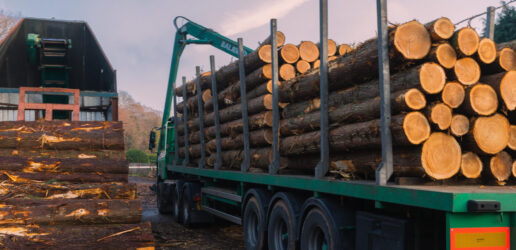
Forest Research has released the latest Accredited Official Statistics on woodland and forestry in the UK.
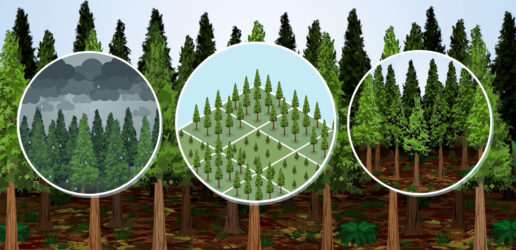
As Forest Research and Forestry England release five animations spotlighting productive tree species, Dr Tom Ovenden, silviculture and species scientist at Forest Research, discusses resilience, diversification and the future of forestry.
Forest Research, on behalf of the Forestry Commission, Scottish Forestry, and Welsh Government, has launched the Forestry Workforce Census. It aims to better understand what the forestry operations workforce in Great Britain looks like today.
Forest Research has released the latest Accredited Official Statistics on woodland and forestry in the UK.
As Forest Research and Forestry England release five animations spotlighting productive tree species, Dr Tom Ovenden, silviculture and species scientist at Forest Research, discusses resilience, diversification and the future of forestry.
Forest Research, on behalf of the Forestry Commission, Scottish Forestry, and Welsh Government, has launched the Forestry Workforce Census. It aims to better understand what the forestry operations workforce in Great Britain looks like today.