We use some essential cookies to make this website work. We’d like to set additional cookies to understand how you use forestresearch.gov.uk, remember your settings and improve our services. We also use cookies set by other sites to help us deliver content from their services.
New land regeneration resources for creating green spaces on previously used land now available
The new resources bring together the latest learnings on land regeneration and climate change, and optimal soil thickness for planting on previously used land.
Date
28 January 2026
Reading Time
4 minutes
Last Updated
26 March 2026
Forest Research has today published a series of resources to help when creating green spaces on previously used land, including when planting treescapes and woodland. The new resources bring together the latest learnings on land regeneration and planting, considering projected future climate change.
A free tool, Optimal Thickness of Soil (OpTS) Model that calculates the optimal soil depth for planting on previously used land, while accounting for future climate change. The tool allows practitioners to enter site locations in the UK and soil variables. The model then calculates the minimum soil thickness needed to help ensure that mature trees receive enough water during the growing season. The tool includes future climate projections to show the soil thickness required under both current and future climate scenarios. It also accounts for current and future projected growing period rainfall, in addition to tree crop type, soil texture and stoniness to estimate the water usage vs water availability on site. Site preparation methods are also considered to identify if additional soil-forming materials may be required to support tree establishment and survival into the future.
The resources are freely available on the Forest Research website and bring together the latest research in this area.
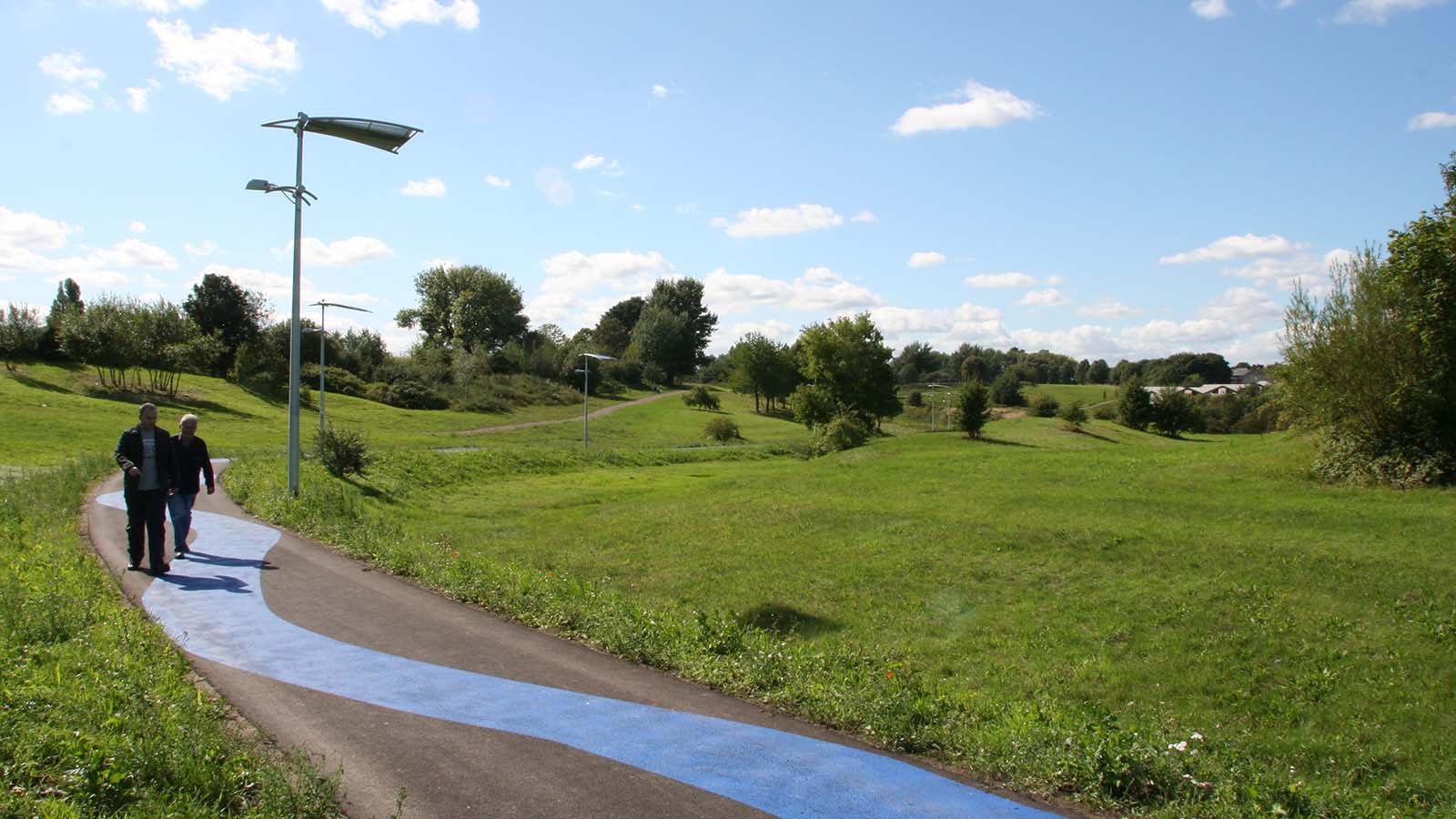
Moston Vale in Manchester, after regeneration.
Reclaiming previously used land to create accessible woodland and treescapes
The creation of woodland or grassland can provide a wide range of social, environmental, and economic benefits. These include carbon sequestration, flood mitigation, local cooling, air quality improvements, habitat creation, and improved mental and physical health. Reclaiming previously used land – which can include former mineral extraction or waste disposal sites – to create accessible woodland and treescapes can help to maximise these benefits.
Establishing woodland or grassland on these sites is more challenging than conventional woodland or grassland creation. This is because, due to past disturbance, the soil tends to be in particularly poor physical, chemical and biological condition. However, these difficulties can be overcome with the right planning, preparation and delivery.
“Woodland creation can be just as successful on previously developed land as on greenfield sites, but the right processes need to be followed,” said Dr Kieron Doick, Head of the Urban Forest Research Group.
“This comprehensive set of new resources brings together over forty-years of research in this area by Forest Research and collaborators, in addition to the very latest learnings, including the effects of climate change.”
“We hope these resources will help people who are involved in planning, executing, managing or regulating green space creation projects on sites which require intervention, so that more people can benefit from the regeneration.”
A new sweet chestnut blight outbreak has been confirmed in Devon, read how Mick Biddle’s Forest Research trial is advancing potential treatments and what this means for the newly introduced demarcated area.
Forest Research, working with The Royal Horticultural Society (RHS) and Coventry University, is calling on woodland owners and the public to help check on the health of sweet chestnuts (Castanea sativa) this spring and summer.
A new sweet chestnut blight outbreak has been confirmed in Devon, read how Mick Biddle’s Forest Research trial is advancing potential treatments and what this means for the newly introduced demarcated area.
Forest Research, working with The Royal Horticultural Society (RHS) and Coventry University, is calling on woodland owners and the public to help check on the health of sweet chestnuts (Castanea sativa) this spring and summer.
We use 3 types of cookie. You can choose which cookies you're happy for us to use.
Strictly necessary cookies
Always On
These essential cookies do things like remember your progress through a form.
They always need to be on.
Cookies that measure website use
We use Google Analytics to measure how you use the website so we can improve it based on user needs.
Google Analytics sets cookies that store anonymised information about:
how you got to the site
the pages you visit on forestresearch.gov.uk and how long you spend on each page
what you click on while you're visiting the site
Cookies that help with our communications and marketing
Some forestresearch.gov.uk pages may contain content from other sites, like YouTube or Flickr, which may set their own cookies. These sites are sometimes called ‘third party’ services. This tells us how many people are seeing the content and whether it’s useful.