Minister celebrates world-class forest research
19 Jul 2017

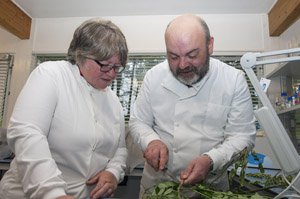
The world-leading role that UK research is playing in the fight against tree and plant pests was demonstrated to Environment Minister Thérèse Coffey recently during a visit to Forest Research in Edinburgh.
The UK continues to lead the way in research to protect our woodlands and tackle tree pests and diseases. Between 2012 and 2019, the UK government will have invested more than £37 million into tree health research.
While at our Scottish base last week, the Minister learnt about the latest efforts to combat tree pests and diseases, forestry’s role in reducing climate change, and the best tree species to increase planting rates.
Speaking after her visit, Thérèse Coffey said:
We can all take pride in the UK’s world-leading forestry science and research which is making a vital contribution towards protecting our native trees and plants from pests and disease.
That is why we are continuing to invest millions of pounds into tree health research to shape the response that government and the forestry industry needs to take to keep our forests and woodlands healthy for future generations.
I also look forward to exploring further how institutions like Forest Research can contribute to government and industry’s continued drive to plant more trees.
Professor James Pendlebury, Chief Executive of Forest Research, said:
Forest Research is internationally renowned for the provision of science, research, evidence and forestry data services in support of sustainable forestry.
We were delighted to host Minister Coffey at our Northern Research Station, where we discussed tree health research and future management regimes to support tree planting in the light of climate change and biotic threats.
During her visit to Edinburgh, the Minister also held a roundtable with representatives from the forestry industry to discuss steps to increase tree planting.
Find out more about our research into tree pests and diseases
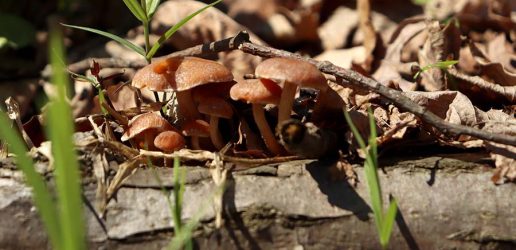
A rare long-term study of woodland creation found that ex-arable woodland was distinct from adjacent ancient woodland 25-years after planting
New research highlights the importance of ecological complexity when restoring ecosystems.
In a new paper published in Trends in Ecology & Evolution, scientists say we need to understand fragmentation as a process that unfolds over time.
A rare long-term study of woodland creation found that ex-arable woodland was distinct from adjacent ancient woodland 25-years after planting
New research highlights the importance of ecological complexity when restoring ecosystems.
In a new paper published in Trends in Ecology & Evolution, scientists say we need to understand fragmentation as a process that unfolds over time.