Forest Research Appoints New Chief Scientist
10 Oct 2018

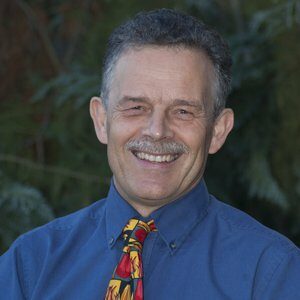
Professor Chris Quine has been appointed as the new Chief Scientist for Forest Research (FR), Great Britain’s principal organisation for forestry and tree-related research.
The post of Chief Scientist oversees the strategic research direction for Forest Research so that it provides the scientific knowledge and expertise required by its customers, and that advice to policymakers and practitioners is based on good science and sound evidence. The Chief Scientist plays an active role in the continuing professional development of FR’s scientific and technical staff, and contributes to the formulation and implementation of the Forestry Commission’s policies and objectives. The Chief Scientist is also a member of FR’s Executive Board, sharing accountability for the performance of the agency.
Professor James Pendlebury, FR’s Chief Executive, said:
“I am delighted to announce this appointment. Chris brings a wealth of forestry knowledge and scientific experience to his new role and will be pivotal in helping us evolve as an organisation to meet the exciting challenges and opportunities ahead.”
On his appointment, Professor Chris Quine commented:
“I am honoured to be chosen to lead FR’s scientific and technical work at a time of transition and new opportunity, and to support our as role as interface between the tree, woodland and forestry sector and wider academia.”
Biography
Chris Quine’s previous role was as Head of Centre for Ecosystems, Society and Biosecurity, and Head of FR’s Northern Research Station in Roslin. He is a Fellow of the Institute of Chartered Foresters.
Chris has extensive knowledge of applied research in temperate/boreal forest ecosystems and expertise in knowledge exchange and interdisciplinary research. He has published widely in academic journals, books and Forestry Commission publications. His first degree was in geography at the University of Cambridge, followed by an MSc in forestry at Oxford University. After a period working for the Forestry Commission in forest management, he joined FR to take up research on windthrow, wind climate and site cultivation. There he also undertook a part-time PhD in forest ecology at Edinburgh University, and was awarded an honorary professorship by Stirling University in September 2014.
His recent research interests have included ecosystem services and integrated land use, interdisciplinary approaches to land management, risk communication, resilience and tree health, and biodiversity of managed forests. He was lead author for woodlands within the UK National Ecosystem Assessment, has recently contributed to two LWEC Tree Health and Plant Biosecurity Initiative projects (FOREMOD, UNPICK), and leads the work package on resilience within the Defra-funded programme ‘Future Proofing Plant Health’.
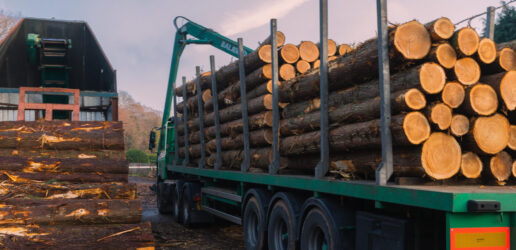
Forest Research has released the latest Accredited Official Statistics on woodland and forestry in the UK.
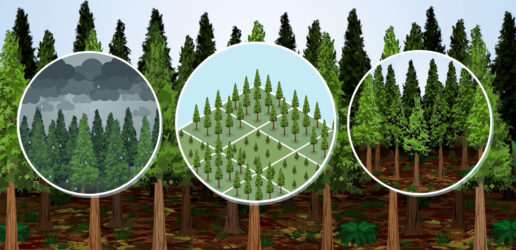
As Forest Research and Forestry England release five animations spotlighting productive tree species, Dr Tom Ovenden, silviculture and species scientist at Forest Research, discusses resilience, diversification and the future of forestry.
Forest Research, on behalf of the Forestry Commission, Scottish Forestry, and Welsh Government, has launched the Forestry Workforce Census. It aims to better understand what the forestry operations workforce in Great Britain looks like today.
Forest Research has released the latest Accredited Official Statistics on woodland and forestry in the UK.
As Forest Research and Forestry England release five animations spotlighting productive tree species, Dr Tom Ovenden, silviculture and species scientist at Forest Research, discusses resilience, diversification and the future of forestry.
Forest Research, on behalf of the Forestry Commission, Scottish Forestry, and Welsh Government, has launched the Forestry Workforce Census. It aims to better understand what the forestry operations workforce in Great Britain looks like today.