
Date
7 August 2023
Reading Time
2 minutes
Last Updated
7 August 2023
Categories
Today Forest Research has published five new climate change factsheets summarising:
• Risks to our forests and woodlands
• Tree species choice
• Provenance choice
• Forest carbon
• Insect pests of trees
The factsheets provide concise summaries of information from scientific research and are aimed at practitioners, individuals and organisations who want to understand more about trees, forests and climate change. The new publications are part of a series of 17 climate change factsheets covering a wide range of topics including tree diseases, biodiversity, peatlands, and flooding.
Short and easy to understand, the factsheets break down detailed scientific evidence into critical figures and information. They also signpost to additional resources and tools including those in the Forest Research Climate Change Hub, to encourage and enable land managers and others to build their knowledge, make decisions and take action.
The publication of the factsheets comes at a time when practitioners are being urged to consider the climate change risks to trees, forests, and woodlands, and to take action to improve the resilience of newly created and existing forests and woodlands. They are also being urged to consider the management of forests and woodlands for the uptake and storage of carbon.
Explore the Forest Research climate change factsheet series.
Recent News
View All news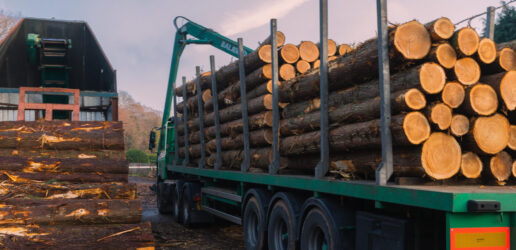
Forestry Statistics 2026 now available
Forest Research has released the latest Accredited Official Statistics on woodland and forestry in the UK.
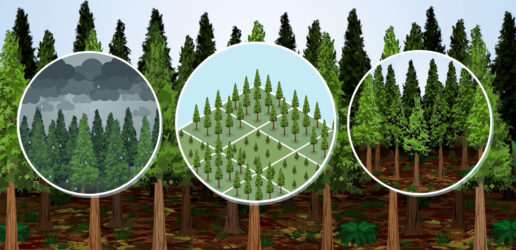
Spotlighting five alternative productive tree species
As Forest Research and Forestry England release five animations spotlighting productive tree species, Dr Tom Ovenden, silviculture and species scientist at Forest Research, discusses resilience, diversification and the future of forestry.
Be counted – take part in the Forestry Workforce Census
Forest Research, on behalf of the Forestry Commission, Scottish Forestry, and Welsh Government, has launched the Forestry Workforce Census. It aims to better understand what the forestry operations workforce in Great Britain looks like today.
Forestry Statistics 2026 now available
Forest Research has released the latest Accredited Official Statistics on woodland and forestry in the UK.
Spotlighting five alternative productive tree species
As Forest Research and Forestry England release five animations spotlighting productive tree species, Dr Tom Ovenden, silviculture and species scientist at Forest Research, discusses resilience, diversification and the future of forestry.
Be counted – take part in the Forestry Workforce Census
Forest Research, on behalf of the Forestry Commission, Scottish Forestry, and Welsh Government, has launched the Forestry Workforce Census. It aims to better understand what the forestry operations workforce in Great Britain looks like today.