Inspiring women in science
6 Nov 2017

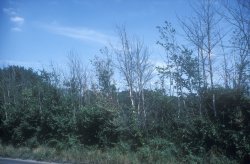
In August, Dr Joan Webber spoke at a symposium held to celebrate the life and career of Johanna Westerdijk. Johanna led the team of female mycologists who discovered the cause of the first epidemic of Dutch Elm Disease – a fungus called Ophiostoma ulmi – and also revealed much of the biology of this damaging pathogen and pioneered the first breeding programme to produce disease resistant elms. Johanna was a truly remarkable woman not only for these achievements but also for her efforts to inspire and empower female mycologists in the early part of the 20th Century.
Speakers at the two-day symposium were restricted to female mycologists and covered topics including ecology, evolution, genomics, plant pathology and biodiversity. Joan’s presentation explained how the seminal work, not only of Prof Westerdijk but particularly her protégées, Christine Buisman and Bea Schwarz, has stood the test of time and forms the cornerstone of much of our understanding of Dutch elm disease right through to the 21st Century. Joan went on to describe some of the work of Forest Research scientists on Dutch elm disease which is of international renown.
With the onset of a second Dutch elm disease pandemic in the 1970s, many significant discoveries were made by Forest Research pathologists Clive Brasier and John Gibbs. Working as a fellow researcher employed by the University of Southampton, Joan was part of that collaborative group and her research particularly focussed on the interplay between the Dutch elm disease pathogen and insect vectors that spread the disease. In her presentation, Joan talked about that collective research and how it has forged a new understanding, not only about Dutch elm disease, but the impacts of introduced tree pathogens and how they change and evolve in their new environments.
For Dutch elm disease, the challenge remains of how to use the knowledge from this research as part of an integrated approach for management and control disease, while also making use of the resistant elms clones generated from several high-profile breeding programmes. At the start of the 21st century, the first glimpses are also emerging of the geographical origins of this damaging fungal disease.
Find out more about Forest Research’s work on Dutch elm disease.
Forest Research, on behalf of the Forestry Commission, Scottish Forestry, and Welsh Government, has launched the Forestry Workforce Census. It aims to better understand what the forestry operations workforce in Great Britain looks like today.

Dr Matt Wilkinson, NCEA Programme Manager at Forest Research talks about how we are trailblazing new technology and implementing innovations as part of the most significant ecosystem assessment ever conducted in the UK.
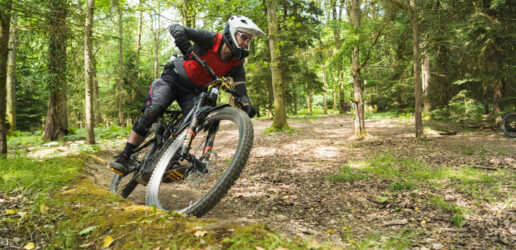
Forest Research, in partnership with the University of Exeter’s Centre for Net Positive Health and Climate Solutions, is leading a new study investigating outdoor nature-based recreation, health and climate change.
Forest Research, on behalf of the Forestry Commission, Scottish Forestry, and Welsh Government, has launched the Forestry Workforce Census. It aims to better understand what the forestry operations workforce in Great Britain looks like today.
Dr Matt Wilkinson, NCEA Programme Manager at Forest Research talks about how we are trailblazing new technology and implementing innovations as part of the most significant ecosystem assessment ever conducted in the UK.
Forest Research, in partnership with the University of Exeter’s Centre for Net Positive Health and Climate Solutions, is leading a new study investigating outdoor nature-based recreation, health and climate change.