
Date
23 November 2026
Reading Time
5 minutes
Last Updated
23 November 2026
Forest Research, in partnership with Forestry England Westonbirt, The National Arboretum, have embarked on a four-year project to investigate the resilience of productive timber species to drought.
This innovative project will combine new, cutting-edge sensor technology with existing experiments to understand which tree species are the most drought resilient, and which are best suited to the anticipated future climates in Britain.
The project, known as ADAPT (Assessing Drought Adaptation of Productive Trees), launches against a backdrop of increasing extreme weather events, including the hottest summer on record (according to provisional figures from the Met Office), underlining the urgency and timeliness of this research.
A new tree growth and stress monitoring network
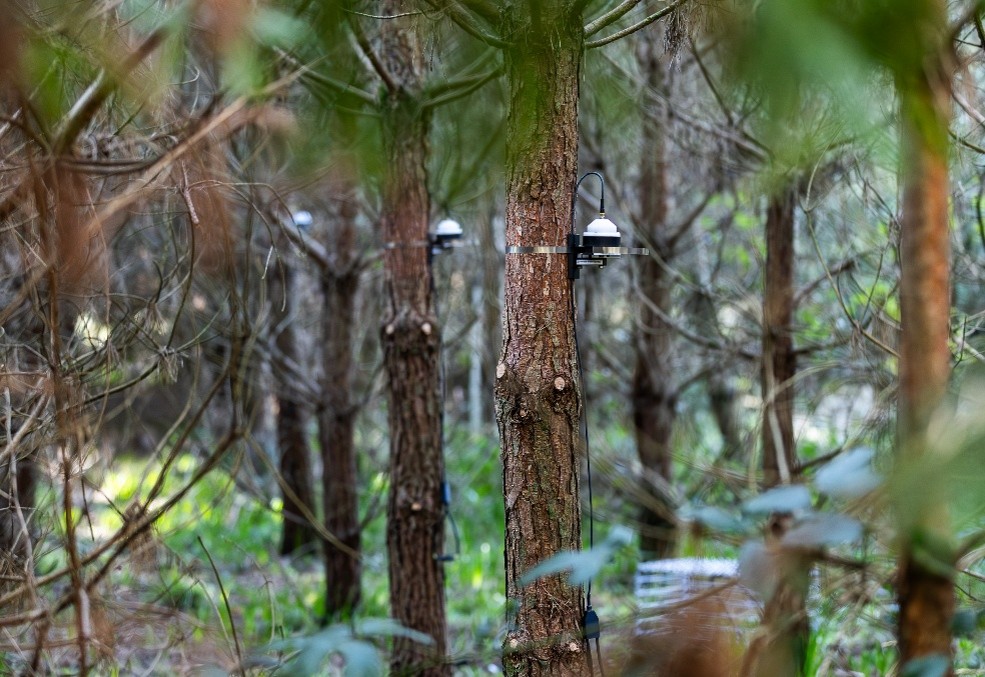
Scientists from Forest Research have just launched a new national tree growth and stress monitoring network, one of the first of its kind in Britain. Funded by Defra, the first phase of this new network is now operational and includes sensors deployed on 355 trees from 12 species in five experiments across Britain.
The species are:
- Silver birch (Betula pendula)
- Radiata pine (Pinus radiata)
- Maritime pine (Pinus pinaster)
- Scots pine (Pinus sylvestris)
- Sitka spruce (Picea sitchensis)
- Douglas fir (Pseudotsuga menziesii)
- Grand fir (Abies grandis)
- Corsican pine (Pinus nigra var. Larico)
- Western red cedar (Thuja plicata)
- Low’s fir (Abies concolor var laoiana)
- Western hemlock (Tsuga heterophylla)
- European larch (Larix decidua)
Fitted to each of these 355 trees is a sensor called a dendrometer, which takes a recording every 30 minutes and allows researchers to track, in unprecedented detail, tree growth rates, drought stress responses and post-drought recovery trajectories.
“We want to understand which productive species are best adapted to climate change, how the ‘best’ species changes depending on site conditions, and what the relative drought tolerance or resilience of these different species and provenances are,” said project lead, Dr Tom Ovenden MICFor, Senior Scientist (Tree Species and Silviculture) at Forest Research.
“The data and multi-year nature of this project means that we have the opportunity to build a comprehensive picture of the impact of drought over time – crucial if we are to understand the long-term growth dynamics and impact of extreme events on our trees.”
Sub-canopies and microclimates
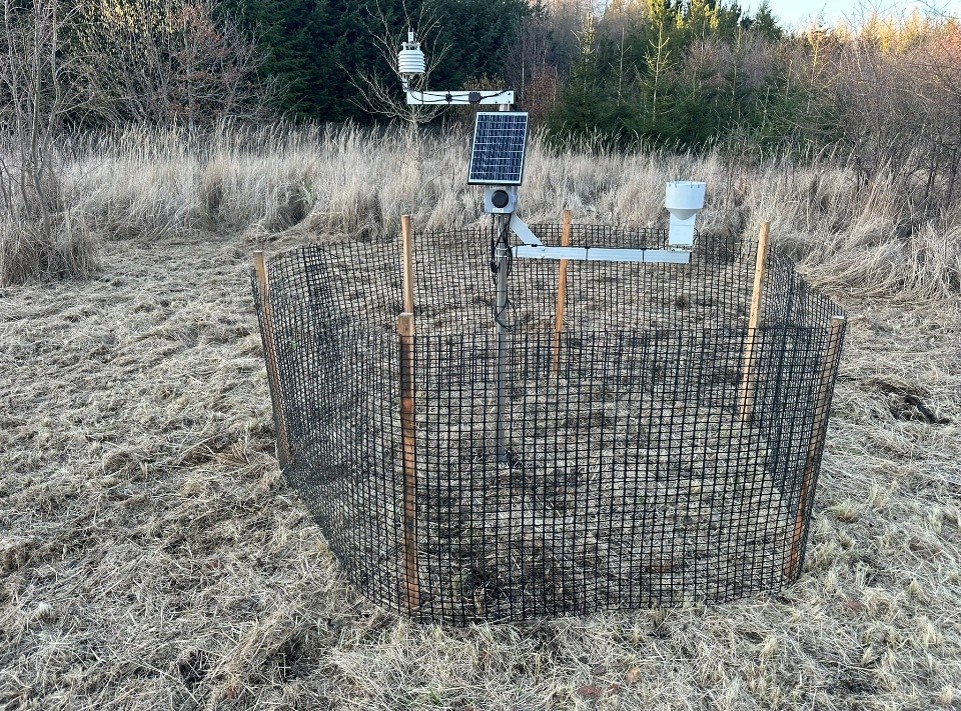
As part of the same project, Forest Research scientists will assess how the drought responses of different tree species affect the sub-canopy microclimate. To do this they are designing and prototyping new custom devices to track key metrics like CO2, temperature, humidity, light and airflow.
By collecting this data, Dr Ovenden and the team hope to answer questions like: do some species buffer the detrimental impacts of drought more than others and do more drought resilient species also create more resilient forest microclimates?
Analysing 100 years of drought dynamics data
Finally, researchers will be using the historic climate record dating back to 1901 to investigate the last c.125 years of drought and crucially, how these events differ and are changing across the UK.
“To our knowledge, this will be one of the first attempts to analyse how the dynamics of the drought events themselves — such as frequency, intensity, timing or seasonality and duration — are changing across the UK, at a high spatial resolution — every 1km square,” said Dr Ovenden.
“The hope is that understanding how these events are shifting will allow us to develop better tools to help land managers and policy makers plan at a local scale for an increasingly drought prone future.”
Working with Forestry England Westonbirt, The National Arboretum
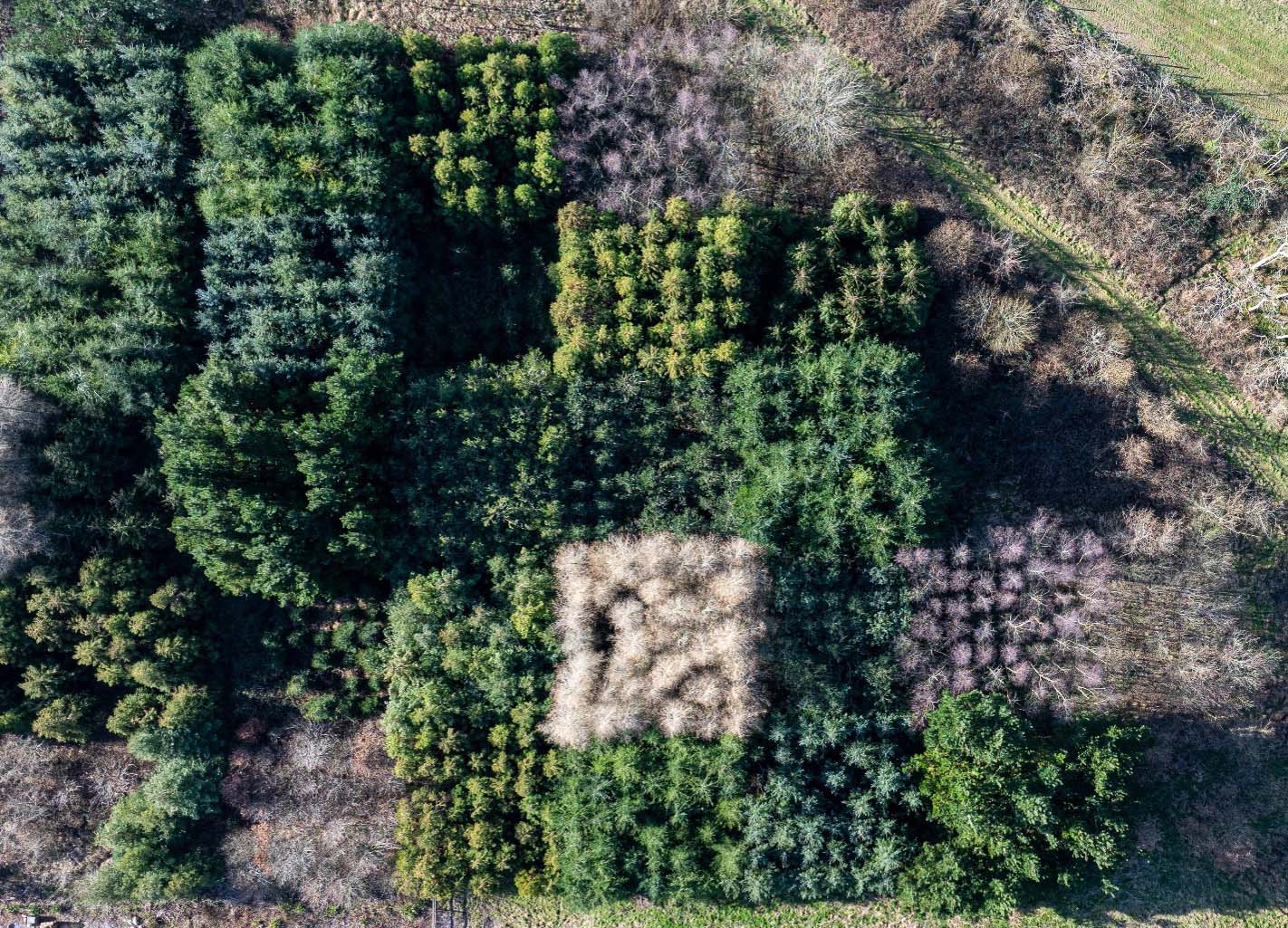
Central to the project is Westonbirt, home to 2,500 different types of trees and shrubs and to one of the experimental sites of the tree growth and stress monitoring network. A powerhouse in public engagement and forestry expertise, Westonbirt will act as the project’s flagship site to help communicate the science as widely as possible.
Scientists will work closely with colleagues at Westonbirt to design activities for the arboretum’s visitors to interact with the research.
“A key aspect of ensuring the future of our productive forests is to engage with people so that they have a greater appreciation of the challenges posed by climate change and therefore the need to manage and adapt our forests and woods so that they are both resilient and productive,” said Ben Oliver, Education and Interpretation Manager at Forestry England Westonbirt, The National Arboretum.
“At Westonbirt, we are excited by the opportunity to bring research to life by enabling people to encounter the science, explore the data and understand why it matters.”
Over the next three and a half years we will bring you highlights from the research as the project unfolds. Follow Forest Research and Westonbirt, The National Arboretum on social media to keep up to date with the latest news.
Recent News
View All news
Timber Price Indices Released
Forest Research has released the latest figures for the Coniferous Standing Sales Price Index, the Softwood Sawlog Price Index and the Small Roundwood Price Index for Great Britain.
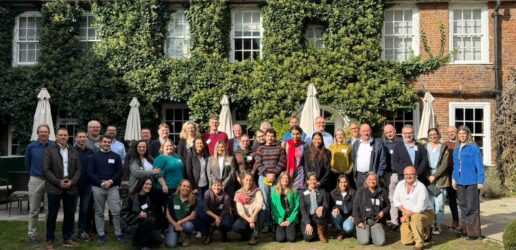
Forest Research welcomes representatives of forestry advisors from across Europe to accelerate knowledge sharing on climate change and forest protection
On 14-15 October 2026, Forest Research and the Forestry Commission hosted over 40 forestry professionals from 15 European countries as part of FORADVISE, an EU-funded Horizon Europe project.
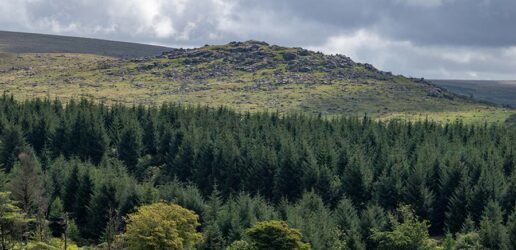
New report brings together best practice guidance for upland forestry
A new report by Forest Research, commissioned by Forestry England, has brought together the best practice guidance for upland forestry silviculture.
Timber Price Indices Released
Forest Research has released the latest figures for the Coniferous Standing Sales Price Index, the Softwood Sawlog Price Index and the Small Roundwood Price Index for Great Britain.
Forest Research welcomes representatives of forestry advisors from across Europe to accelerate knowledge sharing on climate change and forest protection
On 14-15 October 2026, Forest Research and the Forestry Commission hosted over 40 forestry professionals from 15 European countries as part of FORADVISE, an EU-funded Horizon Europe project.
New report brings together best practice guidance for upland forestry
A new report by Forest Research, commissioned by Forestry England, has brought together the best practice guidance for upland forestry silviculture.