The Natural Capital and Ecosystem Assessment (NCEA) is Defra’s largest research and development (R&D) programme and the most ambitious assessment of the current state of nature ever undertaken in the UK.
Since 2022, as part of the NCEA programme, over 450 scientists, across multiple organisations, have been monitoring England’s land, freshwater, and coastal ecosystems to produce a baseline assessment of our natural assets by 2029.
The idea is that this data and knowledge will enable the UK government to create a thriving environment for everyone, where nature is at the heart of policy and decision-making.
Alongside the Environment Agency, Natural England, the Joint Nature Conservation Committee and the Royal Botanic Gardens, Kew, Forest Research is one of five organisations delivering the NCEA programme for Defra.
Collecting and publishing data
Forest Research has played a pivotal role in the collection of data related to trees and woodlands, including using remote sensing to map the trees outside of woodland in England for the first time, using eDNA and DNA meta-barcoding to measure biodiversity and acoustic sensors to monitor bats.
As 2025 drew to a close, analysis-ready data from the first year of the survey was published. As part of this, Forest Research delivered data on woodland water quality, soil condition, air quality, eDNA soil biodiversity and eDNA woodland canopy.
As of May 2026, Forest Research released further datasets including Trees Outside Woodland field data and a biological dataset on soil condition which further supported the soil condition data released in December 2025.
Published under the Open Government Licence, this data is freely available for policymakers, researchers, and anyone with an interest in nature.
Technological innovation – mapping trees from above
Alongside traditional field-surveying techniques, new technology has been vital to the collection of data for Forest Research. Indeed, the innovations that have developed as the NCEA programme has progressed are playing a central role in moving the whole forestry science sector forwards.
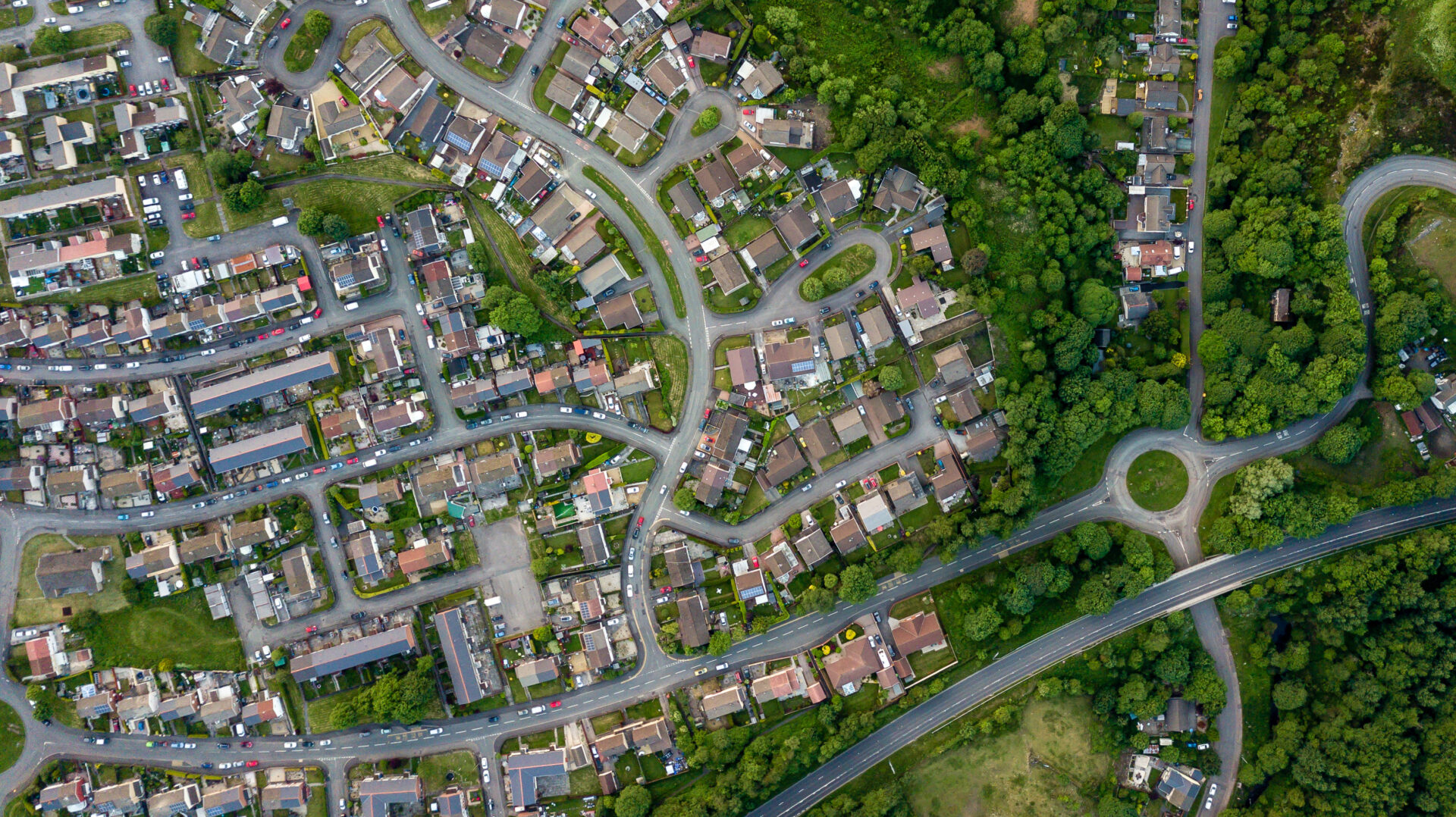
Mapping England’s non-woodland trees is a case in point. This involved using Earth observation techniques, principally aerial LiDAR — a remote sensing technology that uses lasers to generate 3D images of the Earth’s surface — to create a trees outside of woodland map which shows ~30% of canopy cover is outside of NFI woodland. Generation of the map was backed up by on-the-ground field surveying.
And in the latest developments, our researchers are experimenting with incorporating an open-source global model of tree canopy height to enhance individual tree identification and monitoring.
Technological innovation – harnessing eDNA
From the tops of trees to the soil beneath them, new advances in technology are allowing us to conduct surveys in a way that years ago would have been unimaginable. One of these developments is analysing eDNA – or environmental DNA.
Every living organism leaves behind traces of its DNA in the environment, for example in water, air or soil. By taking samples from these environments, the traces of DNA can be sequenced to identify the organisms that were present. Compared to traditional surveying by sight or camera traps, this vastly increases the accuracy and speed of sampling.
And now, thanks to scientists at Forest Research, eDNA data for woodland soil biodiversity is available for anyone to analyse and better understand the richness of this environment.

Technological innovation – acoustic monitoring
Another surveying technique that our scientists have been at the forefront of is acoustic monitoring of bats. Since 2021, Forest Research and the Bat Conservation Trust (BCT) have been working together to deliver the UK’s largest woodland bat monitoring programme: the NCEA National Woodland Bat Survey. Each year, acoustic sensors are deployed across up to 210 one-hectare sites, capturing thousands of hours of sound recordings from woodlands across England.
These recordings are processed through the BCT’s AI-driven acoustic data pipeline, which automatically detects and classifies bat echolocation calls – the high frequency sounds bats use to navigate and find food. Automated classifications are supported by manual verification, ensuring robust, high-quality data on species presence and activity across the network.
All UK bats depend on woodland, making them powerful indicators of woodland biodiversity. Their wide distribution, sensitivity to environmental change, and position high in the food chain mean that fluctuations in bat activity can reveal early signals about ecosystem health, land use pressures, and climate driven change.
This data will serve as an invaluable resource for conservationists, environmental non-governmental organisations, policymakers and practitioners among others.
I’m so pleased that Forest Research has been part of this incredible initiative to deliver the knowledge needed to turbocharge nature’s recovery, address biodiversity loss and climate change, and develop innovative approaches to these challenges.