Transforming and managing stands under continuous cover forestry: silviculture guidance
A new handbook for forest managers on continuous cover forestry (CCF) is now available.

A new handbook for forest managers on continuous cover forestry (CCF) is now available. Authored and published by Forest Research, the best practice guide covers information on both transforming stands to continuous cover forestry (CCF) and on managing stands using CCF approaches.
CCF is an approach to forest management in which a significant proportion of the forest canopy is maintained at one or more levels without clearfelling. Where gaps are created in the canopy, they are less than 0.25 ha to maintain a forest microclimate.
Andrew Leslie, Head of Silviculture and Wood Properties at Forest Research and author of the handbook, said: “Continuous cover forestry usually relies heavily on natural processes, such as natural regeneration, and so requires an in-depth understanding of trees’ environmental requirements and forest stand dynamics. More so than in clearfell systems. The new handbook is a go-to, comprehensive source of information for forest managers who want to explore continuous cover forestry for the first time or who are looking for support in developing existing plans or addressing obstacles.”
The handbook, ‘Transforming and managing stands under continuous cover forestry’, is freely available from the Forest Research website and provides forest managers with comprehensive information about CCF, including:
There has been increasing interest in the use of CCF to manage forest stands in continental Europe and the UK, driven by the environmental, economic and social benefits that can be achieved. The handbook takes a broad interpretation of the term ‘CCF’ since there are a number of methods to achieve it but, compared to clearfell systems, CCF approaches tend to allow a higher degree of management flexibility.
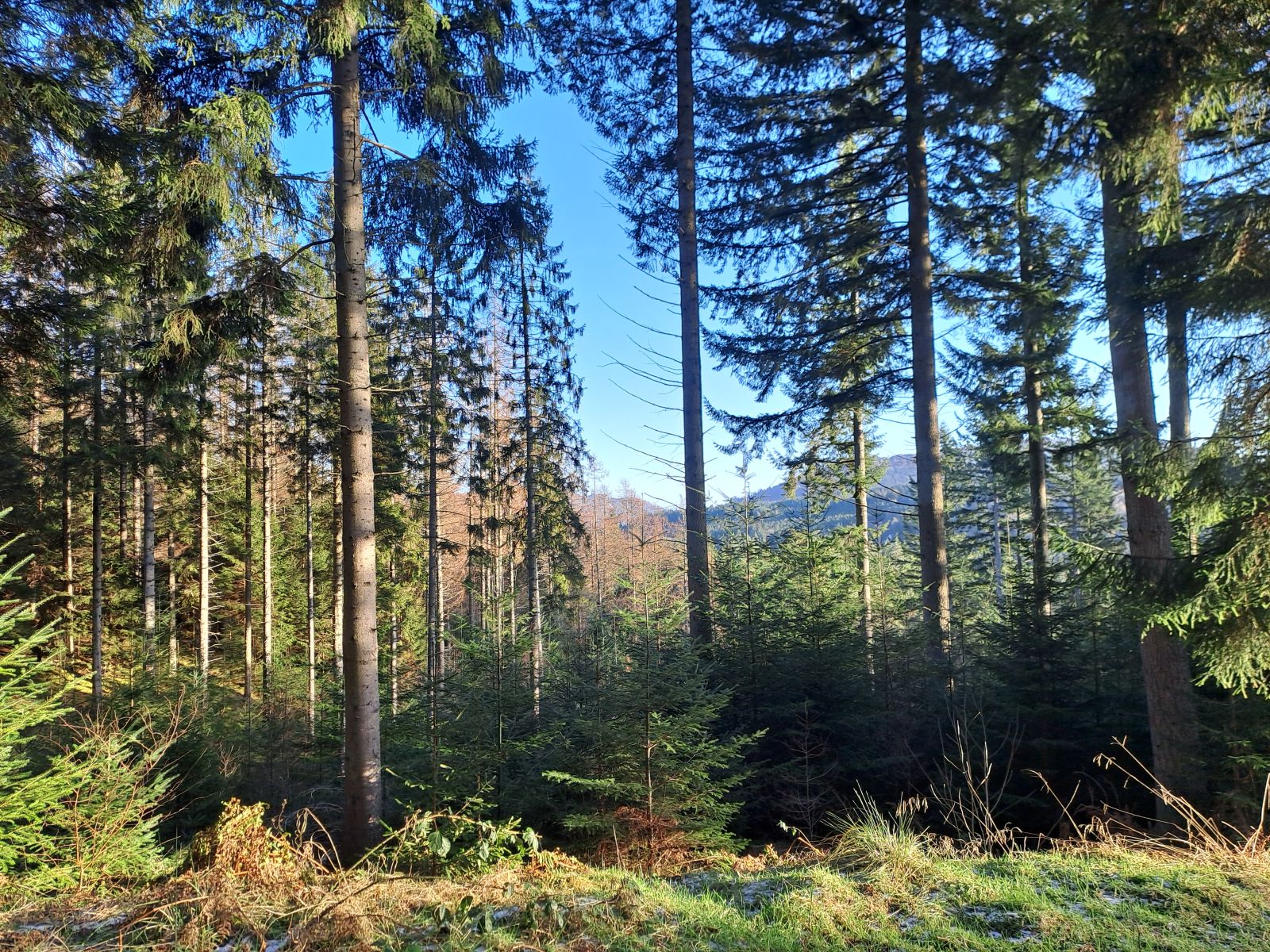
There are many challenges to adopting a CCF approach and it is essential that stand stability through thinning is encouraged, deer populations are kept low to support regeneration, quality trees are promoted and an acceptance there will be some unforeseen disturbance. It is important before managing a stand under CCF to assess its suitability.
Acknowledgments: Many thanks to colleagues at Forest Research, experts in CCF and forest managers applying CCF principles for lots of useful information and feedback that has been incorporated into the guidance.
The publication was funded through the Science and Innovation Strategy for Forestry in Great Britain.
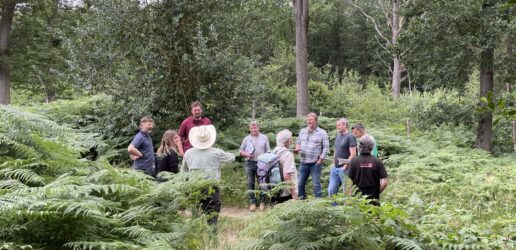
Growing a community equipped with the skills to assess oak health.
Join for an update on the Forest Lab oak health project, showing how monitoring oak tree condition, pests, and diseases can help woodland managers make informed decisions to protect and manage oak woodlands across the UK.
Forest Research entomology scientist, Molly Davidson, discusses her work as a diagnostician for TreeAlert, the hidden world of moths, and a new survey investigating what motivates people to take part in citizen science.
Growing a community equipped with the skills to assess oak health.
Join for an update on the Forest Lab oak health project, showing how monitoring oak tree condition, pests, and diseases can help woodland managers make informed decisions to protect and manage oak woodlands across the UK.
Forest Research entomology scientist, Molly Davidson, discusses her work as a diagnostician for TreeAlert, the hidden world of moths, and a new survey investigating what motivates people to take part in citizen science.