
Summary
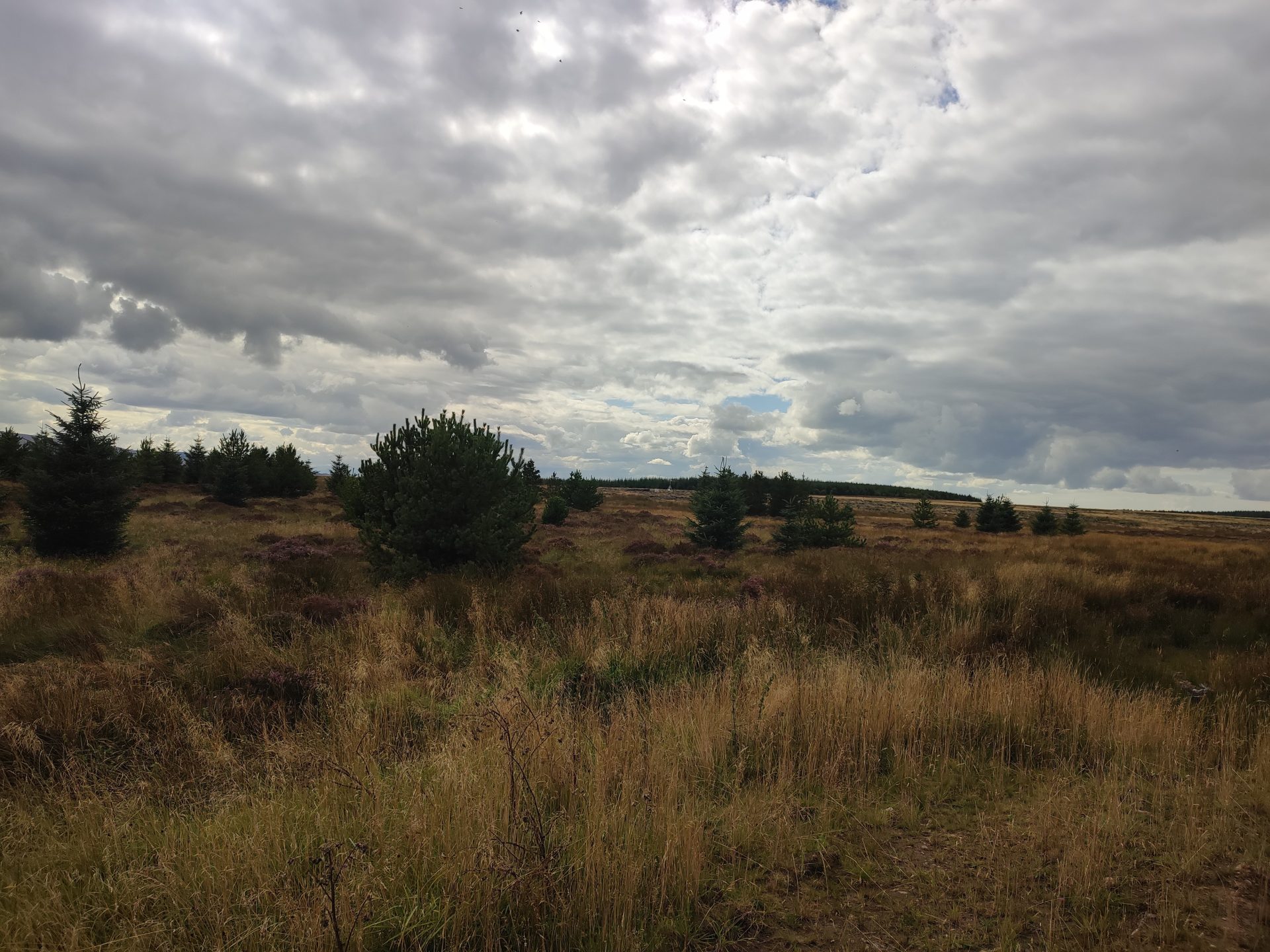
This research aims to quantify the greenhouse-gas balance and aquatic carbon fluxes associated with contrasting peatland restoration techniques following conifer removal.
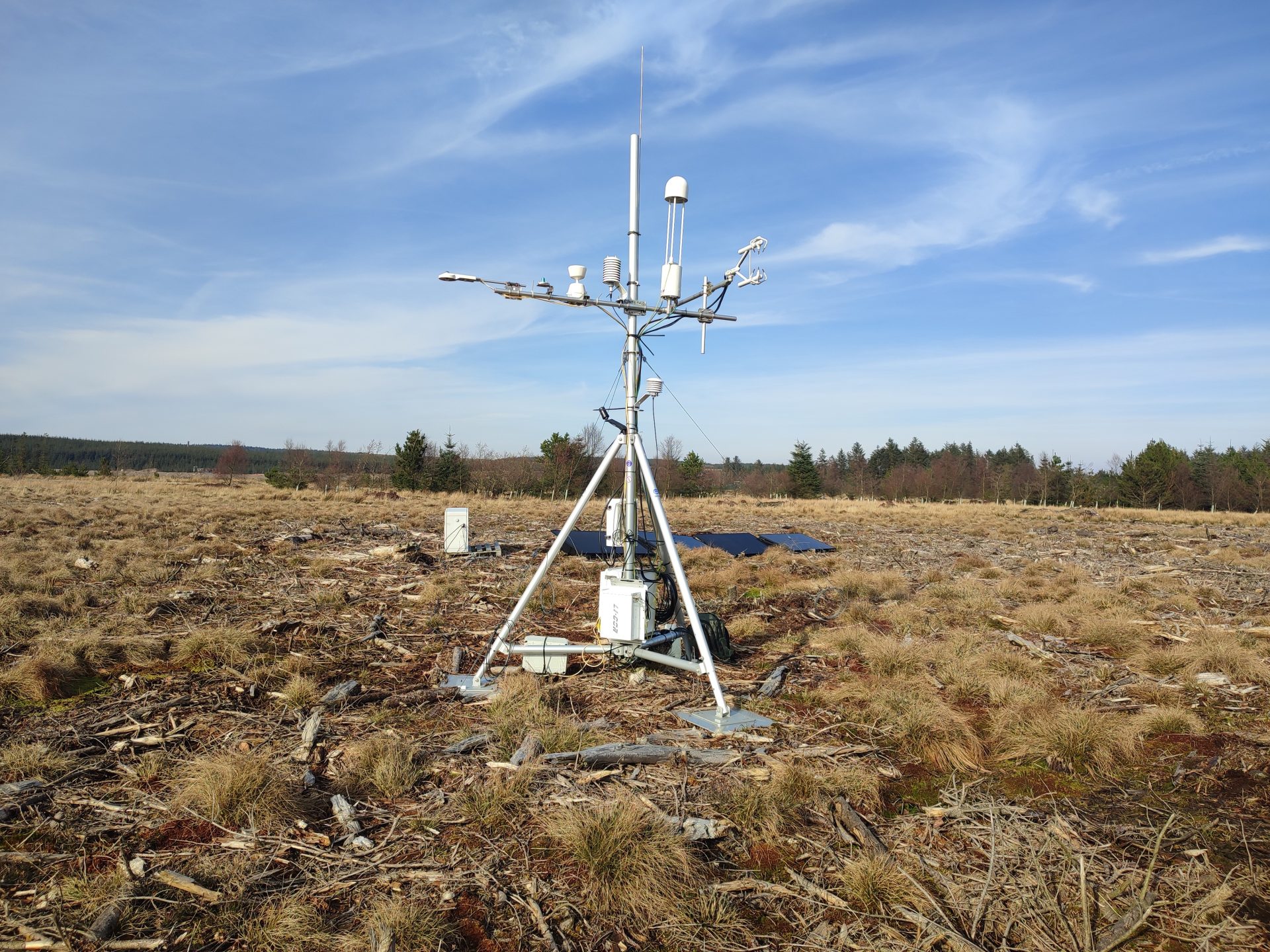
By deploying dual eddy-covariance towers alongside chamber and hydrological measurements, PEATFLUX+ will compare the net CO₂ and CH₄ dynamics of forest-to-bog restoration. Long-term, the project aims to compare low-intervention (bunding/drain-blocking) versus high-intervention (surface reprofiling) methods.
The project will also adapt process-based models (ECOSSE, SCOTIA) and update a life-cycle assessment tool to support evidence-based restoration policy and best practice guidance.
This project has been funded by the UK Government through Defra’s Forestry Research and Development (FRD) programme.
Research Objectives
- Compare GHG balance (EC method), soil-partitioned GHG dynamics (chamber method) and aqueous C flux partitioning.
- Use the empirical data on GHG flux and aqueous C flux to adapt and parameterise process-based models to improve predictions of site GHG dynamics.
- Update an LCA assessment of early-phase restoration practice constrained by new model implementation to determine the overall GHG footprint of restoration practices.
- Obtain surface roughness estimates post-fell (pre-restoration) to act as a baseline for bog condition monitoring.
Funding & Partners
-
 DEFRA
DEFRA