Bleeding canker of horse chestnut: Disease Incidence
Reports and survey results show that the incidence of the bleeding canker has increased
Twenty years ago Bleeding canker of horse chestnut trees (Aesculus hippocastanum) was considered to be a rare disease restricted to the south of England and caused by Phytophthora. In 2000 only four cases were reported, but this rose to more than 110 reports in 2006. It transpired that the increased number of symptomatic horse chestnut trees was due to a previously unknown pathogen identified as the bacterium Pseudomonas syringae pv aesculi. Since then, the disease caused by the bacterium has been reported from throughout the UK and also in the Republic of Ireland.
Forest Research scientists now estimate that many thousands of horse chestnut trees have been affected, a significant number of which have been felled because they are so debilitated by the disease.
Survey results show disease is widespread
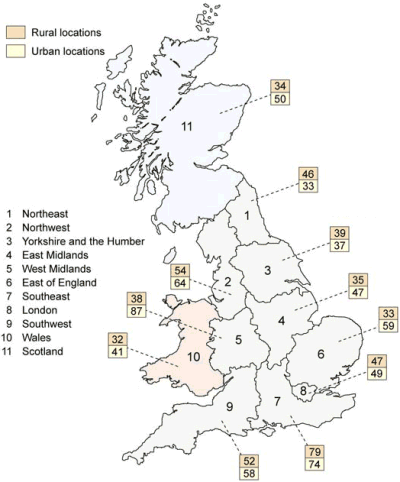
In 2007, The Forestry Commission undertook a survey to assess how widely trees in Britain are affected by the upsurge in bacterial bleeding canker. Survey results showed that the disease was widespread with around 49% of all trees assessed showing symptoms to some degree. The results also showed that the disease incidence varied in different parts of Britain.
| Region | Rural locations | Urban locations |
|---|---|---|
|
Northeast |
46% |
33% |
|
Northwest |
54% |
64% |
|
Yorkshire and Humber |
39% |
37% |
|
East Midlands |
35% |
47% |
|
West Midlands |
38% |
87% |
|
East of England |
33% |
59% |
|
Southeast |
79% |
74% |
|
London |
47% |
49% |
|
Southwest |
52% |
58% |
|
Wales |
32% |
41% |
|
Scotland |
34% |
50% |
Percentage of horse chestnut trees surveyed in 2007 with symptoms of bleeding canker.
A regular annual survey of around 230 horse chestnuts in Hampshire has shown that over half of the trees have developed bleeding canker symptoms. A higher proportion of trees in towns and rural areas are affected compared with woodland trees, while more red horse chestnuts (Aesculus x carnea) suffer from bleeding canker than white-flowered trees (Aesculus hippocastanum).
Incidence in Europe
However this dramatic increase in incidence is not restricted to the UK: the Netherlands, Belgium, France and Germany have seen a similar upsurge. About a half of horse chestnuts in The Netherlands are affected by bleeding canker. More recently bacterial bleeding canker has also been reported from the Czech Republic, Italy, Norway, Slovenia and Switzerland.
What is causing the increase?
Close investigation shows that Phytophthora pathogens are no longer the primary causal agents of bleeding canker. Instead a completely different pathogen, a bacterium called Pseudomonas syringae pv aesculi, is responsible for the increasing incidence of the disease. Find out more about the increase in incidence and the causal agents of bleeding canker.