
Summary
This research project aimed to evaluate the availability and suitability of data to quantify the potential of forest ecosystems to mitigate air pollution, a key ecosystem service provided by this natural capital asset. The work also assessed the impacts of air pollution and supports the development of a set of natural capital accounts for England.
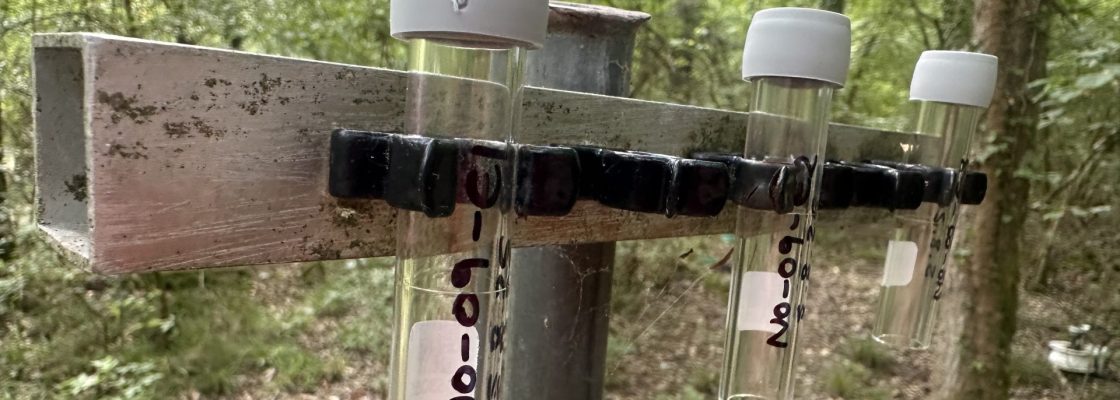
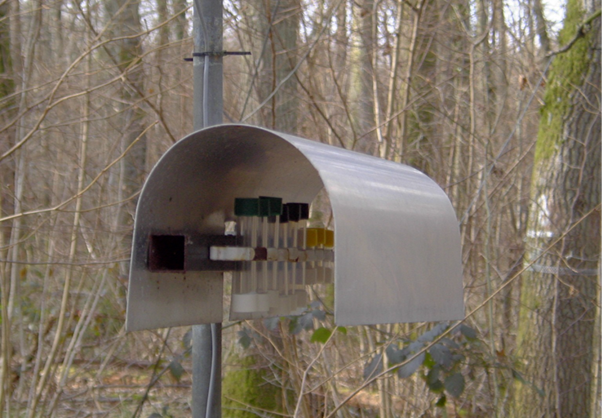
This project will contribute to an evaluation of data and development of modelling of current and future potential of forest for air pollution mitigation as well as assessing air pollution impacts on forest ecosystems, with a particular emphasis on pollutants such as sulphur, nitrogen and heavy metals. The project used a combination of existing FR ICP Forests Long term Forest Monitoring Networks (Level I, Level II, BioSoil) and the National Forest Inventory datasets with models developed by UKCEH. Another important aim was to continue and expand the air pollution monitoring at the FR ICP Forest Long term intensive monitoring plots.
Research Objectives
Forest Research’s Integrated forest monitoring programme is the UK contribution to the European International Co-operative Programme on Assessment and Monitoring of Air Pollution Effects on Forests (ICP forests). This project expanded the variables monitored to include gaseous O3, NO2, and NH3, particularly focussing on gaseous air pollutants which previously were part of the ICP Forests Level II monitoring in the UK but ceased in 2005. ICP Forests monitoring activities contribute to aspects of relevance for forest policy, generating harmonised data across Europe to understand:
- effects of climate change on forests – e.g. effects on biodiversity, physiological processes, foliar nutrition and soil nutrient cycling,
- long-term forest responses to changes in air pollution,
- forests’ contribution to climate change mitigation.
ICP Forests data can be used to calibrate ecosystem biochemical models, assess the performance of critical load models, and inform sustainable forest management practices. Monitoring data from the sites will also be set within the findings of the European monitoring schemes and contribute to annual reports on forest condition across Europe.
The key aims of the NCEA Air quality project were:
- To collect high-quality air pollution datasets as part of the ICP Forests Long term Intensive monitoring (Level II network)
- To analyse long term monitoring data of forest ecosystems to inform the evaluation of the air pollution forest mitigation strategies and monitor the impacts of air pollution on forest ecosystems.
- To use long term forest monitoring datasets to develop and test models and tools for air pollution abatement by forest at site specific, but also national scales.
- To use National Forest Inventory data to develop parameters for air pollution models and tools for optimization of new forest planting for air pollution mitigation but also for existing woodland mitigation potential.
Latest Update
In 2025 we published our first batch of analysis ready data (ARD) for samples collected in 2022-23. In June 2026 we published a subsequent dataset covering 2024. The datasets contain air quality variables including O3, NH3 and NO2, measured by passive diffusion tubes. The datasets cover seven 0.25 hectare ICP Forests Level II plots across England measured every four weeks.
A further release of our 2025 data is due in late 2026 so watch this space.
Funding & Partners
- Funded by the UK Government through Defra’s Natural Capital and Ecosystem Assessment programme (NCEA)
-

-