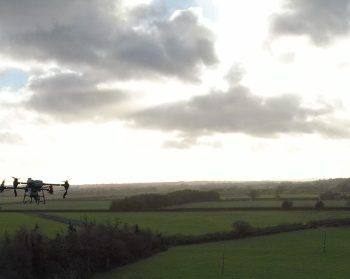
Drones for control of quarantine tree pests (Oak Processionary Moth)
Author(s): Barley Rose Collier Harris, Anna Platoni


Tree health
Barley Rose has previously worked on a project in the Ips typographus team at Forest Research developing a ‘smart trap’ to automatically detect pest invasions. She completed her PhD at the University of Oxford Plant Sciences Department in Prof John MacKay’s Lab in 2024, where she studied the biological defences of Sitka spruce against the weevil Hylobius abietis. Barley Rose also worked as a research assistant creating a sequencing pipeline to monitor forest reproductive material. She completed her undergraduate in 2018 at the University of Cambridge where she studied Natural Sciences specialising in Plant and Microbial Sciences. Prior to university she worked at the John Innes Centre as a Research Assistant investigating natural variation vernalization in Arabidopsis thaliana.
Barley Rose is a Forest scientist who is investigating the operational feasibility of drones for control of quarantine tree pests, initially focusing on Oak Processionary Moth.
Hepworth, J., Antoniou-Kourounioti, Berggren, K., Selga, C., Tudor, E., Yates, B., Cox, D., Collier Harris, B.R., Irwin, J.A., Howard, M., Säll, T., Holm, S., Dean, C. (2020) Natural variation in autumn expression is the major adaptive determinant distinguishing Arabidopsis FLC haplotypes, eLife, vol. 9, p. e57671, doi: 10.7554/eLife.57671.
Hepworth, J., Antoniou-Kourounioti, R.L., Bloomer, R.H., Selga, C., Berggren, K., Cox, D., Collier Harris, B.R., Irwin, J.A., Holm, S., Säll, T., et al. (2018). Absence of warmth permits epigenetic memory of winter in Arabidopsis. Nat. Commun. 9, 639, doi: 10.1038/s41467-018-03065-7