
Summary
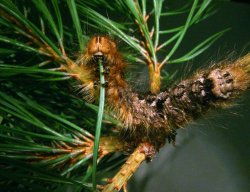
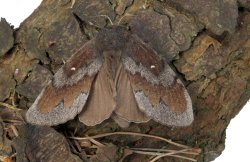
This project investigates the threat posed to UK forestry by the pine‑tree lappet moth (Dendrolimus pini), focusing on its current and future impact, and determining whether the moth represents a recently introduced pest species or an overlooked native resident. Field surveys, biological studies, and climate modelling are being used to understand UK distribution, life cycle, and the environmental drivers of population change.
Surveys undertaken across Scotland have identified small, localised populations within a handful of plantation forests and one ancient Caledonian pine site near Inverness. Despite very low population levels, the species is monitored closely due to its history of causing significant defoliation across Europe. DNA analyses are being used to trace the moth’s origins, and statutory timber‑movement controls have been implemented to limit accidental spread from known sites.
Climate‑driven increases in development rates and outbreak risk are a particular focus, as warming conditions may alter the moth’s behaviour and population dynamics in the UK.
Research Objectives
The main objectives of the project are:
- Apply survey methods to monitor the extent and size of pine‑tree lappet moth (PtLM) populations over time.
- Investigate the phenology of the moth.
- Use DNA markers to clarify whether the Scottish population is native or introduced.
- Determine growth, consumption, and development rates of caterpillars, and adult fecundity.
- Evaluate relationships between caterpillar population densities and foliage damage.
- Use climate modelling to assess current and future outbreak risk.
- Assess methods to minimise the risk of transporting PtLM life stages during tree‑felling or timber‑movement operations.
Latest Update
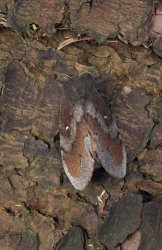
Surveys of more than 80 woodlands have confirmed that PtLM populations remain highly restricted, with repeated detections only at a few established sites. Annual monitoring using pheromone and light traps shows consistent but low levels of adult activity, with early evidence of limited natural spread. Population sizes are significantly below levels associated with economic damage in continental Europe.
Genetic analysis of over 200 moth samples across the species’ native range revealed three major genetic groups. The Scottish population clusters with individuals from Italy, Turkey, and Mongolia and exhibits notably low genetic diversity, consistent with a small founder population.
Feeding trials show that caterpillars develop rapidly when feeding on pine, and slowly on Sitka spruce. Results indicate that development is strongly temperature‑dependent, and the risk posed by PtLM is likely to increase as the UK climate warms.
Statutory movement controls have been applied to prevent the unintentional spread of the insect through timber operations. Suspected pine‑tree lappet moth sightings can be reported via TreeAlert.
General Content
Related pages
Related documents
Published studies
- Molecular investigation of the pine‐tree lappet moth Dendrolimus pini (L.) population in Scotland: a new arrival or an old acquaintance? – A’Hara – 2022 – Agricultural and Forest Entomology – Wiley Online Library
- The importance of trap type, trap colour and capture liquid for catching Dendrolimus pini and their impact on by‐catch of beneficial insects – Sukovata – 2020 – Agricultural and Forest Entomology – Wiley Online Library
- Improved prediction of the climate-driven outbreaks of Dendrolimus pini in Pinus sylvestris forests | Forestry: An International Journal of Forest Research | Oxford Academic
- Moore, R., Cottrell, J., A’Hara, S., and Ray, D. (2017). Pine-tree lappet moth (Dendrolimus pini) in Scotland: Discovery, timber movement controls and assessment of risk. Scottish Forestry, 71 (2), 34-43.
Useful sites
Funding & Partners
Forest Research leads this long running project, working alongside national forestry and conservation partners.
-
 Forest Research: Lead partner
 -
 Scottish Forestry: Funding and strategic support
 -
 Butterfly Conservation Scotland
 -
 Forestry Commission: Tree Health (Advice and Scientific Support Programme)