
Summary
How can local people help in land decontamination projects?
Summary
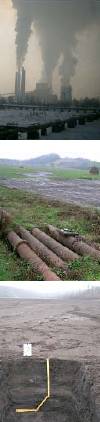
People living in large areas of the West Balkan region are at risk from contaminated water, heavy metals in the food chain and poor health caused by large coal ash deposits from power stations in the area. The RECOAL project developed and tested new ways to remediate coal ash sites and clean up water supplies. Forest Research focused on the socio-economic aspects of the problem and its remediation through stakeholder involvement.
Key findings
- The high alkalinity and increased electrical conductivity of water at ash sites increased solubility and reaction potential of coal ash pollutants
- Above-threshold levels of arsenic, boron, chromium and cadmium at some sites
- Beans displayed the highest levels of pollutant uptake while barley varieties were most tolerant
- Use of deposit sites for crops and livestock in the first 20 years could pose significant risk of transferring pollutants into the human food chain
- A step-aeration system in combination with different types of sorbent materials may help reduce water pollutant levels by 50% or more
- Ash amendments (unpolluted organic materials) can help to quickly establish a vegetation cover to prevent the dispersion of coal ash dust
- Greenspace and tree cover was favoured by several interviewees for their multiple social and health benefits
- Many local residents highlighted other socio-economic factors (e.g. unemployment, lack of social services) that compound the negative impacts of pollution
- Local residents have contextual knowledge that can aid risk analysis and help to characterise health and environmental impacts
- Greater openness and trust-building between the industry and local residents are needed
- Official signed reports that present research results in an accessible way will have a greater impact than distributing original research deliverables
Our involvement
Forest Research worked with partners from five other European academic research institutions and the power station operator Tuzla from Bosnia-Herzegovina. The Social and Economic Research Group of Forest Research led the social science research activities. These included extensive stakeholder analysis, an impact assessment of different remediation options and the development of decision support tools for use by local authorities.
The fieldwork provided an excellent test bed in which to develop new methodologies and decision support tools which integrate social research with the natural sciences. These tools are applicable to other applied natural resource research projects in the UK and Europe, in particular those involving the reclamation of brownfield sites.
Publications and presentations
Funders and partners
Funded by the EU Sixth Framework Programme (FP6)
Partners:
- University of Natural Resources and Applied Life Sciences, Vienna, Austria (Coordinator)
- Hydro-Engineering Institute, Faculty of Civil Engineering, Bosnia and Herzegovina
- University of Banja Luka, Bosnia and Herzegovina
- University of Zagreb, Croatia
- Brandenburg University of Technology at Cottbus, Germany
- Forest Research, UK
- Tuzla, Bosnia and Herzegovina
Status
2005-2007.